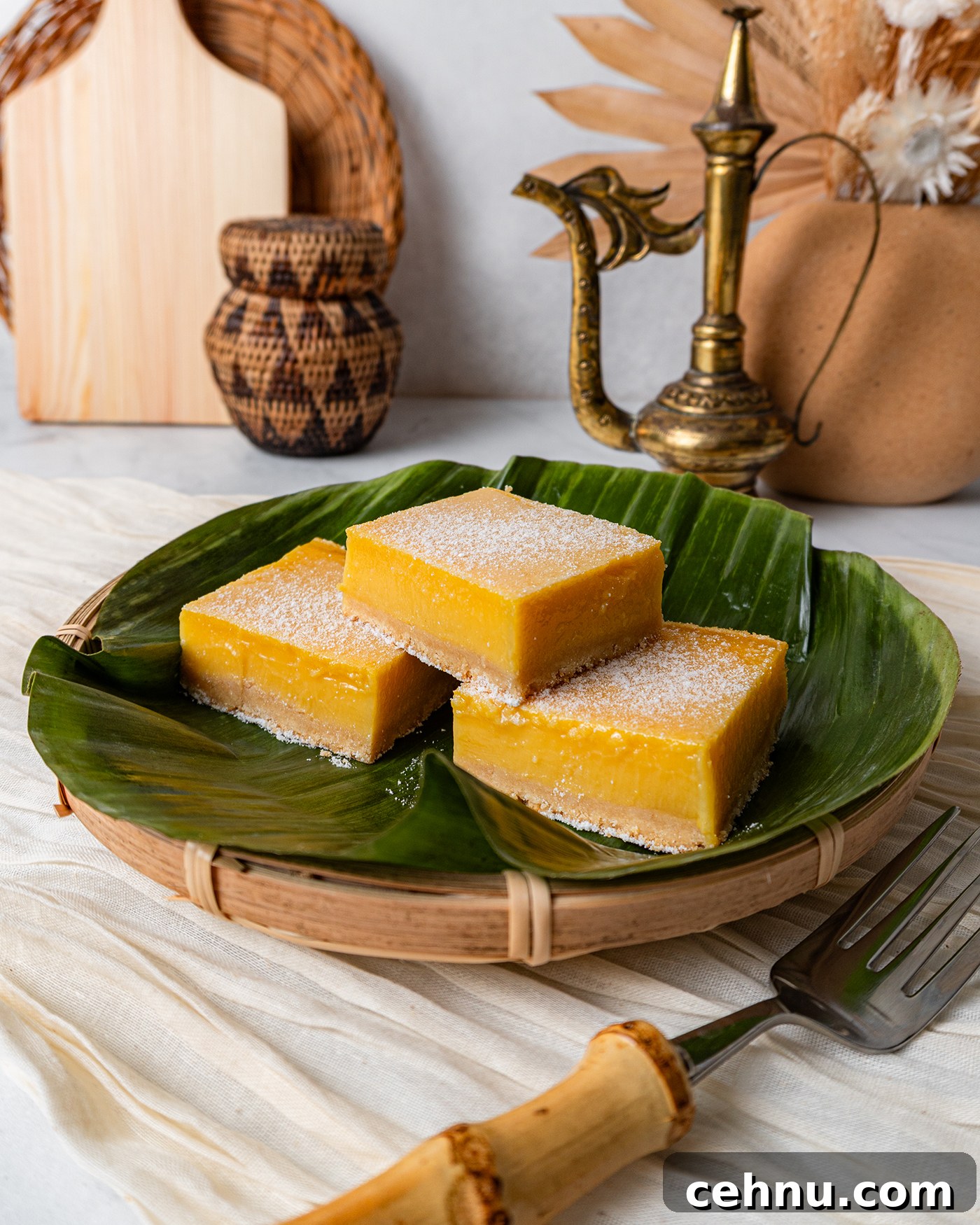
Calamansi Bars with a Polvoron Crust are a bright, tart, and not-too-sweet Filipino dessert made with a smooth calamansi filling and a buttery polvoron-inspired shortbread crust.
If you enjoy citrus desserts with a bold tropical flavor, this easy calamansi bars recipe is a wonderful choice. It has the familiar comfort of lemon bars, but with the distinct fragrance and sharp citrus taste of calamansi, a beloved Filipino ingredient often used in drinks, sauces, marinades, and desserts.
The crust is inspired by classic Filipino polvoron. It uses toasted flour, powdered milk, sugar, salt, and melted butter to create a tender, crumbly base that pairs beautifully with the tangy calamansi custard. The result is a Filipino dessert that feels nostalgic, modern, and perfect for sharing.
For the crust, this recipe uses the same base dough featured in our Modern Polvorons recipe. Reading that post first can help you understand how to toast the flour properly and how the polvoron mixture should look before baking.
Keep reading for make-ahead tips, helpful baking advice, troubleshooting notes, and the full calamansi bars recipe.
Looking for more Filipino-inspired desserts? Try our Pandan Coconut Rice Krispies and Buko Pocket Pies.
This post may contain affiliate links. Please read our disclaimer policy for details. As an Amazon Associate we earn from qualifying purchases.
Table of Contents
- Why You’ll Love Calamansi Bars with Polvoron Shortbread Crust
- How to Make This Recipe Ahead of Time
- Tips for Making Calamansi Bars with Polvoron Crust
- Equipment Needed
- Ingredients
- Calamansi Bar Filling
- Polvoron Crust
- Other Ingredients
- Recipe
- Make Polvoron Crust
- Make Calamansi Filling
- Bake the Calamansi Bars
- Troubleshooting – Why Did My Calamansi Bars Crack?
- Final Thoughts
- More Recipes You’ll Love
- References & Further Reading
Why You’ll Love Calamansi Bars with Polvoron Shortbread Crust
- Tart and not too sweet
These calamansi bars are designed for people who love dessert but prefer a balanced sweetness. The filling is sharp, citrusy, and refreshing, with enough sugar to soften the natural tartness of the calamansi without covering it up.
Many lemon bars can lean heavily on sugar, which sometimes makes the citrus flavor feel muted. In this Filipino-inspired version, the calamansi remains the star. Every bite has a bright tropical flavor, a creamy filling, and a buttery crust that keeps the dessert rich but not overwhelming.
- Simple steps with impressive results
This is an approachable recipe for beginner and experienced bakers alike. The crust is mixed by hand, pressed into the pan, and topped with a simple calamansi filling. There is no complicated technique, no need for special decorating skills, and no pressure to make every slice look perfect.
The most important steps are to mix gently, strain the filling, and let the bars chill fully before slicing. Once set, the bars cut beautifully and make a delicious addition to parties, potlucks, family gatherings, or a quiet dessert at home.
- Easy to portion and share
You can cut these calamansi bars into larger squares for plated desserts or smaller bite-sized pieces for serving a crowd. For gatherings, try slicing them into 1- to 2-inch squares and placing each piece in a cupcake liner. This makes them easy to pick up, serve, and store.
How to Make This Recipe Ahead of Time
Calamansi bars are a great make-ahead dessert because they need time to cool and set. If you want to spread the work over several days, divide the recipe into simple stages.
- Day 1: Prepare the ingredients and make the crust components
Start by toasting the flour for the polvoron crust. The flour needs time to cool completely before it is mixed with the other crust ingredients. While it cools, measure the powdered milk, sugar, salt, butter, eggs, calamansi juice, and flour for the filling. This preparation step, also known as mise en place, makes the rest of the recipe easier and more organized.
- Day 2: Mix, assemble, and bake
Once everything is measured, the recipe comes together quickly. Make the polvoron crust, press it into the parchment-lined baking pan, prepare the calamansi filling, strain it over the crust, and bake until the center has just set.
- Day 2 or 3: Cool, chill, and serve
After baking, let the bars cool completely at room temperature. Do not rush this step. Once cooled, refrigerate the bars for at least 2 hours or overnight so the filling can firm up. The dessert can be served within 7 days when properly stored in the refrigerator.
Tips for Making Calamansi Bars with Polvoron Crust
Use these tips to make smooth, flavorful, and sliceable calamansi bars.
- Use a ceramic or glass baking dish
- For citrus bar recipes, ceramic or glass is preferred. Metal pans can sometimes affect the flavor of acidic desserts, leaving an unpleasant metallic note. A ceramic or glass baking dish also helps the bars bake evenly and makes them easier to serve.
- Mix gently to reduce bubbles
- A smooth filling starts with gentle mixing. Whisk the eggs only until the yolks and whites are combined, then stir in the calamansi juice carefully. Avoid vigorous whisking, which can add too much air to the filling. Excess bubbles may rise during baking and contribute to cracks on the surface.
- Strain the filling before baking
- Straining removes lumps of flour, bits of egg, and any seeds or pulp that may be in the calamansi juice. Hold the strainer close to the pan as you pour to reduce splashing and prevent extra bubbles from forming.
- Move the full bar only once
- Once the bars are fully chilled, transfer the whole slab from the baking dish to a cutting board only once. Too much bending or moving can cause the filling to crack. After slicing, use a spatula to transfer individual pieces to a serving plate or airtight container.
Equipment Needed
- Nonstick pan
- Mixing bowls
- Whisk
- Silicone spatula
- Knife and cutting board
- Fine mesh strainer
- Parchment paper
- Large ceramic or glass baking pan, approximately 11.4″ x 8″
Ingredients
Calamansi Bar Filling
- 8 eggs, room temperature
- 1 cup calamansi juice, room temperature
- 2 cups white sugar
- ½ cup all-purpose flour
Polvoron Crust (see Modern Polvorons Recipe)
- 1 cup all-purpose flour, toasted and sifted
- ½ cup powdered whole milk
- ½ cup white sugar
- ⅛ tsp kosher salt
- ½ cup unsalted butter, melted
Other Ingredients
- Powdered sugar, for dusting. See Note 1.
Note 1. Regular powdered sugar can melt quickly when sprinkled on top of fruit tarts and citrus bars such as calamansi bars, lemon bars, and lilikoi bars. For the cleanest presentation, dust the bars right before serving.
An alternative is to use non-melting powdered sugar, which is often used by bakeries to help pastries stay neat in display cases for longer periods.
Recipe
- Preheat the oven to 350°F / 176°C.
Make Polvoron Crust
- In a mixing bowl, whisk together the toasted and sifted flour, powdered whole milk, white sugar, and kosher salt. Pour in the melted butter and mix until the dough is evenly combined.
- Line the baking pan with parchment paper. Transfer the polvoron dough to the pan and spread it into an even layer. Press it down firmly with your palms to form a compact crust.
Make Calamansi Filling
- In a mixing bowl, whisk together the sugar and flour until evenly combined.
- In a separate bowl, gently whisk the eggs just until the yolks and whites are blended. Mix in the calamansi juice, stirring carefully to avoid creating too many bubbles.
- Pour about one-third of the egg and calamansi mixture into the dry mixture. Stir with a spatula until smooth, then add the remaining liquid and gently mix until fully incorporated.
- Strain the filling over the prepared crust. Keep the strainer low and pour slowly to minimize splashing.
- Use a toothpick to pop any large bubbles on the surface.
Bake the Calamansi Bars
- Bake at 350°F / 176°C for 25 to 30 minutes, or until the center has just set. Remove the pan from the oven and let the bars cool completely on the counter.
- Refrigerate for at least 2 hours or overnight so the filling can set fully.
- Transfer the chilled slab to a cutting board. Slice into bars, dust with powdered sugar, and serve immediately.
Troubleshooting – Why Did My Calamansi Bars Crack?
Cracking is one of the most common issues with calamansi bars, but it is usually only cosmetic. The bars will still taste delicious, and small cracks can be hidden with a light dusting of powdered sugar before serving.
Because the filling is a citrus custard, it can be sensitive to temperature changes, excess air, and movement after baking. If your bars crack, review the causes below and adjust your process next time.
- A sudden temperature change
- Avoid placing freshly baked calamansi bars directly into the refrigerator. The sudden shift from hot to cold can cause the custard to crack. Let the bars cool at room temperature first, then chill them once they are fully cooled.
- If your kitchen temperature changes quickly, you can turn off the oven just before the bars are fully set and let them cool slowly with the oven door slightly open. This gradual cooling method may help reduce cracking.
- Too many bubbles in the filling
- Whisking too aggressively can add extra air to the custard. During baking, those bubbles rise, pop, and may leave cracks or small holes on the surface. Mix slowly and strain the filling for a smoother result.
- Too much movement after chilling
- The whole uncut bar can bend if it is moved too often, especially once the filling has set. Transfer it from the baking dish to the cutting board only once, then slice and move the individual pieces with a spatula.
Final Thoughts
Calamansi takes center stage in this Filipino twist on classic lemon bars. The filling is tart, smooth, and full of tropical citrus flavor, while the polvoron crust adds a buttery, milky, shortbread-like base. It is an easy calamansi dessert recipe that feels special without being difficult.
Serve these calamansi bars chilled, dusted with powdered sugar, and cut into neat squares. They are ideal for holidays, parties, potlucks, or whenever you want a Filipino-inspired dessert that is bright, refreshing, and memorable.
For more delicious Filipino desserts, try our Modern Filipino Polvorons and Milo Checkerboard Shortbread Cookies.
Thank you for reading. If you enjoyed this recipe, please leave a rating and review on the recipe card below and share your creations with us.
Calamansi Bars with Polvoron Crust
Equipment
- Nonstick pan
- Mixing bowls
- Whisk
- Silicone spatula
- Knife and cutting board
- Fine mesh strainer
- Parchment paper
- Large ceramic or glass baking pan, approximately 11.4″ x 8″
Ingredients
Calamansi Bar Filling
- 8 eggs, room temperature
- 1 cup calamansi juice, room temperature
- 2 cups white sugar
- ½ cup all-purpose flour
Polvoron Crust
- 1 cup all-purpose flour, toasted and sifted
- ½ cup powdered whole milk
- ½ cup white sugar
- ⅛ tsp kosher salt
- ½ cup unsalted butter, melted
Other Ingredients
- Powdered sugar, for dusting
Instructions
- Preheat the oven to 350°F / 176°C.
Make Polvoron Crust
- Whisk together the toasted flour, powdered whole milk, white sugar, and salt. Mix in the melted butter until evenly combined.
- Transfer the polvoron dough to a parchment-lined baking pan. Spread it evenly and press it firmly into a crust.
Make Calamansi Filling
- In a mixing bowl, whisk together the sugar and flour.
- In another bowl, gently whisk the eggs until evenly blended. Stir in the calamansi juice.
- Add about one-third of the egg-calamansi mixture to the dry mixture and stir until smooth. Add the remaining liquid and gently mix.
- Strain the filling into the baking pan over the crust, keeping the strainer low to prevent splashing.
- Pop any large surface bubbles with a toothpick.
Bake the Calamansi Bars
- Bake for 25 to 30 minutes, or until the center has just set. Cool completely at room temperature.
- Refrigerate for at least 2 hours or overnight.
- Transfer to a cutting board, slice into bars, dust with powdered sugar, and serve immediately.
Notes
Refer to our Modern Polvorons recipe for more guidance on making the polvoron crust.
Dust the bars with powdered sugar right before serving for the best appearance.
More Recipes You’ll Love
Check out this recipe
Check out this recipe
Check out this recipe
References & Further Reading
Further reading on lemon bars, citrus bars, refrigeration, and storage can help you better understand how similar custard-style desserts behave after baking.