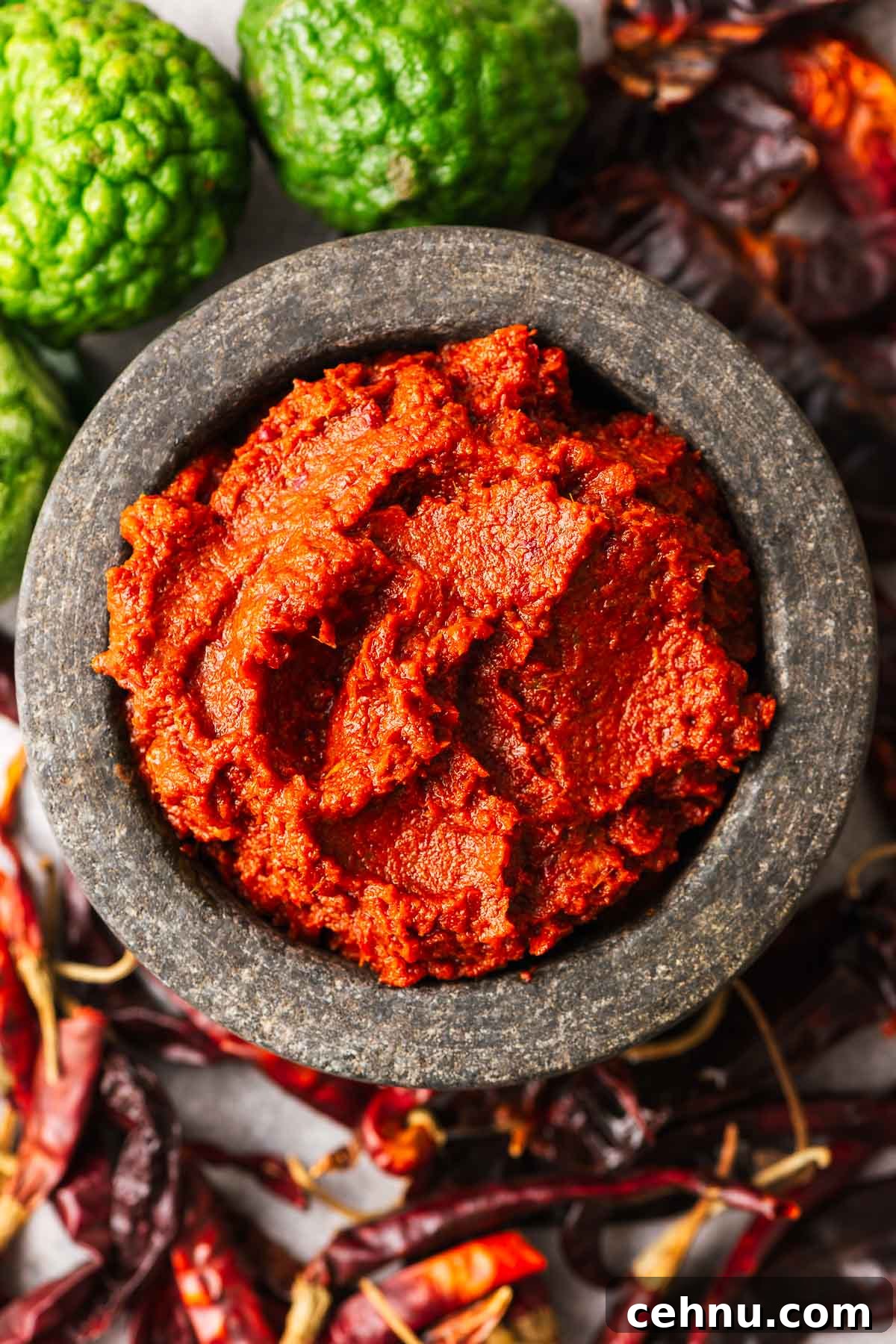
Nothing beats the rich, layered flavours of an authentic Thai red curry, and the foundation of that dish is a vibrant, aromatic red curry paste. With a handful of fresh ingredients and a small food processor or spice grinder, you can make a fresher, more fragrant paste at home than any jarred version.
Homemade red curry paste tastes brighter and more complex than store-bought alternatives, and it’s surprisingly simple to prepare. Below is a clear, practical guide to making authentic Thai red curry paste, including ingredient notes, step-by-step instructions, storage tips, and ways to use the paste in your cooking.
In this post:
- Why I love this recipe
- Ingredients and substitutes
- How to make
- Storage
- How to use
- Frequently asked questions
- Recipe card
Why I love this recipe
- Authentic flavour: This paste uses traditional Thai aromatics—lemongrass, galangal, and makrut (kaffir) lime zest—for true Thai character.
- Versatile: Use it in curries, marinades, stir-fries, fish cakes, and more.
- Simple method: A small food processor or spice grinder yields a smooth paste quickly—no heavy pestle-and-mortar work required.
- Make-ahead friendly: The paste stores well in the fridge or freezer, so you can batch-make and portion for later use.
If you enjoy Thai food, making your own red curry paste is a small step that delivers big flavour rewards.
Ingredients and substitutes
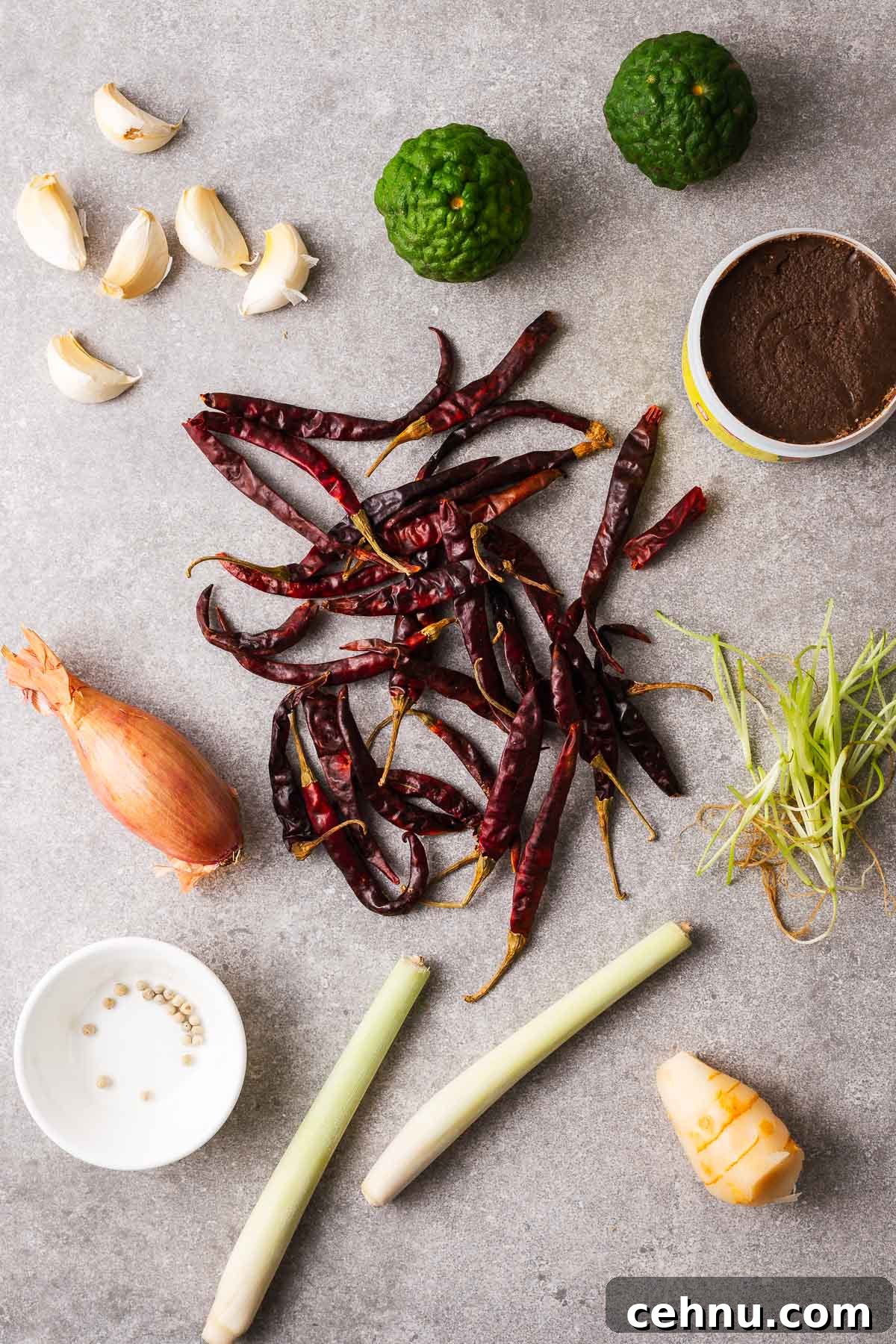
Most ingredients are available at Asian markets and many grocery stores. Below are the traditional choices along with practical substitutes if you can’t find every item.
- Dried chillies: Deseeded chile de árbol is my go-to. Thai red spur chillies are traditional; use generic dried red chillies or guajillo for a milder result.
- White peppercorns: White provides a classic tone, but black peppercorns work fine.
- Galangal or ginger: Fresh galangal is traditional. If unavailable, fresh ginger is a good substitute. Avoid powdered galangal for this paste.
- Lemongrass: Adds bright citrusy notes. Use only the tender inner stalks, finely sliced.
- Shallots and garlic.
- Cilantro root or stems: Cilantro root adds depth; if you only have stems, use the soft, pale parts.
- Makrut (kaffir) lime zest: The zest contributes an essential citrus aroma. Substitute regular lime zest or add a few kaffir lime leaves when you simmer the curry.
- Shrimp paste: Gives umami and depth. For a vegan paste, use a strong miso paste instead.
- Salt.
Some cooks add coriander and cumin seeds for extra warmth—about a teaspoon each—if you prefer a slightly different spice profile.
How to make Thai red curry paste
Follow these steps for a smooth, bright red paste. The key is to prep finely and blend in stages so the tougher fibres break down evenly.
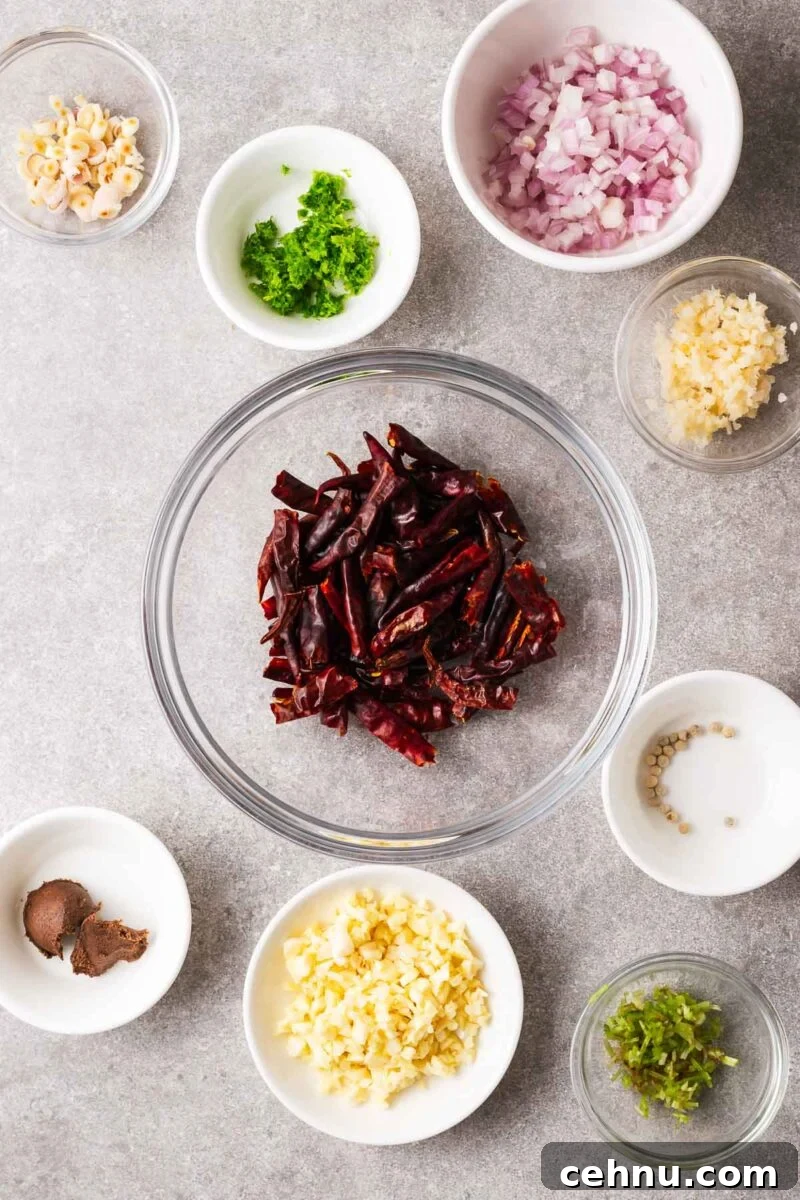
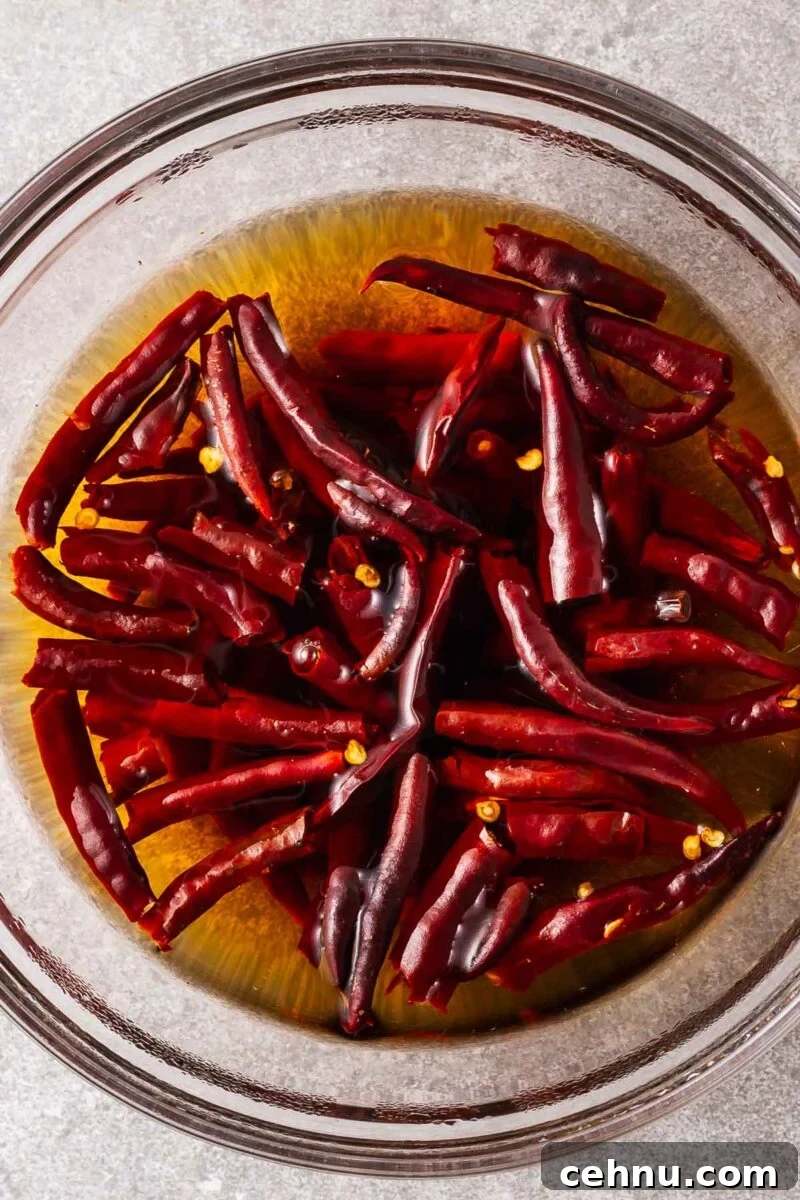
- Prep ingredients: Finely dice galangal and lemongrass—the smaller they are, the easier the grinder will make them.
- Soak the chillies: Remove stems, break chillies in half and shake out most seeds. Cover with boiling water and soak for about 30 minutes to rehydrate.
- Grind pepper and tough aromatics: Pulse white peppercorns in a small food processor or spice grinder. Add diced galangal and sliced lemongrass and pulse until the mixture is fibrous and homogeneous, scraping the sides as needed.
- Add softer aromatics: Add diced shallot, garlic, and cilantro root or stems. Blend until you have a mostly smooth, wet paste, stopping to scrape the bowl.
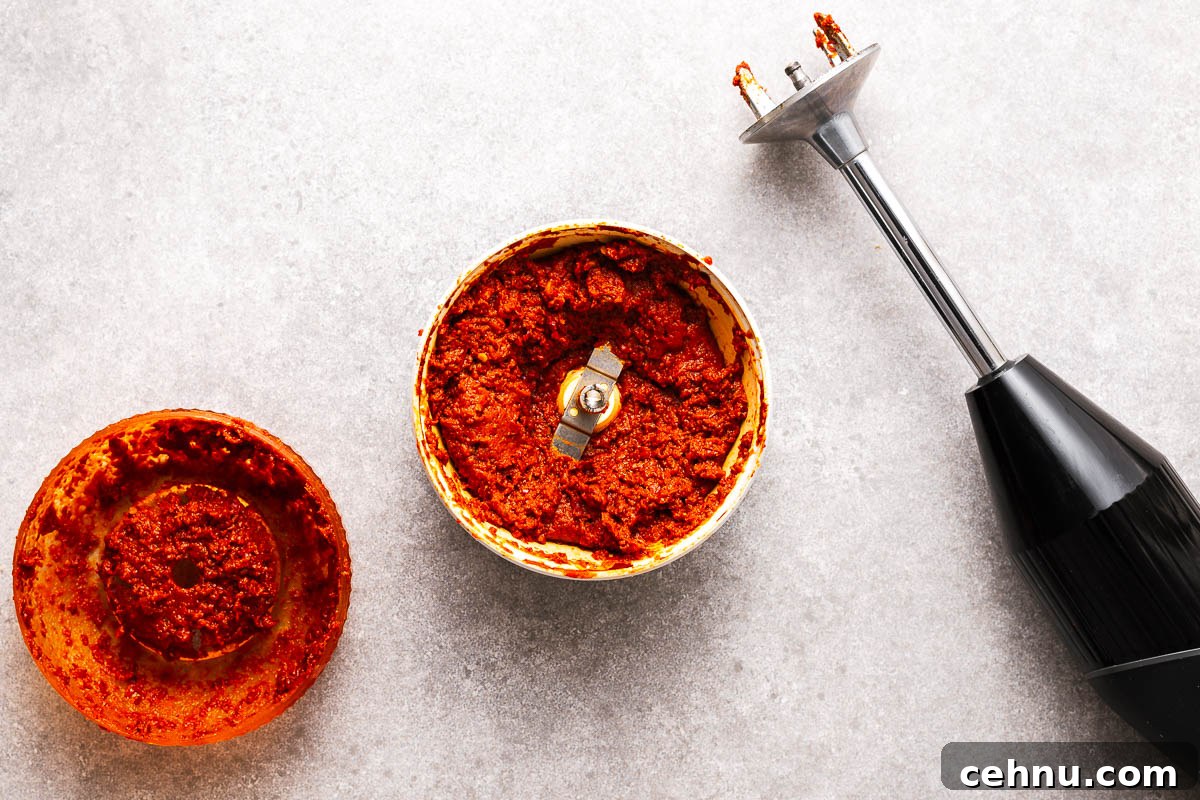
- Blend in chillies: Drain the rehydrated chillies and add them in batches to the grinder. Blend until the paste is smooth and vividly red.
- Finish: Add makrut lime zest, shrimp paste (or miso for vegan), and salt. Blend until the paste is thick and uniform.
Storage
Pack the paste into an airtight container and refrigerate for up to 5 days. For longer storage, freeze in small portions (ice-cube trays or sealed bags) for up to 3 months. This recipe yields about 150 grams (roughly ½ cup), which is enough to make around 12 servings of curry—handy to portion into three freezer portions.
How to use
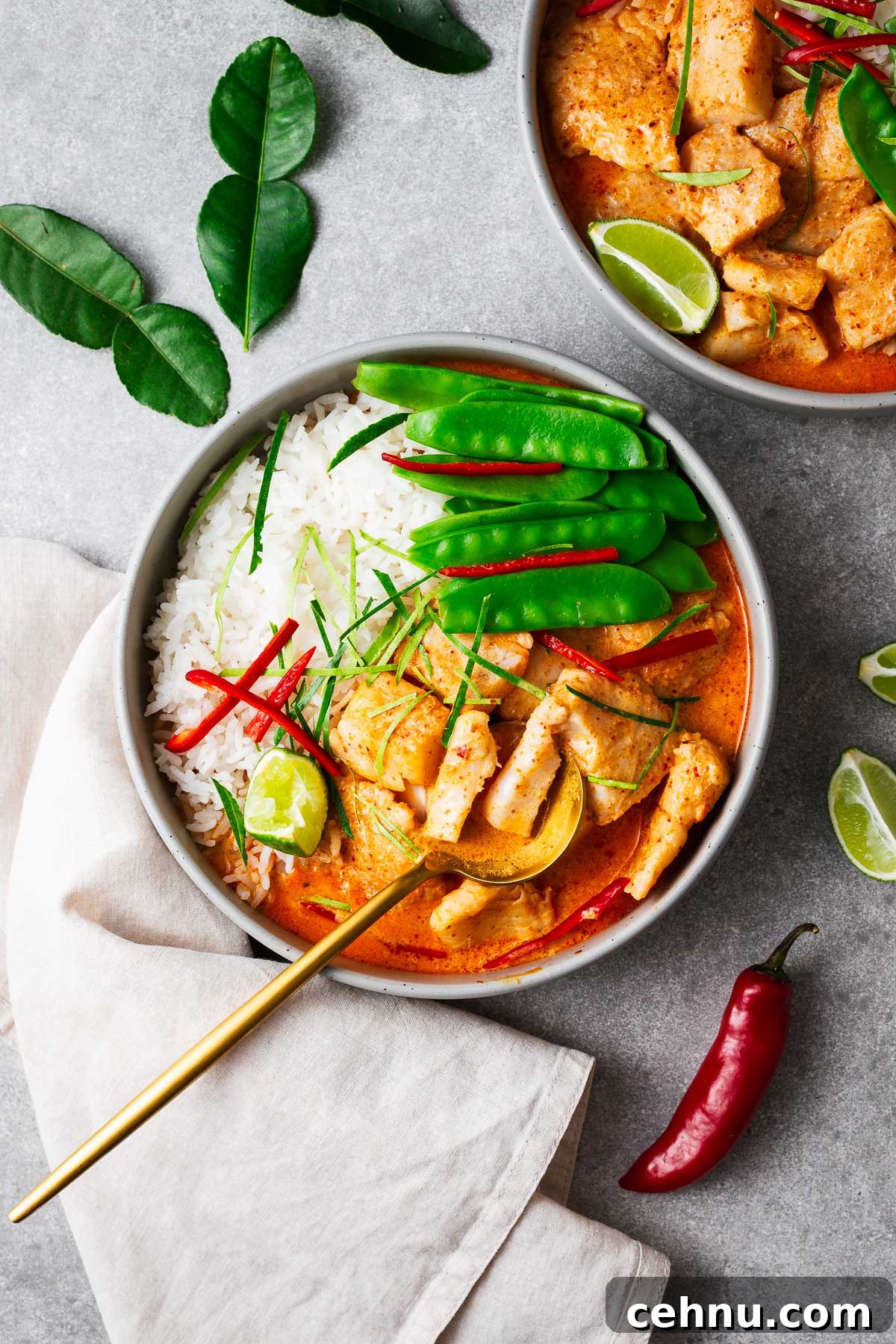
Classic Thai red curry: Sauté a few tablespoons of paste in oil, add coconut milk, fish sauce and palm or brown sugar, then simmer your choice of protein (chicken, pork, fish, shrimp, tofu) and vegetables (bell peppers, bamboo shoots, eggplant) until cooked. Serve over jasmine rice.
Stir-fries and noodles: Stir a spoonful into stir-fries or noodle dishes for instant Thai flavour.
Marinade: Mix with soy or fish sauce and lime for a spicy, savoury marinade.
Meatballs and snacks: Add a spoonful to meatball mixes or fish cake recipes for an authentic Thai punch.
Frequently asked questions
Red curry paste combines dried chillies with aromatics like garlic, shallots, lemongrass, galangal (or ginger), shrimp paste, white peppercorns, and kaffir lime zest. Variations exist—some include coriander and cumin seeds.
It’s used as the flavour base for Thai curries, but also for stir-fries, marinades, soups, and snacks.
Heat varies with the chillies used and how many seeds remain. Adjust the amount of paste or dilute it with coconut milk to reduce heat.
Thai paste relies on shrimp paste, galangal, lemongrass, and kaffir lime zest. Indian curry pastes or masalas more commonly use tomatoes, vinegar, and a different spice blend such as turmeric, cumin, and coriander.
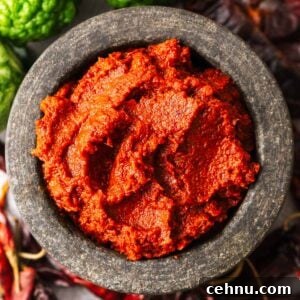
Easy Thai Red Curry Paste (Prik Gaeng Ped)
Yield: ½ cup (about 150 g) • Servings: 12 • Prep time: 10 mins • Chilli soaking: 30 mins • Total time: 40 mins
Ingredients
- 30 dried chiles de árbol (deseeded if you prefer less heat)
- 20 white peppercorns (or black)
- 1 tablespoon finely diced galangal (or ginger)
- 2 stalks lemongrass, tough outer leaves removed, finely sliced
- ¼ cup finely diced shallot (about 1 small)
- 6 garlic cloves, peeled
- 1 tablespoon sliced cilantro roots (or stems)
- 2 teaspoons finely grated makrut (kaffir) lime zest
- 2 teaspoons shrimp paste (or miso for vegan)
- 1 teaspoon salt
Instructions
- Remove stems from the chillies, break them in two and shake out most seeds. Cover with boiling water in a heatproof bowl and soak for 30 minutes.
- Pulse the white peppercorns in a small grinder until coarsely ground.
- Add diced galangal and sliced lemongrass; blitz until fibrous but even, scraping down the sides.
- Add shallot, garlic and cilantro root or stems; blend to a wet, mostly smooth paste.
- Drain the chillies and add them in batches; blend until smooth and bright red.
- Stir in makrut lime zest, shrimp paste and salt; blend to a thick, uniform paste.
- Store in an airtight container in the fridge for up to 5 days or freeze in portions for up to 3 months.
Notes
- Dried chilli variety controls heat—use guajillo for milder flavour or Thai spur chillies for a more authentic heat.
- If fresh galangal isn’t available, fresh ginger is a suitable substitute.
- Makrut limes (kaffir) provide a distinctive aroma; one lime typically yields the zest called for above.
- Traditional methods use a mortar and pestle, but a small grinder or food processor makes the process faster and easier for most home cooks.
Nutrition (per ~12.5 g serving)
Calories: 15 kcal • Carbohydrates: 3 g • Protein: 1 g • Fat: 0.1 g • Sodium: 225 mg • Fiber: 1 g