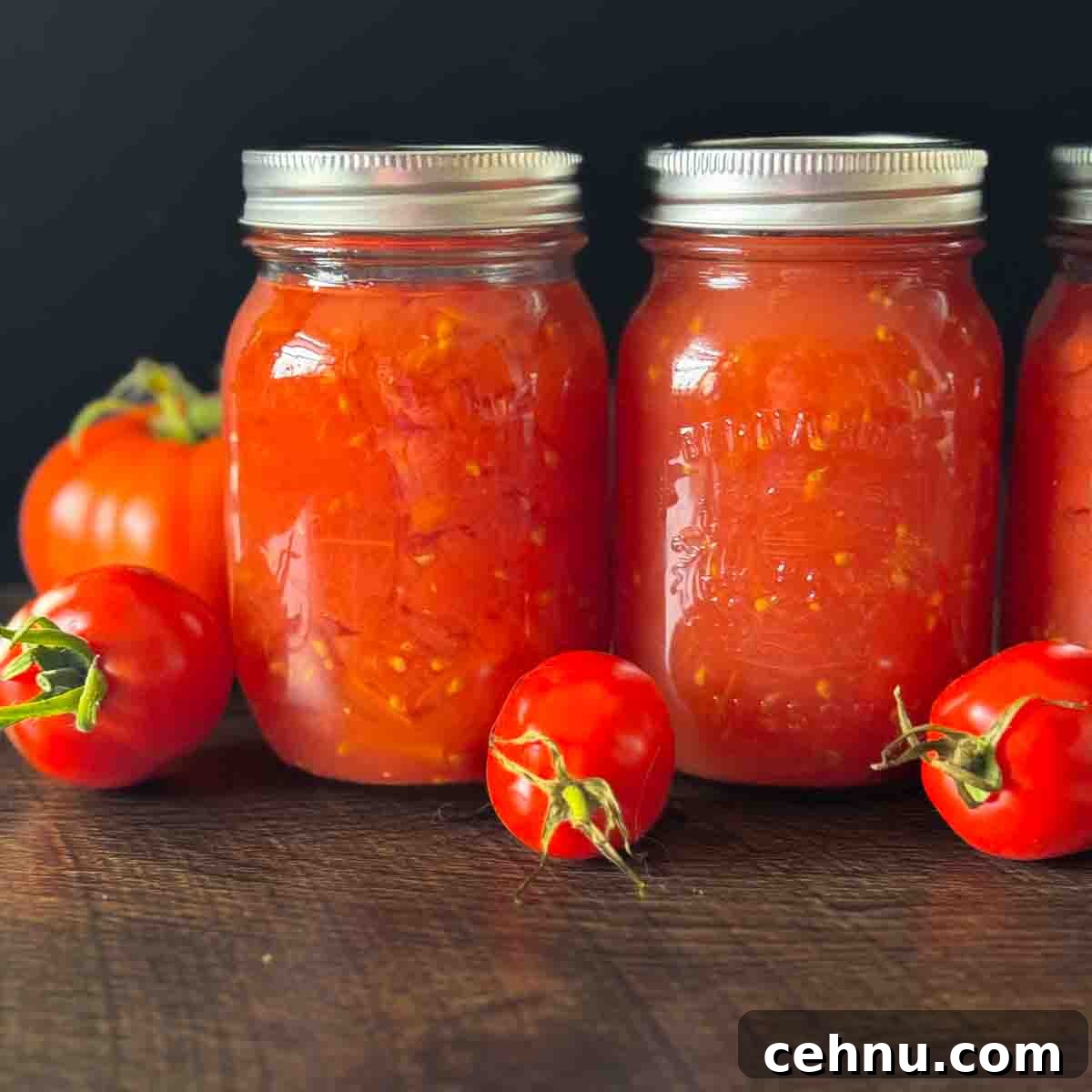
If your garden delivered more tomatoes than you can eat fresh, homemade canned tomatoes are the perfect solution. This small-batch recipe is simple, safe, and captures summer flavor far better than store-bought jars.
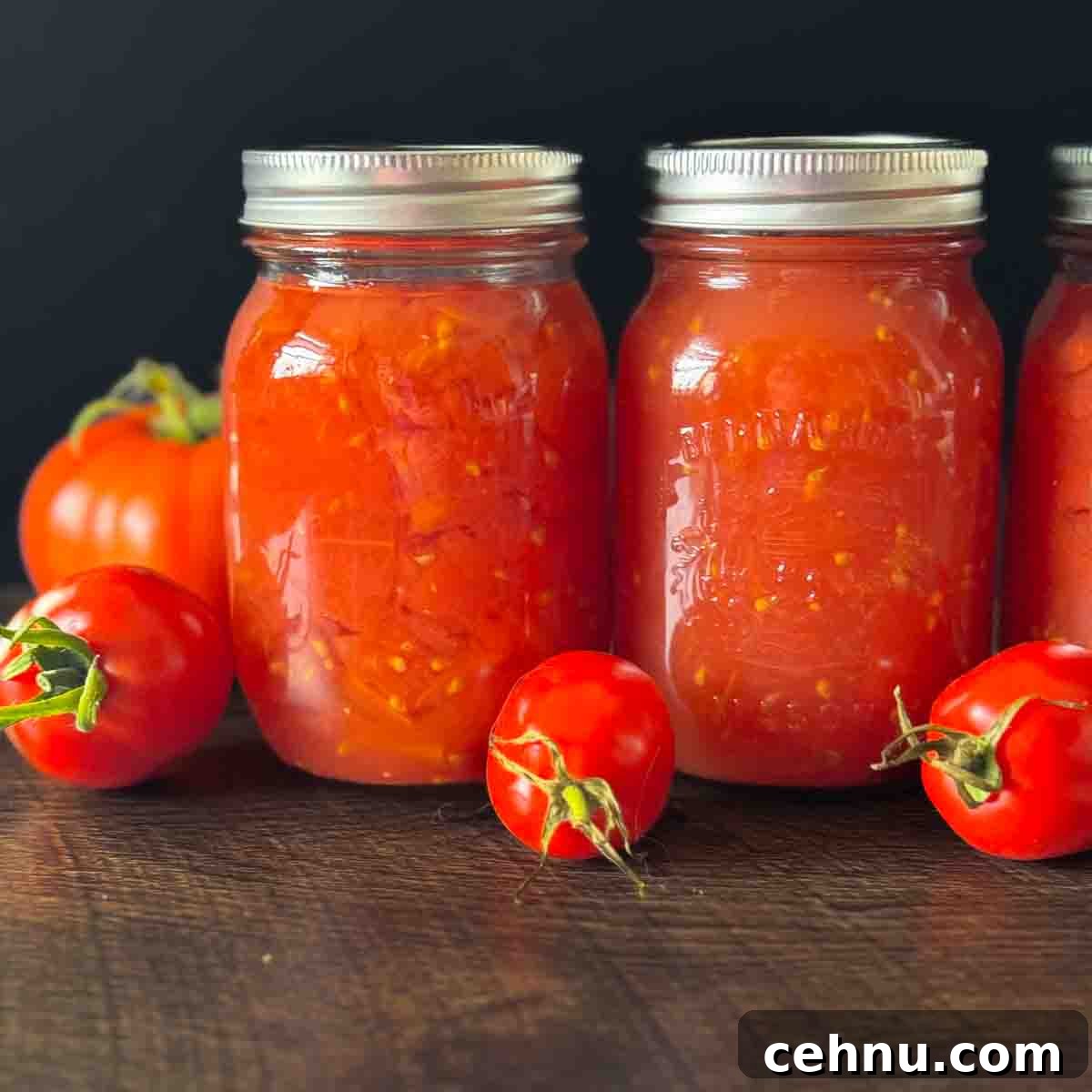
Why I Love This Canned Tomatoes Recipe
I garden every year and grow an abundance of tomatoes. Canning them lets me enjoy summer flavors all winter long. Opening a jar of home-canned tomatoes on a cold night instantly brings back the brightness of fresh tomatoes—ripe acidity, sweetness, and that unmistakable tomato aroma.
This method is aimed at small batches, so it’s approachable for first-time canners and useful when you don’t have quantities for a full canner load. It uses a water bath canner and follows common safety practices for acidifying tomatoes so they store well.
Ingredients You’ll Need
These amounts make about four pint jars of canned diced tomatoes.
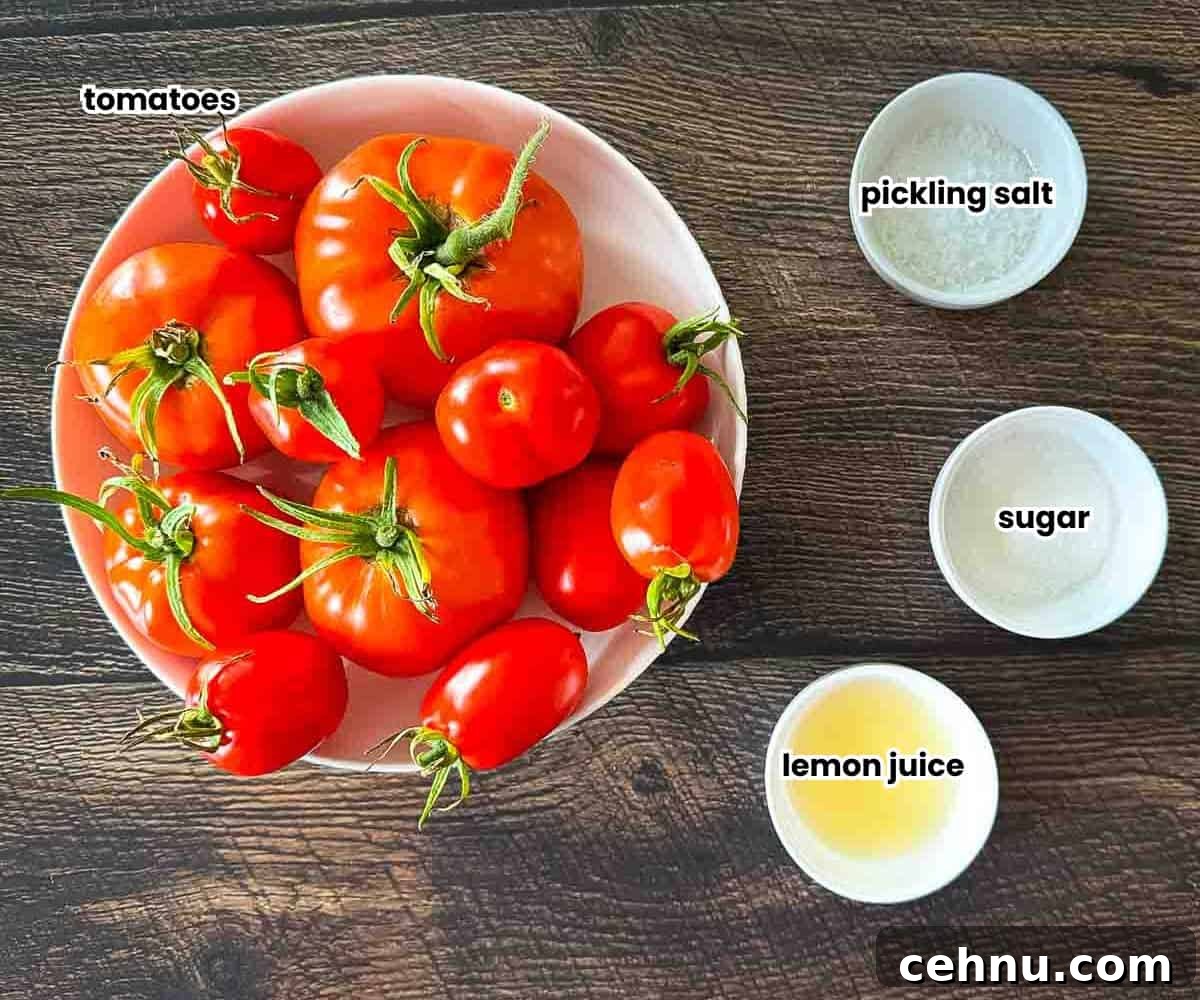
- Ripe tomatoes: Choose firm, juicy, ripe tomatoes. Roma or plum varieties are great because they have less excess water, but any ripe tomato will work.
- Pickling salt: Also called canning or kosher-style salt—helps flavor and preserve. Use non-iodized salt.
- Granulated sugar: A small amount balances acidity and brightens flavor; optional but recommended.
- Bottled lemon juice or citric acid: For safety, use bottled lemon juice (consistent acidity) or measured citric acid. Add 1 tablespoon bottled lemon juice (or 1/4 tsp citric acid) per pint jar; double for quarts.
How to Can Tomatoes in a Water Bath Canner
Step 1: Peel Tomatoes
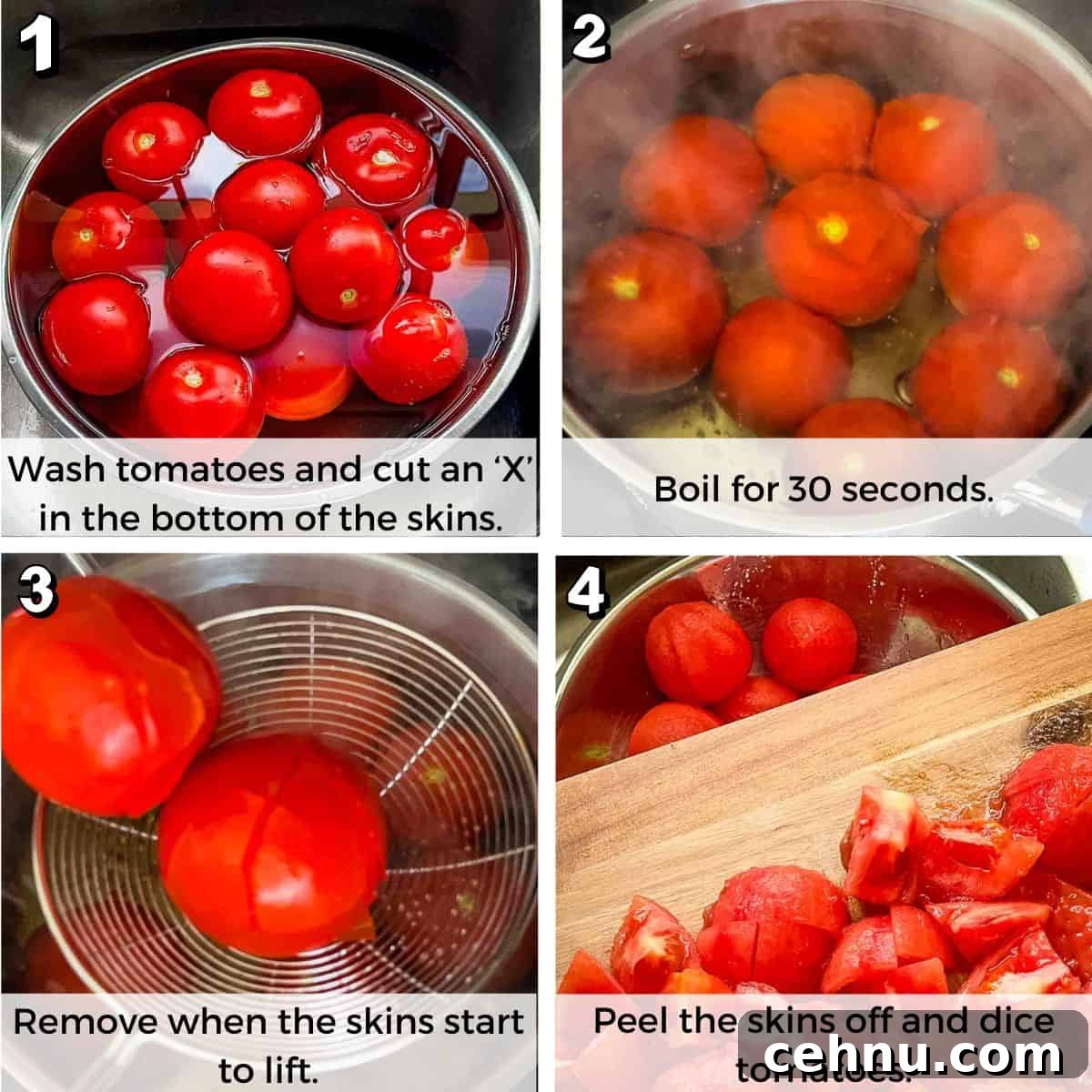
- Wash tomatoes well. Cut a shallow ‘X’ on the bottom of each tomato to loosen the skin.
- Bring a large pot of water to a boil and add the tomatoes for about 30 seconds, until the skins start to lift. Immediately transfer to a large ice water bath. The skins should slip off easily. Core and cut the tomatoes into chunks or dice as desired.
Step 2: Simmer Tomatoes and Prepare Jars
- Wash jars, lids, and bands in hot, soapy water and rinse well. Sterilize jars by boiling them in a large pot for 10 minutes or run them through a hot dishwasher cycle. Keep jars hot until ready to fill.
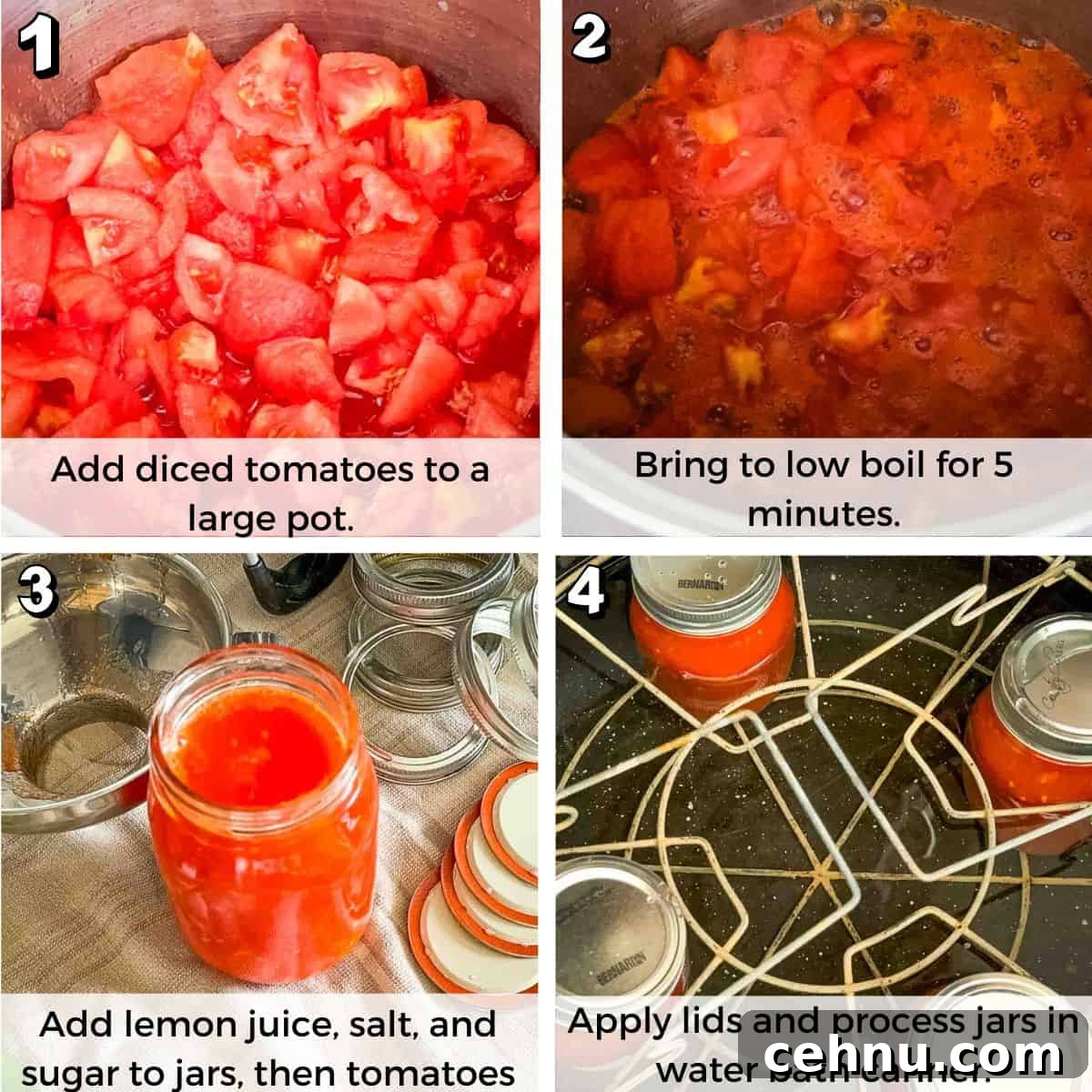
- Place the diced tomatoes in a large pot and bring to a boil over medium-high heat. Stir occasionally and simmer for about 5 minutes to heat through and slightly concentrate the tomatoes.
Step 3: Fill and Process Jars
- Add bottled lemon juice or citric acid to each jar: for pint jars add 1 tablespoon bottled lemon juice (or 1/4 teaspoon citric acid); for quart jars add 2 tablespoons bottled lemon juice (or 1/2 teaspoon citric acid). Add 1/2 teaspoon pickling salt and 1/2 teaspoon sugar to each pint (double for quarts) if desired.
- Ladle the hot tomatoes into the prepared jars, leaving about 1/2 inch headspace. Use a clean plastic or wooden utensil to remove any trapped air bubbles. Wipe the jar rims with a clean, damp cloth and center the lids. Screw on the bands until fingertip tight.
- Place jars on the rack in your water bath canner and lower the rack into boiling water. Ensure there is at least 1 inch of water above the tops of the jars. Bring the water to a full rolling boil, cover the canner, and process pint jars for 40 minutes and quart jars for 45 minutes.
Step 4: Cool and Store
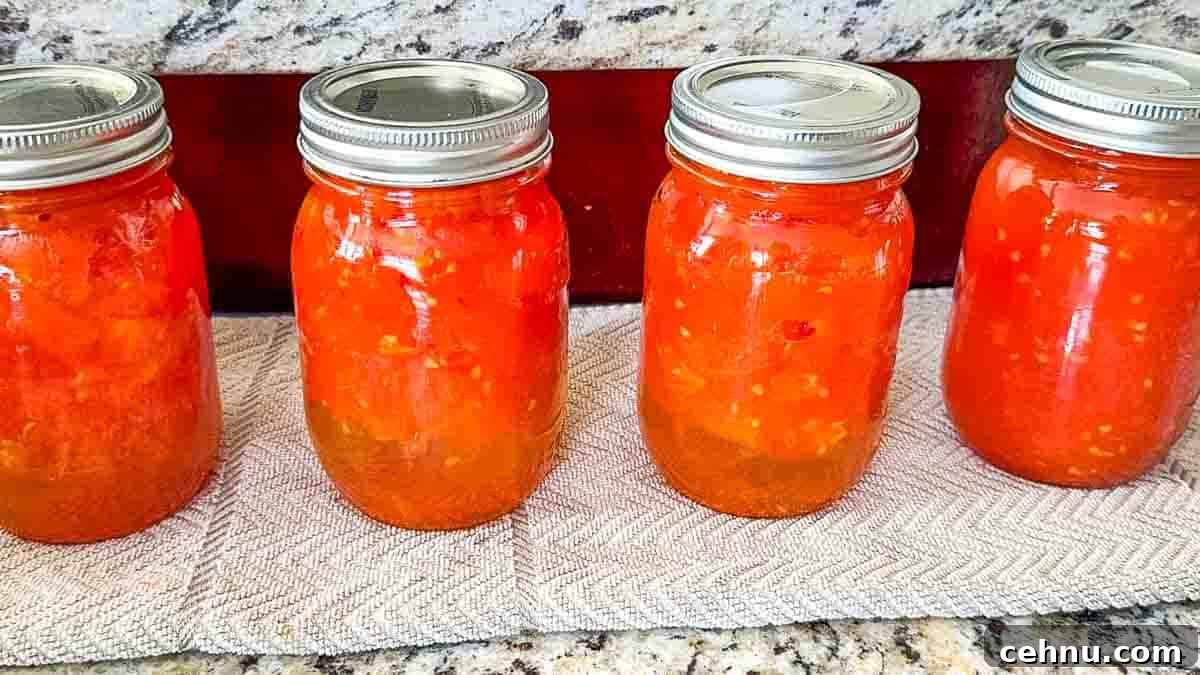
- When processing is complete, turn off the heat and carefully lift the rack from the canner. Use a jar lifter to transfer jars to a towel-covered counter, spacing them apart so air can circulate.
- Let the jars cool undisturbed for 12 to 24 hours. Press the center of each lid: if it doesn’t flex, the jar is sealed. Any jars that fail to seal should be refrigerated and used within a few days.
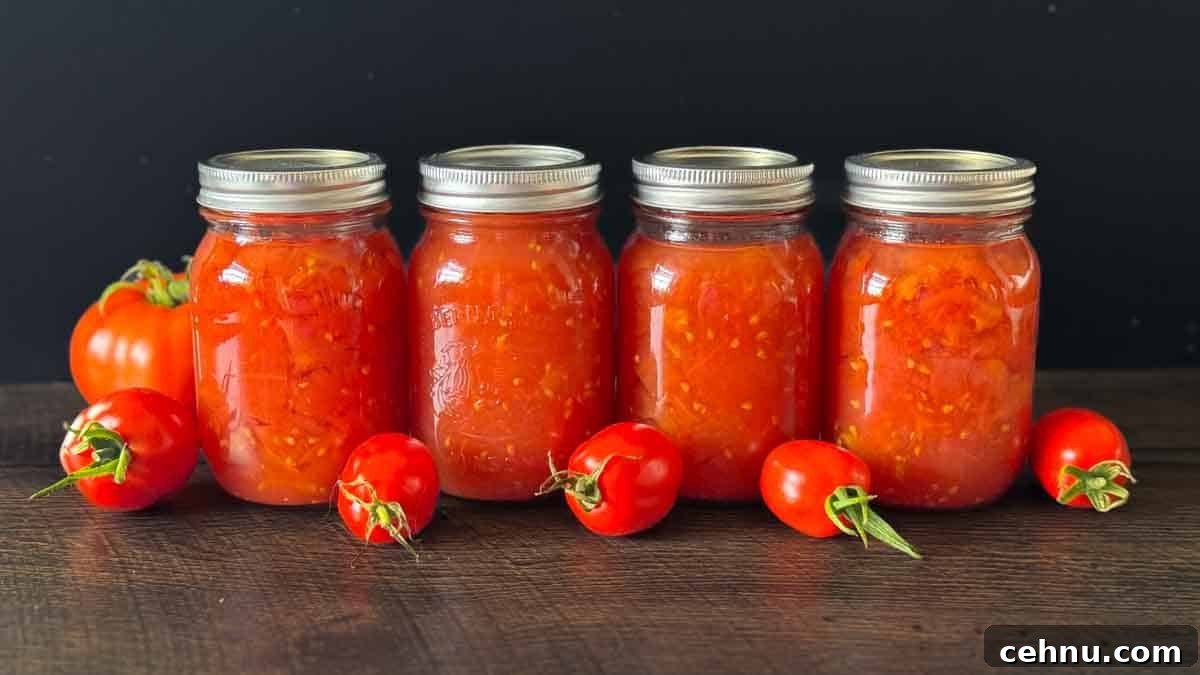
- Store properly sealed jars in a cool, dark place for up to one year. It’s normal to see some watery liquid separate and settle near the bottom; simply stir the tomatoes when you open the jar.
Tip: Keep jars upright and avoid exposing sealed jars to direct sunlight during storage to preserve flavor and color.
How to Use Your Canned Tomatoes
Home-canned tomatoes are versatile and can replace store-bought canned tomatoes in nearly any recipe. Here are some favorite uses:
- Make homemade pasta sauce—simmer with garlic, onion, and herbs.
- Add to soups, stews, chilis, and casseroles for bright tomato flavor.
- Blend into a quick pizza sauce or tomato soup.
- Use as the base for salsas, braises, or shakshuka.
Variations
- Italian style: Add 1 teaspoon dried basil and 1 teaspoon dried oregano to each jar before filling for a herby tomato base.
- Spicy: Add a pinch of red pepper flakes or a small slice of hot pepper to each jar for heat.
- Crushed tomatoes: Use a potato masher or pulse briefly with an immersion blender while simmering for a crushed texture instead of diced.
A Few Helpful Tips
- Roma or plum tomatoes are a good choice because they often yield thicker jars with less watery separation.
- Peeling tomatoes gives a smoother texture in sauces and soups, but leaving skins on is fine if you prefer less prep time.
- Always add bottled lemon juice or measured citric acid to each jar to ensure consistent acidity and safe storage.
- Heat the water in your canner while you heat the tomatoes; jars should be hot when filled to prevent cracking and to help maintain proper processing temperature.
- Adjust processing times if you live at higher altitudes: add a few minutes according to your altitude recommendations.
Frequently Asked Questions (FAQs)
You can use either a hot-pack method, where tomatoes are heated briefly before packing, or a raw-pack method, where raw tomatoes are packed into jars. This recipe uses a short simmer (hot pack) to warm and slightly concentrate the tomatoes before packing.
Yes—adding bottled lemon juice or citric acid to each jar is recommended to ensure acidity is high enough for safe water-bath canning. Bottled lemon juice provides consistent acidity compared to fresh juice.
More Easy Canning Recipes
- Homemade canned spaghetti sauce with fresh tomatoes (use your favorite sauce recipe with these canned tomatoes as a base).
- Homemade salsa for canning, using fresh tomatoes, onions, peppers, and seasonings.
- Small-batch bread and butter pickles—an easy, sweet-and-tangy side for sandwiches.
Thanks for reading! Save this recipe and try canning a small batch this season to enjoy fresh-tasting tomatoes all year long.
– Jeri
Printable Recipe
Canned Diced Tomatoes
If you have a bumper crop of tomatoes, canning them preserves the fresh flavor. This small-batch recipe produces about four pint jars and is easy to follow for beginners.
Equipment
- Water bath canner (or a large pot with a rack)
- Jar lifter and canning funnel
Ingredients
- 5 pounds ripe tomatoes
- 4 tablespoons bottled lemon juice (1 tablespoon per pint jar)
- 2 teaspoons pickling salt (½ teaspoon per pint jar)
- 2 teaspoons granulated sugar (½ teaspoon per pint jar)
Instructions
- Wash tomatoes and cut an ‘X’ on the bottom of each. Blanch tomatoes in boiling water for about 30 seconds, then transfer to an ice bath. Remove skins and chop tomatoes.
- Wash lids, bands, and jars in hot soapy water and rinse well. Sterilize jars by boiling for 10 minutes or using a hot dishwasher cycle. Keep jars hot until ready to use.
- Add chopped tomatoes to a large pot and bring to a boil over medium-high heat. Simmer for 5 minutes, stirring occasionally.
- Add 1 tablespoon bottled lemon juice (or 1/4 teaspoon citric acid), 1/2 teaspoon salt, and 1/2 teaspoon sugar directly to each pint jar. Double these amounts for quart jars. Fill jars with hot tomatoes, leaving 1/2-inch headspace. Remove air bubbles, wipe rims, and apply lids and bands fingertip-tight.
- Place jars in the canner, ensuring 1 inch of boiling water covers the jars. Process pint jars for 40 minutes and quart jars for 45 minutes in a rolling boil.
- Remove jars and cool on a towel-covered surface for 12–24 hours. Check seals, refrigerate any unsealed jars, and store sealed jars in a cool, dark place for up to one year. Stir before using if liquid has separated.
Notes
- Use bottled lemon juice for consistent acidity and safety.
- Roma or plum tomatoes work well because they are less watery and yield thicker jars.
- You may leave skins on, but peeled tomatoes give a smoother texture.
- Don’t overfill jars; tomatoes expand during processing.
- If you live at higher altitude, increase processing time slightly according to altitude guidelines (add a few minutes as recommended for your elevation).
Nutrition (Approx.)
Nutrition information is an estimate and not guaranteed.