My favourite country road runs from my home into the nearby wood, shaded by four oaks and fringed with wildflowers and herbs. For years I was enchanted by poppy buds—picking them up to guess their colour—and by the delicate purple and yellow field blooms I would tie with string into a modest bouquet to set on the marble table in the living room.
Everything changed when my grandmother began teaching me the edible plants that grow unnoticed along the roadside. Young chicory is tender in salads, while older leaves are best cooked together with wild Swiss chard for a heartier dish. Salad burnet tastes faintly of cucumber and brightens green salads. Wild lettuce and dandelion are staples to forage before flowering—dandelion, in particular, is prized for its healthful properties. Poppy sprouts are a surprising addition to omelettes. These names and uses carry an old, practical knowledge: people learned to name edible plants, pass on recipes and traditions, and teach the next generation to recognise safe food in nature.
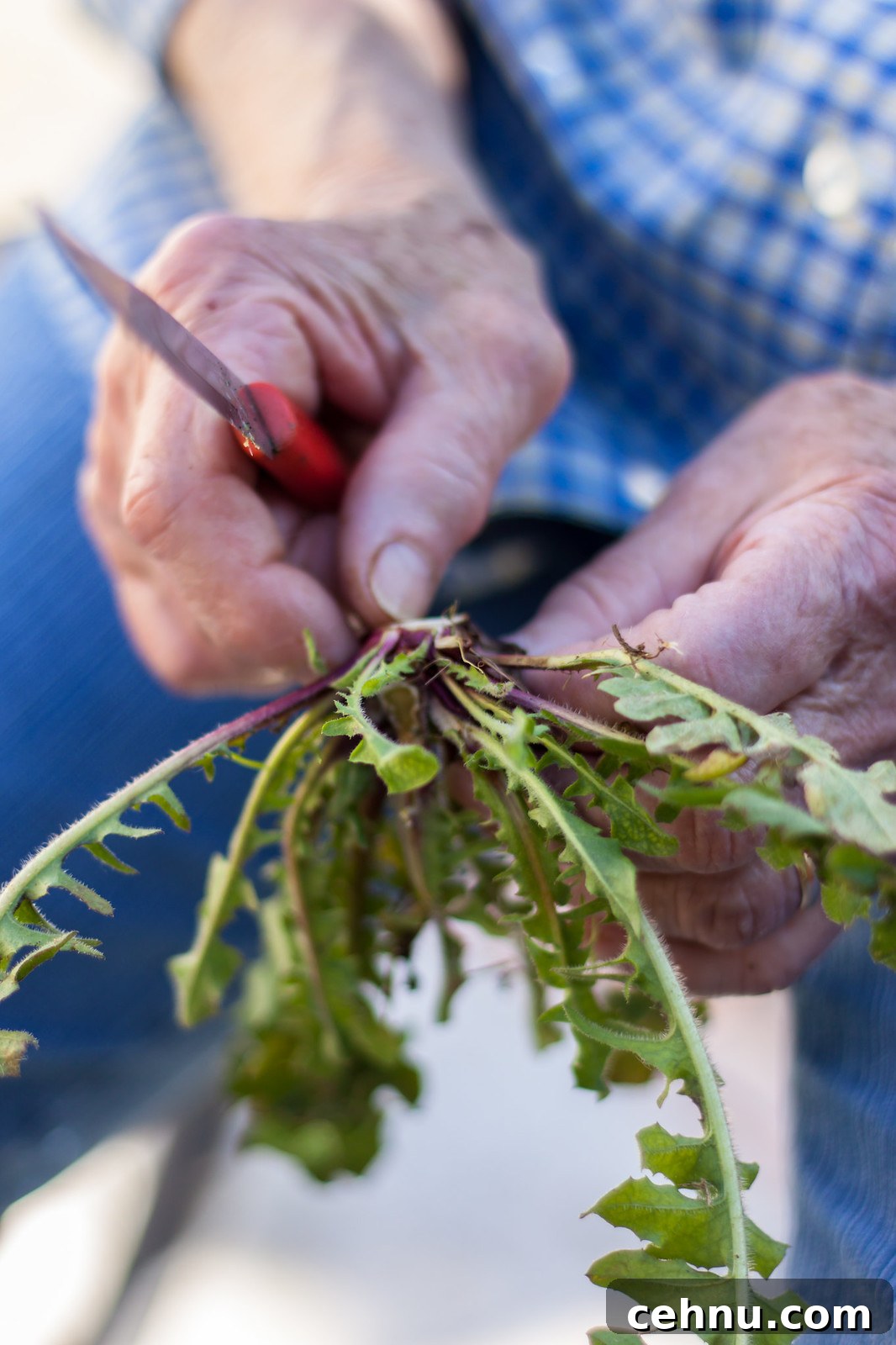
One of my first clear memories of foraging was a morning spent with my grandmother gathering herbs for an omelette. Foraging has since become a recurring theme in my life and writing, where tradition, culture, gastronomy and a touch of superstition meet. When the fields and lanes explode in fresh greens—dandelion, nettle, chicory—we decided to make these humble wild herbs the stars of this month’s Italian Table Talk.
Friends and fellow cooks join the celebration: Jasmine, newly charmed by Sicily and its flavours, uses wild fennel in a traditional pasta con le sarde a mare; Emiko, exploring Tuscany, found calamint on ancient walls and made a spring braised artichoke dish; Valeria foraged nettles in a London park and turned them into a vibrant pesto to toss with scrambled eggs.
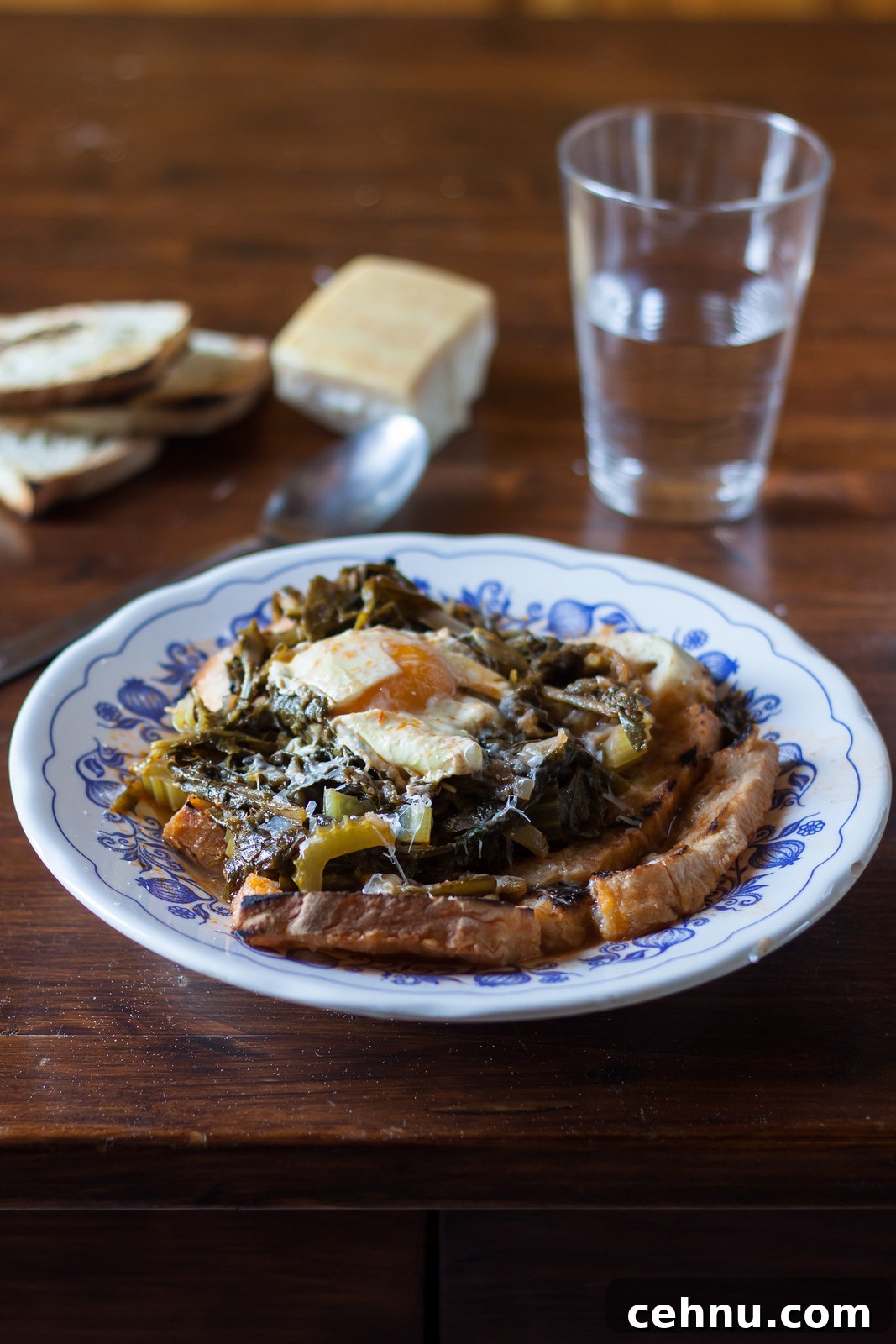
My grandmother returned from the fields with a bag of chicory and dandelion—slightly too firm to eat raw but perfect once cooked. I used some to make malfatti, and the remainder became the base for acquacotta, a rustic Tuscan soup that celebrates simplicity and seasonal greens.
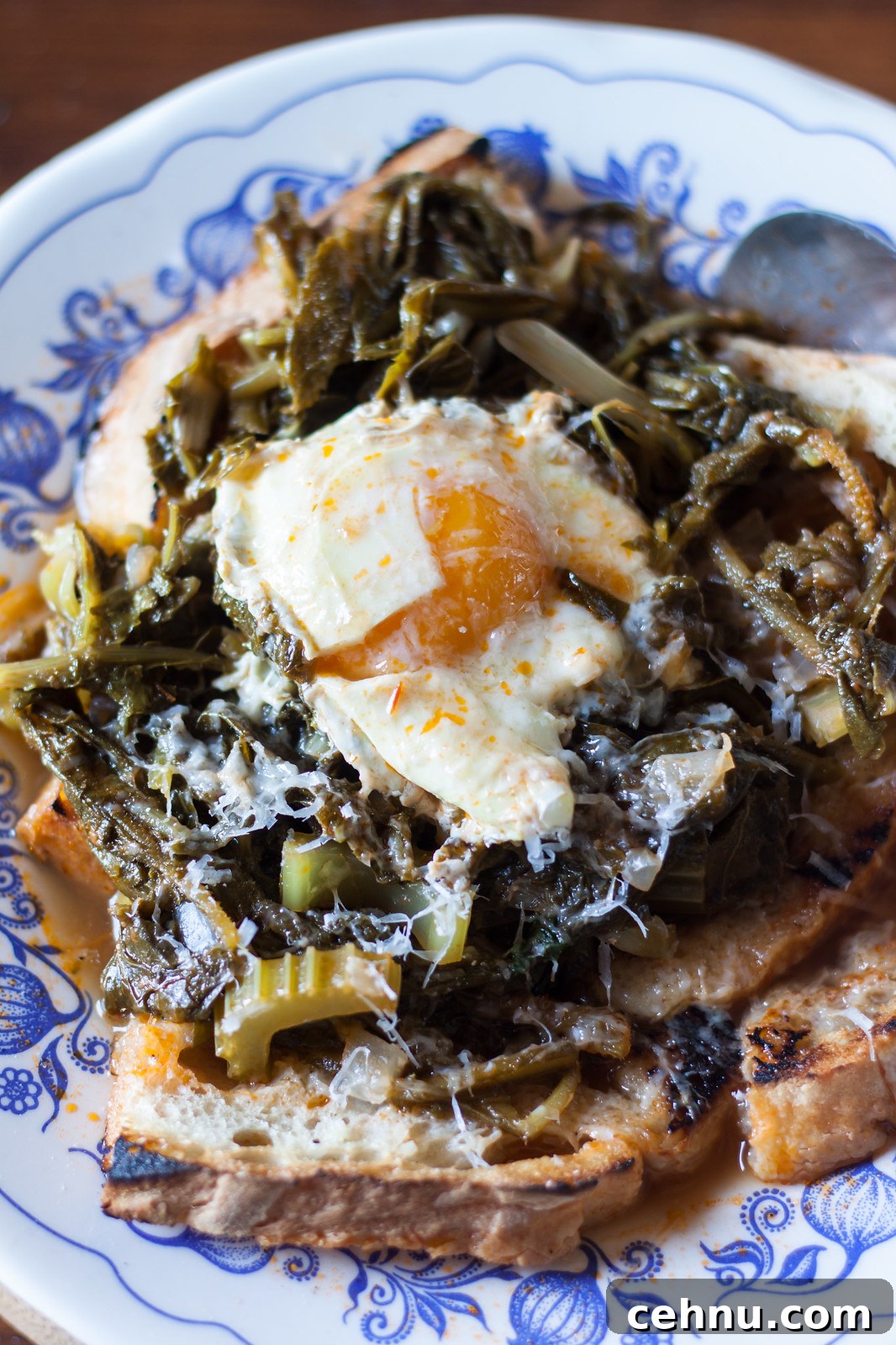
Acquacotta is a traditional soup from southern Tuscany. The first time I tasted it was in late spring at a biodynamic farm in Maremma. The farmer had simmered a pot of foraged herbs for hours, then gently poached eggs on top so the whites were set and the yolks remained thick and slightly runny. Each serving was finished with toasted bread rubbed with garlic and a drizzle of olive oil—an emblem of country cooking where modest ingredients shine.
Foraging for the Italian Table Talk – Acquacotta, Foraged Herb Soup
Author: Giulia
Course: Soup | Cuisine: Tuscan | Serves: 4
Prep time: 10 mins | Cook time: 3 hrs | Total time: 3 hrs 10 mins
Ingredients
- Extra virgin olive oil
- 1 clove garlic, peeled and lightly crushed
- 2 stalks celery, washed and diced
- 2 red onions, peeled and diced
- 4 tablespoons tomato purée
- 300 g mixed field greens (foraged chicory, dandelion and similar young herbs)
- 1 chilli pepper
- Salt, to taste
- 8 slices Tuscan bread, toasted and rubbed with garlic
- 4 eggs
- Aged Parmesan or pecorino, grated, for serving
Instructions
- Peel the onions, wash and dice the celery and onions.
- In a large saucepan or heavy pot, heat a generous splash of extra virgin olive oil. Sauté the garlic clove briefly, then add the diced vegetables, tomato purée, chilli and a pinch of salt. Stir to combine.
- After a few minutes, add about 2 litres of hot water and bring to a gentle simmer.
- After 30 minutes, add the roughly chopped foraged herbs. Cover and leave the pot on the lowest heat for two to three hours so the flavours can develop slowly.
- When the soup is nearly ready, toast the bread slices, rub them with garlic and tear them into pieces. Place the torn bread in the bottom of four bowls.
- Carefully crack the eggs into the simmering soup, poaching them gently so the whites set while the yolks remain soft. Use a slotted spoon to lift the eggs and keep them warm.
- Ladle the soup over the bread in each bowl, place a poached egg in the centre, drizzle with extra virgin olive oil and finish with a generous sprinkle of grated Parmesan or pecorino. Serve hot.
This simple, rustic soup is flexible: use the best young greens you can find, adjust seasoning to taste, and remember that slow, gentle cooking brings out depth in otherwise humble ingredients. Acquacotta is a dish that highlights the instinctive, resourceful spirit of Italian country cooking—turning foraged greens and basic pantry staples into a warm, nourishing meal.
Link love
To stay in touch with the Italian Table Talk contributors, follow their blogs and social accounts. They regularly share seasonal foraging tips, recipes and stories about food and place. Contributors in this series include Emiko, Valeria, Jasmine and Juls—each bringing their own regional perspective and favourite wild herbs to the table.
We invite you to share your experiences foraging in spring: which wild herbs do you harvest near you, and how do you turn them into memorable dishes? The conversation around foraged greens is always evolving, and every region adds its own flavours and traditions.