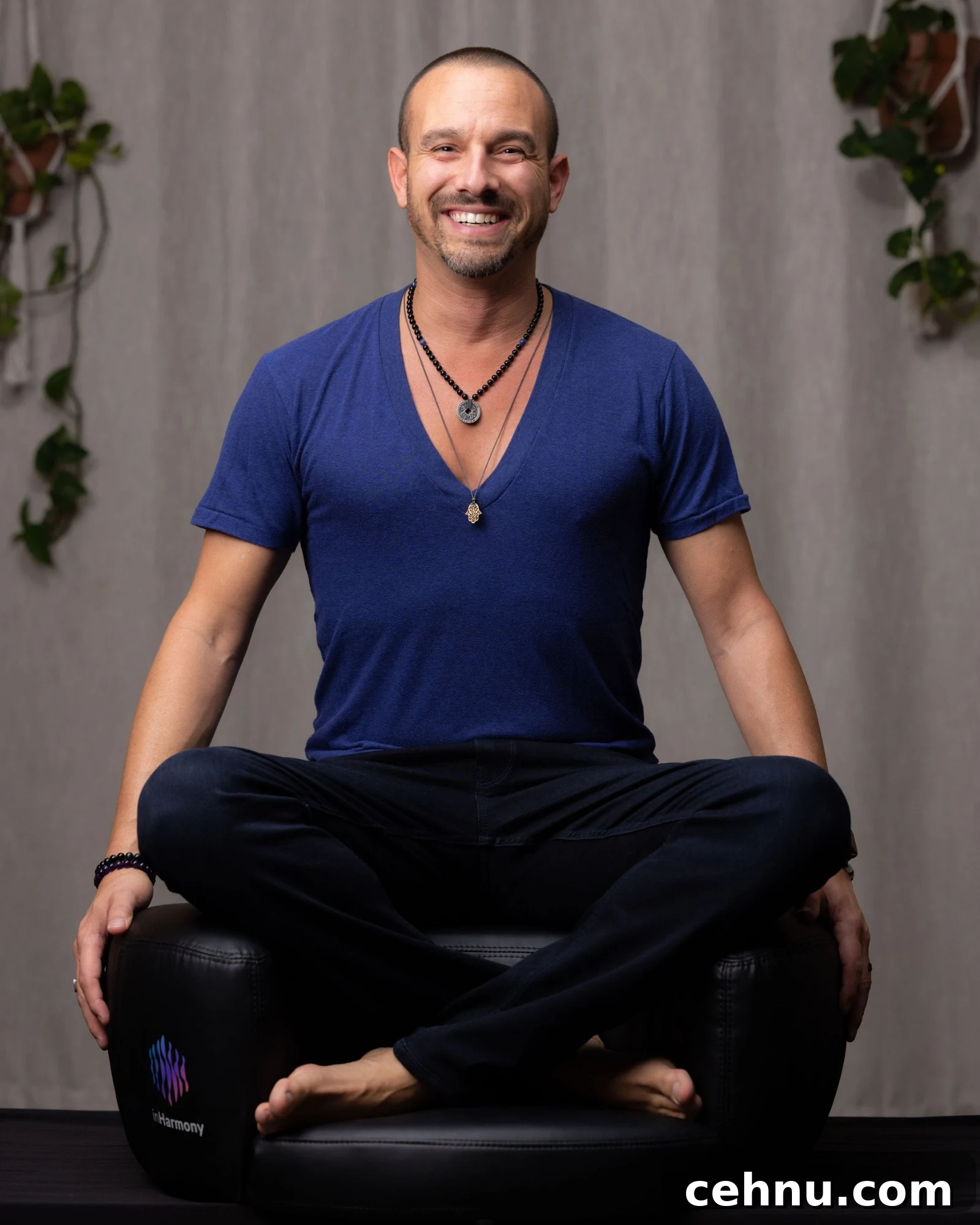
If the idea of sitting still and “clearing your mind” makes you groan, you’re not alone. For many people, meditation feels like an impossible task: thoughts race, bodies fidget, and silence only highlights how distracted we are. Yoga classes can feel intimidating, and traditional guided meditation often seems designed for someone whose brain simply won’t argue back. That’s where a different approach—one that relies on sound and vibration—can make relaxation accessible and real.
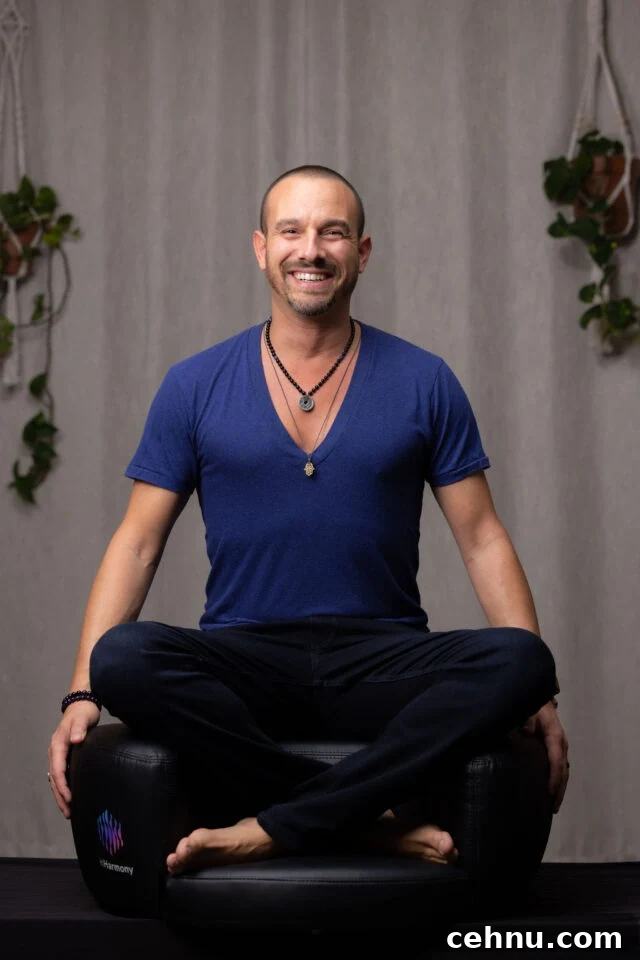
Craig Goldberg, co-owner of inHarmony, knows this frustration firsthand. He and his team have developed what they call “relaxation furniture” that uses sound and vibration to guide the body into a calmer state. Their work centers on vibroacoustic therapy, a practice that combines sound frequencies and physical vibration to influence physiology, neurology, and overall well-being.
Welcome to the World of Vibroacoustic Therapy
Vibroacoustic therapy isn’t a trendy gimmick—it’s the application of controlled sound and vibration to support the body’s natural relaxation response. The scientific exploration of these effects began in the late 1970s and has continued to show how different frequencies can influence heart rate, breathing, brainwave patterns, and overall nervous system tone.
The essential idea is straightforward: combined sound and vibration help the nervous system shift from a sympathetic, stressed state into the parasympathetic mode, where recovery and repair happen. As Craig puts it, when we are calm and relaxed “the body is simply able to maintain itself and operate optimally.” In practice, that means less chronic tension, improved sleep, and a greater capacity to focus and perform.
A New Approach to Wellness
Modern life piles on demands—constant messages, packed schedules, and endless to-do lists. That environment promotes a chronic stress response that most of us weren’t built to sustain. Instead of adding another task to that list (“meditate more”), inHarmony offers a practical reset: sound and vibration that help the nervous system return to balance without requiring advanced meditation skills.
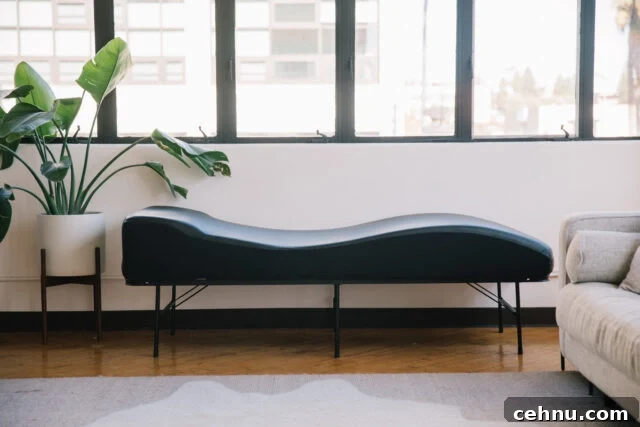
Their devices and sound lounge are designed to be simple and effective. Users recline, experience synchronized audio and tactile frequencies, and are guided toward a state of rest. For people who feel overwhelmed by conventional wellness practices, vibroacoustic therapy can be a straightforward way to reduce anxiety, quiet internal chatter, and recharge.
inHarmony’s technology aims to harmonize brain activity and bodily sensation by synchronizing audible frequencies with felt vibration. Craig describes the result as a kind of non-pharmacological pathway to deep relaxation—an experience that can mirror some of the integrative feeling people report with psychedelic-assisted therapies, but without the substances or legal complications.
A Skeptic’s Journey with inHarmony’s Sound Lounge
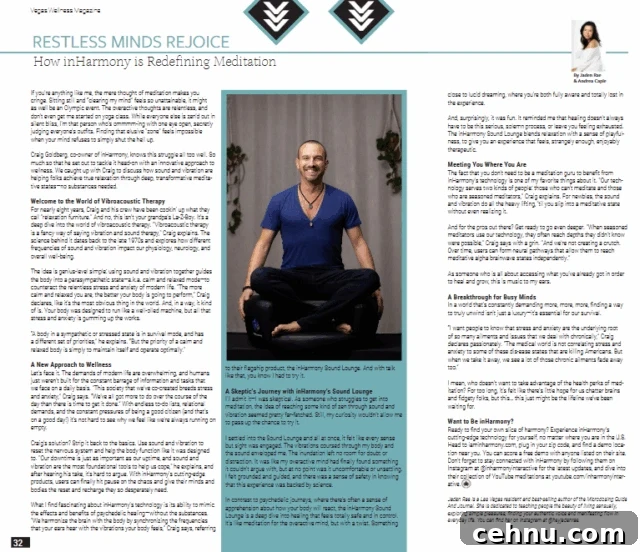
I went in skeptical. Meditation has never come easily, and the promise of instant calm can sound too good to be true. The experience in the inHarmony Sound Lounge surprised me: vibrations traveled through my body while layered sound filled the space, creating an immersive, disarming sensation. My usual internal commentary quickly lost its footing; there was simply nothing left for it to latch onto.
The session felt safe and grounded—different from the unpredictable intensity some people report with psychedelic experiences. Instead of losing control, I felt guided. Awareness remained present, but the steady rhythms and frequencies allowed me to move into a deep, restful state without strain. The session felt restorative and unexpectedly enjoyable, a reminder that healing can be both effective and pleasant.
Meeting You Where You Are
One of the strongest benefits of this approach is accessibility. You don’t have to be a meditation expert to get results. “Our technology serves two kinds of people: those who can’t meditate and those who are seasoned meditators,” Craig says. For newcomers, sound and vibration do the heavy lifting until a meditative state is reached naturally.
For experienced practitioners, the Sound Lounge can deepen practice and reveal states that may be hard to access alone. Regular use may support the formation of neural pathways that help people reach meditative alpha states more easily on their own, so the technology can function as both a catalyst and a training tool rather than a permanent crutch.
A Breakthrough for Busy Minds
In a culture that prizes productivity and constant connectivity, true rest has become an essential health strategy rather than an indulgence. Craig emphasizes that chronic stress underlies many long-term health problems, and reducing that stress can lead to meaningful improvements in overall well-being.
For people whose minds rarely slow down, vibroacoustic therapy offers a practical method to interrupt chronic stress cycles. It provides a reliable, science-informed way to rest, recover, and return to daily life with more focus and resilience.
Want to Be inHarmony?
If you’re curious to try vibroacoustic therapy, inHarmony offers demos at locations across the U.S. through their website and local partners. You can also follow inHarmony on social platforms to learn about new offerings and guided audio experiences. A demo can be a simple first step toward integrating sound-and-vibration relaxation into a busy life.
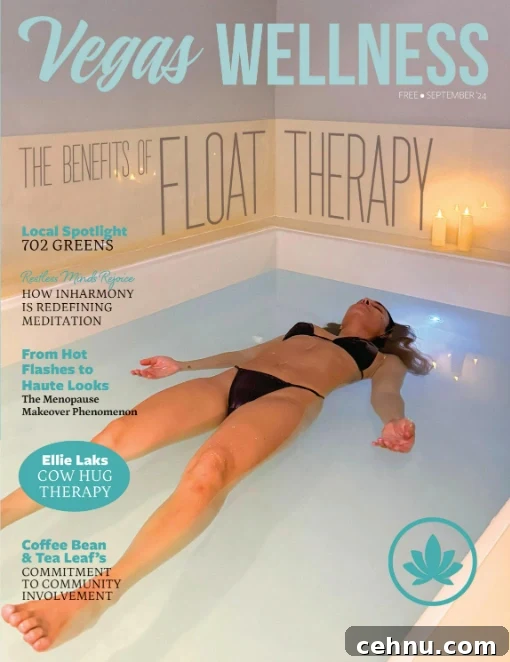
Originally published in the print edition of Vegas Wellness Magazine.