
If you’re the household cook, deciding what to make is often the hardest part of dinner. The good news: you don’t need to reinvent the wheel every week. Build a simple, repeatable weekly plan around store ads, pantry staples, and a short set of systems that work when life gets busy. This guide lays out a clear method: scan weekly ads, pick standout deals, plan dinners around those items, and keep a running spreadsheet grocery list with your always-buys. The result is less stress, less spending, and the ability to make a week’s worth of decisions at once.
For privacy, this guide uses sample ads rather than any single store, but the approach is the same no matter where you shop. If stores are nearby, one or two pickups are easy. If not, one store is usually enough. The aim is simple, smart, and repeatable — and this article breaks it down step by step.
Why Use Weekly Ads for Your Weekly Meal Plan?
Weekly ads are a fast way to spark meal ideas and lock in savings without chasing every deal. Think of them as a combined menu brainstorm and price check. You don’t need to plan your week around every sale; instead, notice obvious wins that make weeknight dinners easier — family packs of chicken thighs, a deal on ground beef, or a sale on shrimp.
Keep it easy with a few habits:
- Focus on one or two nearby stores.
- Ignore stores with steady pricing (like bulk clubs) unless you’re already shopping there.
- Scan the whole ad — value packs and clearance finds can be in unexpected sections.
- Schedule easy nights (frozen pizza, bagged salad with nuggets, or a BOGO pizza) so you don’t burn out.
Step-by-Step: Build a 7-Dinner Plan You Can Repeat
The goal is not to repeat the exact menu every week but to learn a method you can reuse. Below is a sample, reusable week that shows how to pair ad finds with pantry staples, leftovers, and quick sides.
1) Chicken Bacon Ranch Casserole
If chicken thighs and bacon are on sale, a chicken-bacon-ranch casserole is a natural choice. If you’d rather, you can make a chicken bacon ranch flatbread instead. Check for chicken thighs, bacon, potatoes or a flatbread substitute, cheese, and ranch dressing.
- Why it works: Filling, kid-friendly, and built from staples.
- Side: Often a full meal on its own; add a simple salad if you like.
2) Lemon Pepper Chicken Thighs
A slow-cooker lemon pepper chicken is an easy, “set it and forget it” meal. You only need chicken thighs, lemon pepper seasoning, fresh lemon, and oil. Fresh lemon juice brightens the dish and flavors the sides too.
- What to check: chicken thighs, lemon pepper seasoning, fresh lemon, oil.
- Why it works: Hands-off cooking with leftovers for later.
- Side: Rice and broccoli. Replace a tablespoon of rice water with lemon juice and drizzle a little over the broccoli for extra flavor.

3) Lemon Chicken Soup
Transform leftover chicken into soup to reduce waste and stretch protein. Use broth, carrots, and potatoes — or swap in rice or orzo. Better-than-bouillon-style concentrates are handy to have on the shelf.
- Suggested ingredients: carrots, potatoes or pasta/rice, broth concentrate, lemon juice, dill, garlic, salt, pepper (optional onion or other vegetables).
- Why it works: Cozy, low-effort, and uses leftovers.
- Side: Bread or rolls if you want something to dip.
4) Meatloaf
Lean ground beef often goes on sale. Meatloaf is a classic that feeds a crowd and makes excellent leftovers — save some sauce to speed up a later slider night. Before shopping, check for ketchup, brown sugar, and breadcrumbs.
- What to check: ground beef, ketchup, breadcrumbs, brown sugar.
- Why it works: Comfort food that cooks once and serves twice.
- Side: Baked potatoes and canned or frozen corn; bake potatoes while the meatloaf cooks.
5) Meatloaf Sliders (Leftovers Night)
Turn leftover meatloaf into sliders using soft rolls and a few crunchy onions for texture. The sauce typically uses pantry staples, so you likely won’t need extra shopping.
- What to check: slider rolls and any garnish like crispy onions.
- Why it works: Fast, fun, and uses what you already cooked.

6) Shrimp Scampi-ish
A shrimp sale adds variety and feels special. Use cooked, peeled shrimp for speed and toss with a lemon-butter-garlic pasta. Keep lemons, butter, olive oil, garlic, and pasta on your list.
- Why it works: Quick, satisfying, and pantry-friendly.
- Side: One bagged salad kit keeps the meal light and simple.
7) Shrimp Tacos
Use extra shrimp for tacos. Season with your preferred taco blend, top with cabbage or slaw, avocado, sour cream, and a squeeze of lime for a fresh, fast meal.
- What to check: tortillas, slaw or cabbage, avocados, sour cream, limes.
- Why it works: Customizable, quick, and family-friendly.
- Side: Chips and salsa if you want extra snacky sides.
You set the rules: if you don’t cook every night, swap in a freezer pizza or store-made lasagna. If you only need five dinners, plan five. Keep what works and drop the rest.
Creating Your Spreadsheet Grocery List
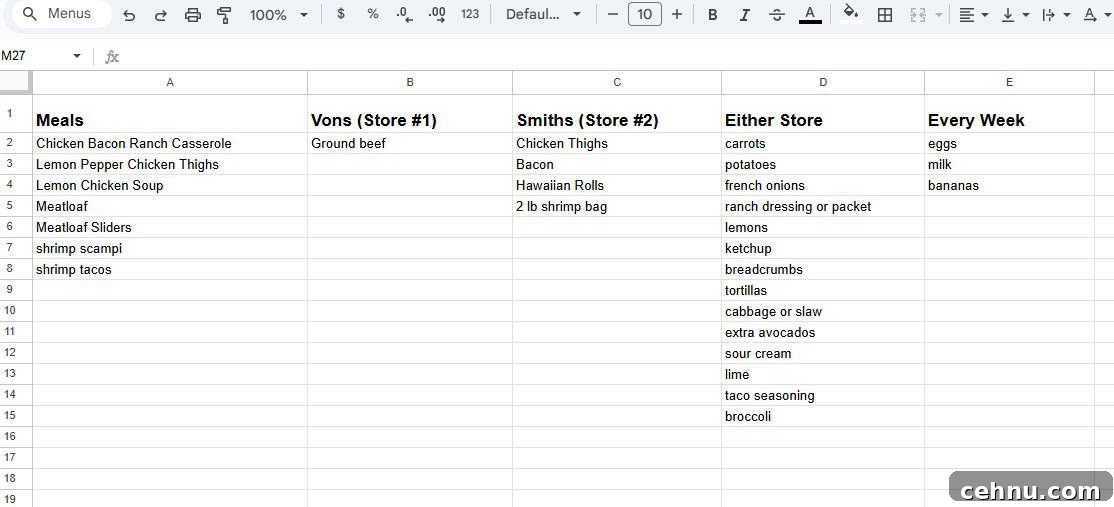
A simple spreadsheet becomes your reusable meal-planning template. It tracks meals, staples, and store choices so you can plan in minutes and avoid decision fatigue.
Setting Up the Sheet
Create a sheet with a tab for each week and label tabs by date or occasion. Duplicate last week’s tab so staples carry forward, and add an “Every Week” column for recurring items.
Common every-week items to include:
- Eggs
- Milk
- Bananas or another favorite fruit
- Bread for sandwiches and toast
Customize your list — mine also includes avocados and bagels.
Adding Meal Items and Pantry Checks
List each meal in the weekly column and the main ingredients needed. Mark pantry items you already have. If a recipe needs two lemons, note “x2.” Confirm pantry staples before checkout to avoid duplicate purchases.
Comparing Prices Across Stores
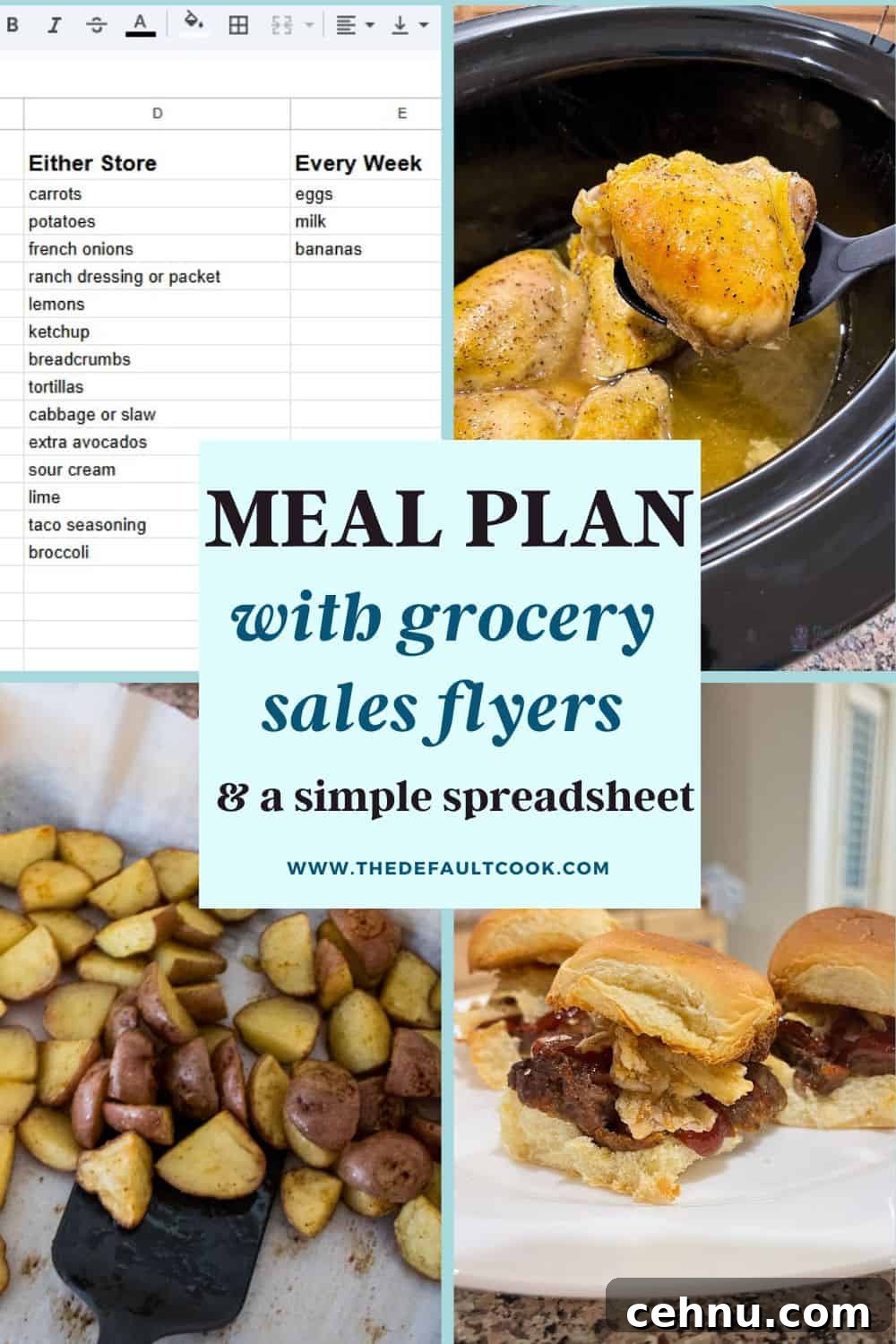
Compare the prices of items you buy often, like potatoes or carrots, and choose one or two stores for pickup based on convenience and overall value. A small price difference isn’t worth a long drive. Keep travel time and effort in mind as part of your cost.
Tip: add one new fruit or vegetable each week for variety — apples are a convenient, versatile choice.
Planning Breakfasts, Lunches, and Leftovers
You don’t need to overplan breakfasts and lunches if your household runs on simple routines. A short, reusable list keeps decisions minimal and saves time.
Simple Breakfast Routines
Bananas turn into quick breads, eggs become French toast, and bagels or English muffins make easy mornings. Keep milk and bread on your weekly list and consider breakfast-for-dinner on busy nights.
Lunch Ideas with Leftovers
Adults can use dinner leftovers; kids often prefer simple options like PB&J. Salad kits fill gaps and pair well with leftover proteins or a few nuggets. Add fruit for balance.
Filling Gaps
If you pack lunches, check snack supplies before shopping. Pick up extras when they’re on sale and keep a small buffer so you don’t run out midweek.
Side Dish Playbook You Can Reuse
Sides complete meals without a lot of extra work. Try these simple, repeatable options:
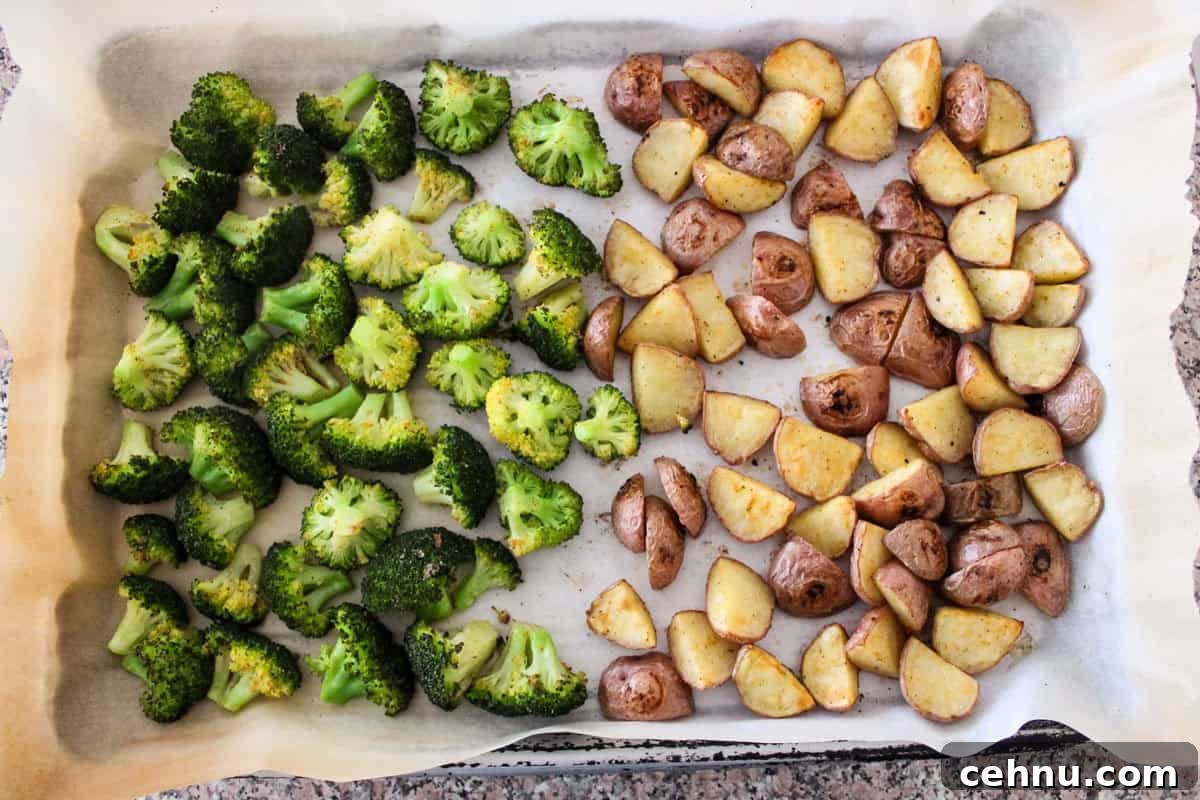
- Meatloaf night: baked potatoes and corn, or roasted potatoes and broccoli.
- Slow-cooker chicken: rice and broccoli, brightened with lemon juice.
- Shrimp scampi: bagged salad kit.
- Casseroles: often complete — add a side salad for greens.
- Soups: serve with bread or rolls if you want something to dip.
- Tacos: serve as-is or add chips and salsa.
Make It A Habit: Swap Sales, Keep the System
The featured items in ads will change, but the planning framework stays the same:
- Pick a protein and build two to three meals around it.
- Add a quick pasta, taco night, or slow-cooker option.
- Plan at least one leftovers night.
- Choose sides that cook alongside the main or need minimal prep.
- Keep an “Every Week” column so staples aren’t forgotten.
This approach cuts food waste and keeps shopping and cooking manageable wherever you live.
Final Tips and Encouragement
With a seven-dinner framework, a reusable spreadsheet, and a short list of simple sides, weekly meal planning becomes fast and practical. Stick to one or two stores, let ads inspire you, plan around your social calendar, and keep room for easy nights.
Quick reminders:
- Limit shopping to one or two stores when possible.
- Mix easy nights and leftovers into your plan.
- Check the pantry before checking out.
- Use a fridge-cleanout night to reduce waste.
Most importantly, remember: you are doing an excellent job. Feeding your household consistently is an achievement — keep the system simple, and it will serve you well week after week.