
All About Emotional Eating
Almost everyone experiences emotional eating at some point. Whether it’s reaching for chocolate after bad news or snacking while unwinding after a long day, using food to manage feelings is common. If you’re trying to manage weight or improve health, frequent emotional eating can interfere with your goals. This article explains how to recognize emotional eating and offers practical strategies to change the pattern.
What Exactly Is Emotional Eating and How Can It Harm You?
Emotional eating means eating for reasons other than physical hunger—to soothe or distract from feelings. We naturally turn to food for pleasure and comfort. That makes it an easy, immediate source of relief when emotions are intense. Emotional eating can involve any food, but people often consume larger portions of comfort foods that are high in sugar, salt, or fat, such as ice cream or chips.

Not all comfort food is bad — choose nourishing versions that still feel satisfying, like a comforting beef stew or vegetable-based dishes that bring warmth and nourishment.
Emotional eating isn’t limited to negative feelings. It can also happen during positive moments—celebrations, happiness, or relaxed social times. The issue arises when food becomes your primary way to feel better, rather than one of several coping options. When that happens, emotional eating can escalate and begin to affect both physical and mental health.
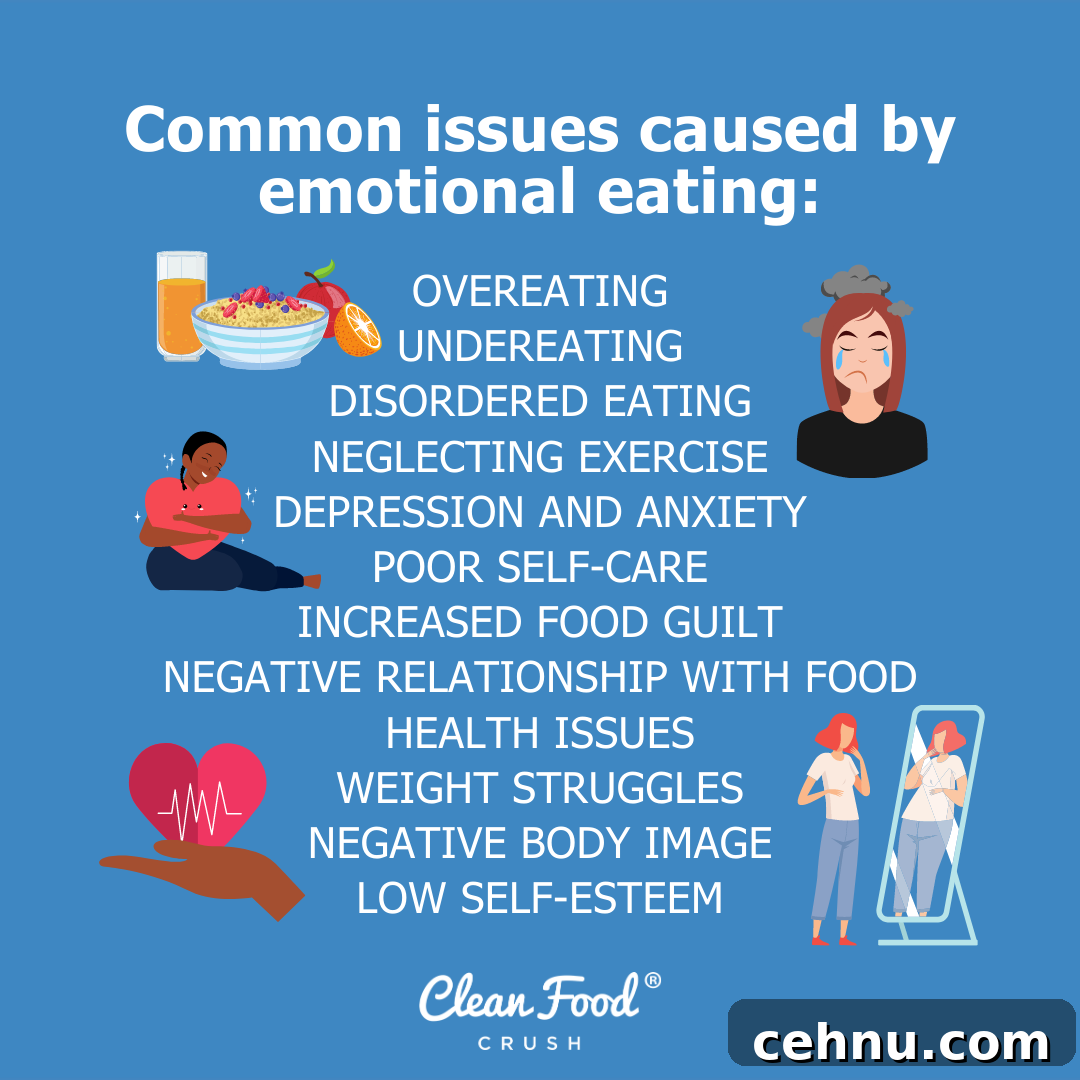
Potential consequences include:
- Losing touch with hunger and fullness signals, which can lead to under- or overeating
- Neglecting healthier coping methods like exercise, social connection, or processing feelings with others
- Feelings of guilt or shame around eating, which can harm your relationship with food
- Weight changes, health problems, and negative body image

Comfort food can be part of a healthy diet when prepared thoughtfully—choose balanced and nourishing recipes that still bring satisfaction.
How to Recognize Emotional Eating
Recognizing emotional eating can be tricky, especially if it has become a habit. A helpful first step is learning to tell the difference between physical and emotional hunger. They can feel similar, but there are clear distinctions.
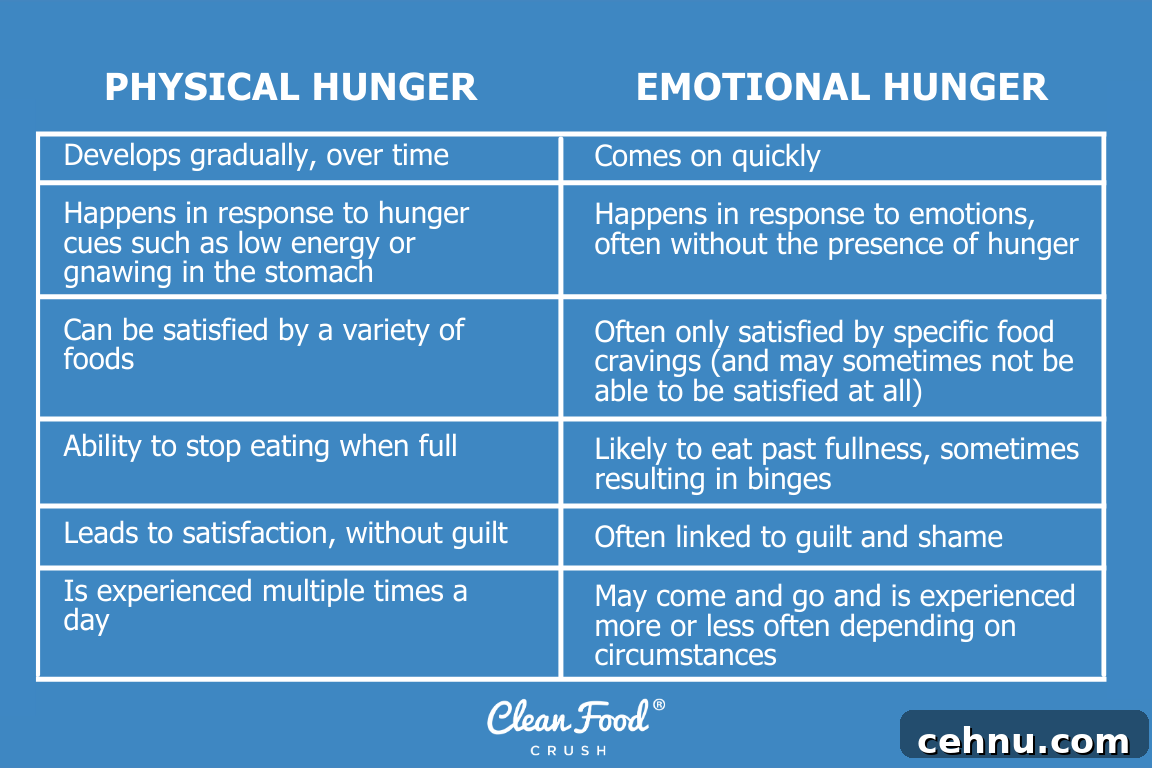
Physical hunger:
- Develops gradually
- Responds to bodily cues like low energy or a rumbling stomach
- Can be satisfied by a variety of foods
- Allows you to stop when you are full
- Leads to satisfaction without guilt
- Happens several times a day with predictable patterns

There are healthier takes on favorite comfort foods—choose versions that satisfy both taste and nutrition.
Emotional hunger:
- Arrives suddenly
- Triggered by emotions rather than physical need
- Often involves cravings for specific foods
- Can lead to eating past fullness or bingeing
- Frequently followed by guilt or shame
- Fluctuates depending on emotional state and circumstances
Tips for Overcoming the Emotional Eating Cycle
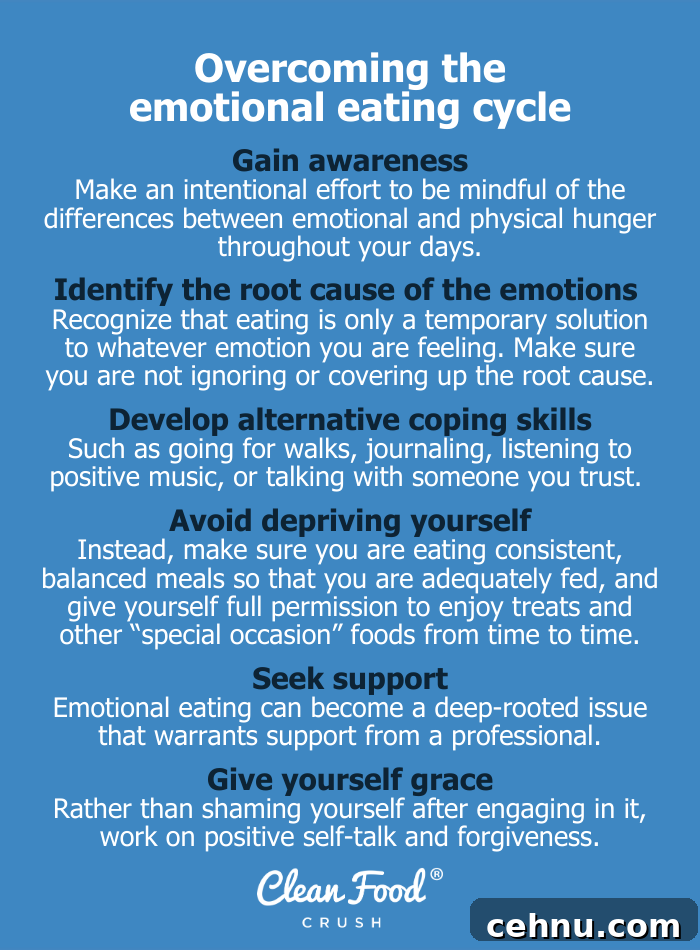
If you rely on food to manage emotions, try these practical strategies to reduce emotional eating and build healthier habits:
- Increase awareness. Pay attention to when you reach for food and ask whether you are physically hungry or reacting to an emotion. Mindfulness helps you choose a response rather than act automatically.
- Address the underlying emotion. Eating provides temporary relief but doesn’t resolve the cause. Pause and reflect on what triggered the feeling. Ask yourself what you need in the long term to process or solve this issue.
- Build alternative coping skills. Replace automatic eating with other soothing activities: go for a walk, journal, call a friend, listen to uplifting music, or practice deep breathing. Repeating alternatives makes them easier to use over time.
- Avoid strict deprivation. Severe restriction often increases cravings and can trigger binge eating. Eat regular, balanced meals and allow yourself occasional treats so you don’t feel deprived.
- Seek support when needed. Emotional eating can be complex. Speaking with a therapist or a registered dietitian experienced in intuitive eating can help you uncover patterns and build a sustainable plan. Professional support is a sign of strength, not weakness.
- Be kind to yourself. Occasional emotional eating is normal. Rather than responding with shame, use each episode as a learning opportunity. Practice forgiveness and plan how to handle similar moments in the future.

Comforting meals can be both nourishing and satisfying—choose recipes that support both your mood and your health.

Many people find that community support and structured programs help them replace emotional eating with healthier patterns. If individual efforts haven’t worked for you, consider joining a supportive group focused on clean eating and balanced habits.

Nourishing, flavorful meals—like roasted vegetables or hearty grain bowls—can lift your mood while fueling your body.
In Summary
Emotional eating is a common human response and not inherently wrong. It becomes problematic when it consistently replaces healthier ways of coping and begins to affect your physical or emotional well-being. By learning to recognize emotional hunger, developing alternative coping strategies, eating regularly, and seeking support when needed, you can regain control and build a balanced relationship with food.
Be patient and compassionate with yourself. Change takes time, and each step toward awareness and healthier coping is progress. If you need guidance, consider talking with a trusted professional or a supportive community to help you stay accountable and supported.