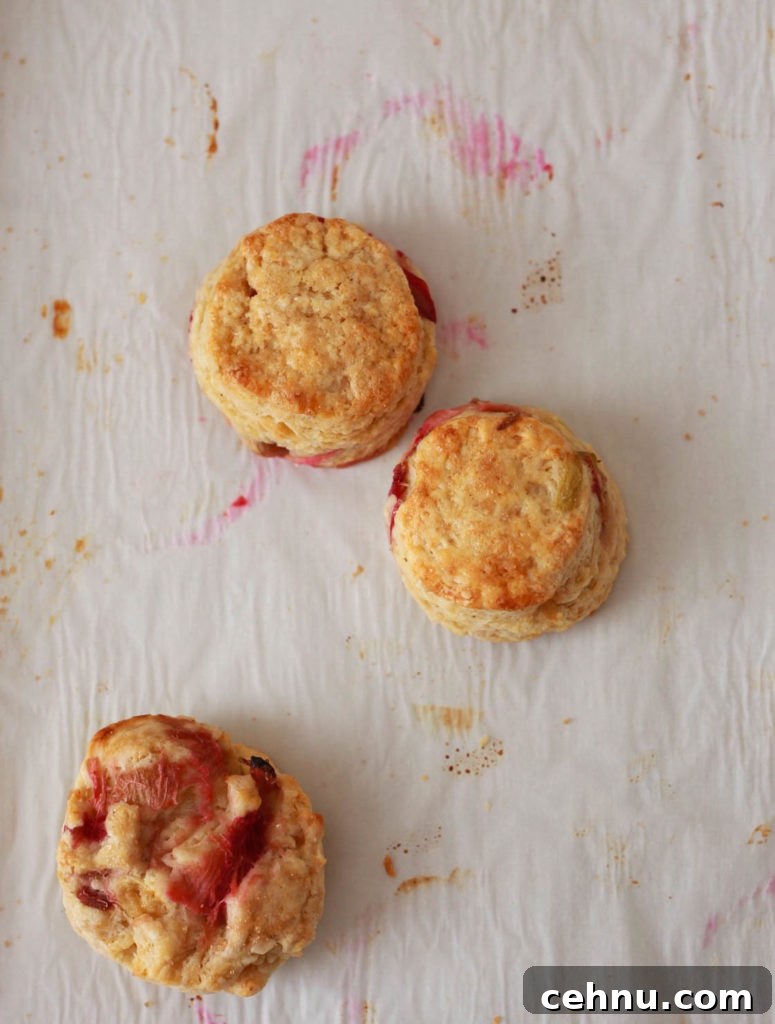
When I decided to make rhubarb-buttermilk-brown sugar scones, I went straight to my usual habit: searching for a reliable buttermilk scone recipe to adapt. One popular online recipe I tried produced a dough so wet and sticky it behaved more like drop-biscuit batter. The scones, once baked, lacked flakiness and felt closer to muffins than what I wanted. Disappointed, I turned to the cookbooks on my shelf.
I found what I needed in Beth Hensberger’s The Best Quick Breads, a modest but dependable cookbook I’ve used for years. Hensberger offers two buttermilk scone recipes — one richer and one leaner — and I chose the richer version as my starting point. I made a few intentional changes: swapping some granulated sugar for brown sugar, replacing the original dried fruit and nuts with roasted rhubarb, and using a different method to incorporate the butter. The dough’s base proportions remain Hensberger’s.
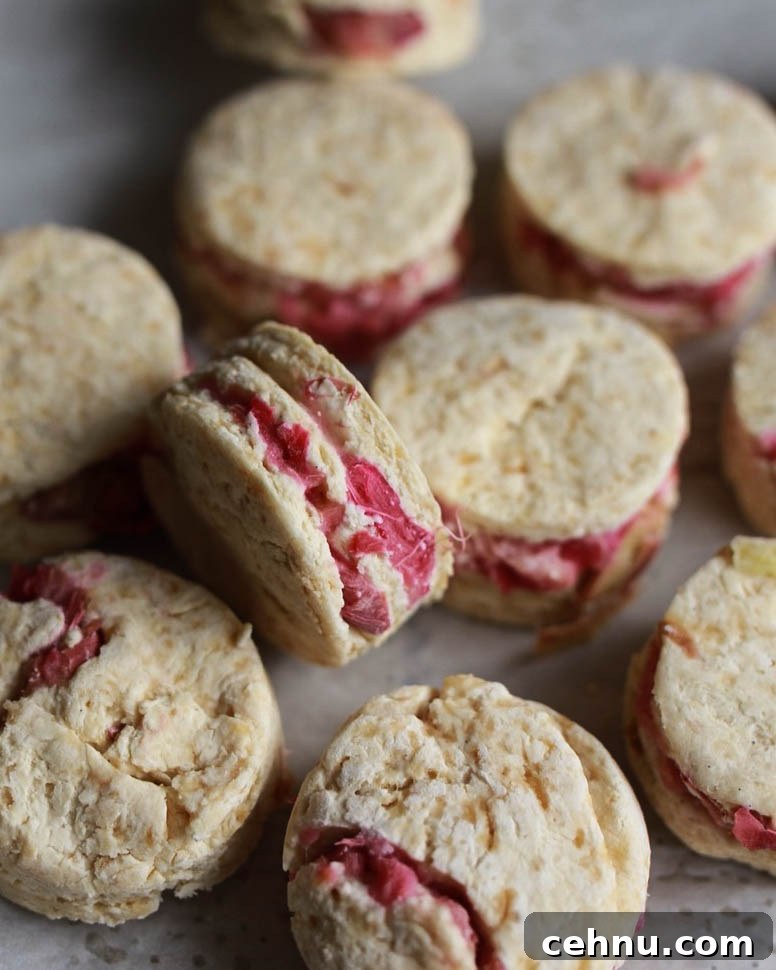
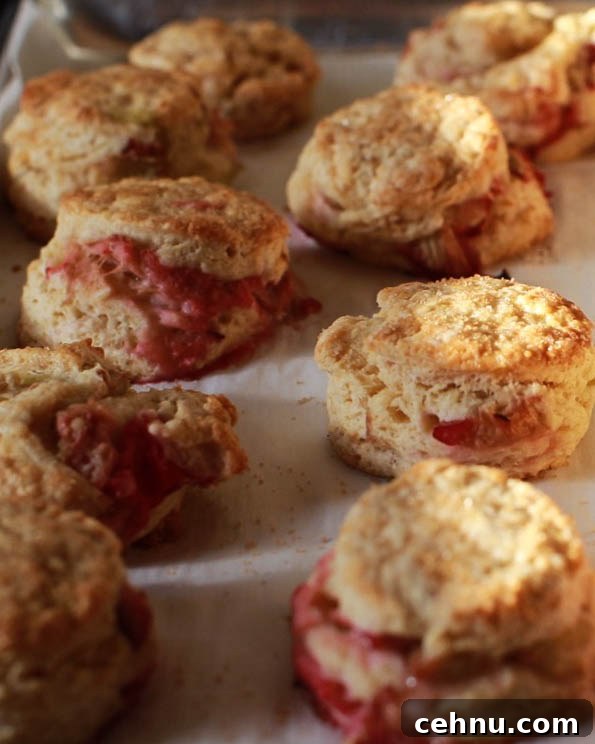
As a hobby baker with little formal training, I often rely on established recipes for proportion and technique. My main adjustments here are twofold: I grate frozen butter into the dry ingredients rather than cutting or rubbing in cold butter, and I spread roasted rhubarb over the rolled dough and fold it in thirds, like a business letter, to create a gentle laminated effect. I first learned the folding technique from a baking blog; it helps distribute fruit and encourages layers without overworking the dough.
Technique note:
A key practical change I use when making scones is to freeze the rolled dough before cutting the rounds. Typical advice tells you to press a cutter straight down without twisting to preserve layers. But scone dough is soft and sticky, and pressing and pulling can compress the dough or nudge butter into the flour. Freezing the dough first lets you cut clean rounds without compressing the layers, and keeps the butter solid so it won’t smear into the flour. You can also return cut scones to the freezer before baking for even better lift and flakiness.

For scone and pie dough alike, the guiding rule is: keep everything cold. It may feel tedious to keep chilling the dough and ingredients through the process, but patience yields flakier, lighter scones. The rest of this piece walks through the recipe and offers practical tips for success.
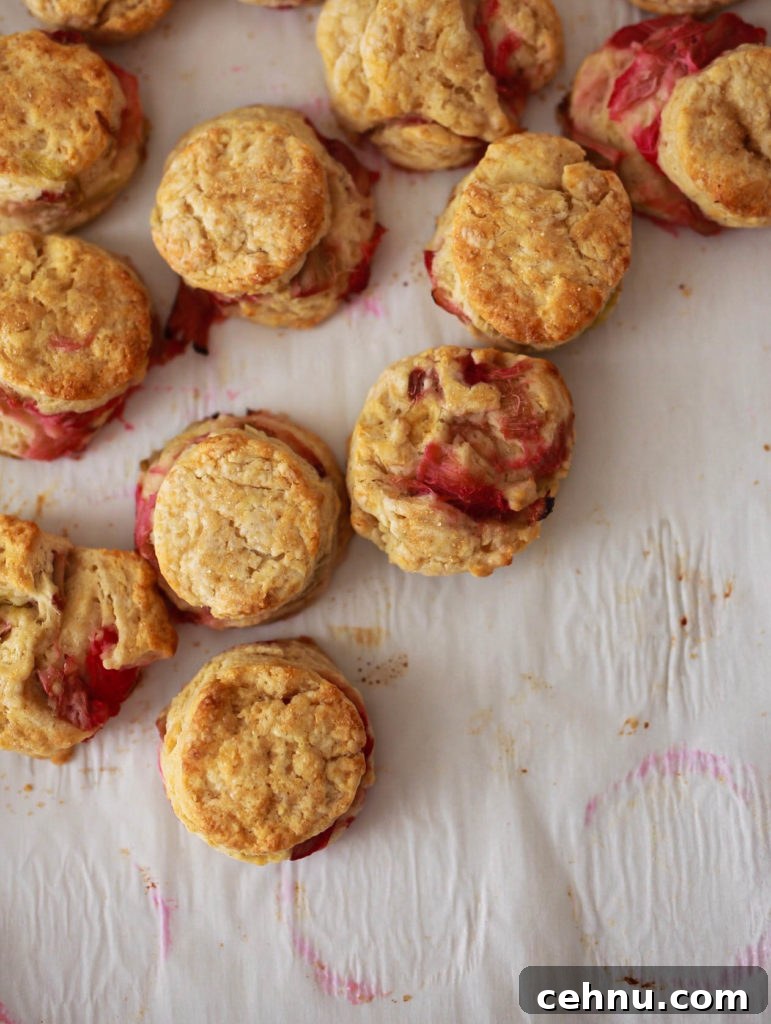
Roasted Rhubarb, Buttermilk, and Brown Sugar Scones
A rich, flaky scone full of roasted rhubarb flavor. Loosely adapted from The Best Quick Breads, by Beth Hensberger.
Ingredients
- 4 tbsp granulated sugar, divided
- 1/2 lb. (224 g) rhubarb, chopped into ~1-inch pieces
- 3 c. (387 g) all-purpose flour
- 3 tbsp firmly packed brown sugar
- 1 tbsp baking powder
- 1/2 tsp baking soda
- 1/2 tsp salt
- 3/4 c. (168 g) unsalted butter, frozen
- 1/2 tsp vanilla bean paste or extract
- 1 c. cold buttermilk
- 2 tbsp heavy cream (optional)
- 2 tbsp turbinado sugar
Instructions
- Preheat the oven to 425°F (220°C). Line a large baking sheet with parchment paper.
- Toss the chopped rhubarb with 2 tablespoons of granulated sugar and spread in a single layer on the prepared sheet. Roast 15–20 minutes, until the juices are bubbling and beginning to caramelize. Transfer rhubarb to a plate to cool, leaving the sticky juices on the pan (discard or reserve the syrup).
- When the rhubarb is cool, whisk together the flour, baking powder, baking soda, and salt in a large bowl. Add the remaining 2 tablespoons granulated sugar and the brown sugar, then chill the bowl in the freezer for five minutes.
- Using the large holes on a box grater, grate the frozen butter into the chilled flour mixture, tossing occasionally to distribute. If the mixture warms, return it to the freezer briefly. Once the butter is distributed, chill the bowl again.
- Whisk the cold buttermilk with the vanilla in a small measuring cup. Remove the flour-butter bowl from the freezer, make a shallow well, and pour in the buttermilk. Toss and fold with a rubber spatula to incorporate most of the liquid, then use your hands to bring it into a rough mass. Turn the dough onto lightly floured parchment and knead a few times until evenly moistened. Pat or roll into a rectangle about 9 × 12 inches.
- Spread the roasted rhubarb evenly over the dough rectangle. Fold the rectangle into thirds like a business letter to encase the rhubarb, then gently press or roll the folded dough back into a rectangle about 1¼ inch thick. Transfer the dough on the parchment to a baking sheet and freeze 30–45 minutes.
- Remove the semi-frozen dough from the freezer and place it on the counter. Prepare a fresh parchment-lined baking sheet. Use a lightly floured 2–2½ inch cutter to press straight down and cut 10–12 scones. Space them an inch or two apart. Gather scraps, press together or re-roll briefly, and chill again if they have warmed before cutting the remaining scones.
- At this point you can freeze the cut scones for later (freeze solid, then store in a freezer bag) or bake them now. If baking later, freeze for at least two hours and bake from frozen at 425°F, reducing immediately to 400°F and baking until risen and light golden, about 23–25 minutes for frozen scones.
- Before baking, optionally brush tops with heavy cream and sprinkle with turbinado sugar for sparkle and crunch. Bake until golden. Let cool a couple minutes on the pan, then enjoy warm.
Recipe Notes
- This recipe uses a grating method to incorporate frozen butter into the flour. Grating works well, but keep the butter cold. Grating 3/4 of each stick and leaving a small handle makes the process easier.
- Cold ingredients and intermittent freezing are the keys to flakiness. Skipping these steps will speed the process but may reduce lift and layers.
- If the dough sticks while folding, use a bench scraper to help separate it from the parchment and complete the fold.
- Brushing with cream is optional; it promotes browning and shine. Don’t skip the turbinado sugar — it adds a pleasant crunch and balances rhubarb’s tartness.