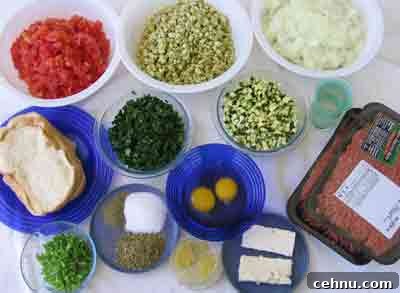
 These are Greek summer meatballs—keftedes kalokairinoi—though you might call them vegetable fritters with meat. Packed with eggplant, peppers, tomatoes and herbs, they sneak a lot of garden vegetables into a dish even carnivores will love. I lost my mother’s version of this recipe years ago, and when the eggplants and peppers were ready to harvest I called her. She guided me through it in her usual succinct way.
“How much parsley, Mama?”
“Eh, you know, enough!”
Her confidence in my judgment is comforting. When I mentioned working with one kilo of meat she teased, “You mean you have two pounds?” The recipe below is easy to halve if you want a smaller batch.
Ingredients
2 pounds lean ground beef
6 slices of bread, soaked in milk and squeezed dry
2 thick slices of feta cheese, crumbled
6 tomatoes, chopped
1 round eggplant or 4 Japanese eggplants, peeled and finely chopped
2 banana or Anaheim peppers, finely chopped
2 small zucchini, finely chopped (optional)
6 onions, finely chopped
6 cloves of garlic, minced or pressed
2 bunches of parsley, minced
40 fresh oregano leaves, minced or 1 tbsp crumbled dried oregano (not powdered)
2 eggs
1/2 cup ouzo (or substitute red wine or beer)
4 tsp salt
1 tsp black pepper
a few cups of flour for coating the meatballs
several cups of oil for frying
Cook It!
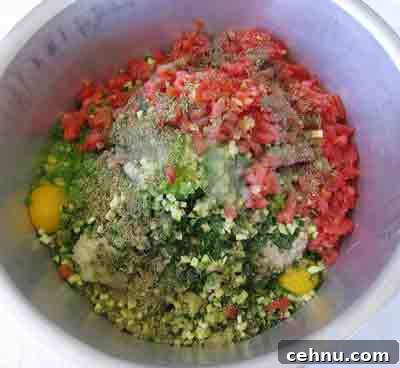
Start by placing the ground beef in a large bowl. Tear the soaked, well-squeezed bread into pieces and add it to the meat, then crumble the feta on top. Layer in the chopped tomatoes, eggplant, peppers, zucchini if using, onions, garlic, parsley and oregano. Add the eggs, ouzo (or chosen substitute), salt and pepper.
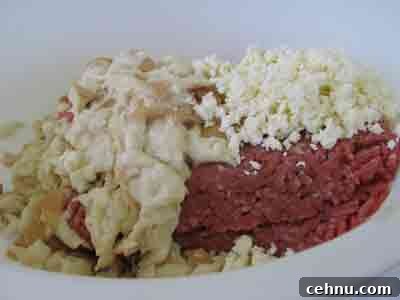
As you combine everything you’ll likely realize the bowl is too small—switch to a bigger vessel so you can mix comfortably.
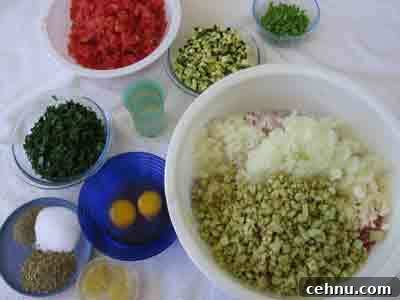
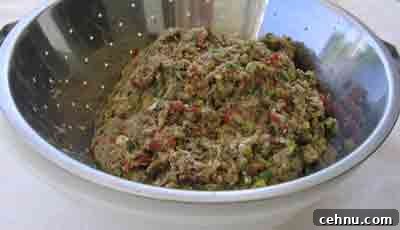
Use your hands to mix thoroughly until the ingredients are evenly distributed and the mixture holds together. My mother always insisted on very thorough mixing so the flavors and textures meld—take the extra time to do this properly. After mixing well, transfer the meat mixture to a colander set over a bowl and refrigerate for at least one hour, or ideally overnight. This lets excess liquid drain away and firms the mixture for shaping. (If you save the drained liquid, there are tasty ways to use it later.)
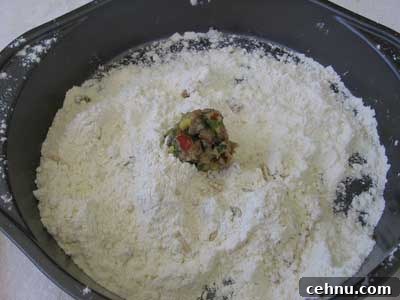
When you’re ready to fry, place a small spoonful—about a tablespoon—of the chilled mixture into a shallow dish of flour. Sprinkle a little extra flour over it, gather the meat with some flour in your hand, and roll it into a ball. The mixture is moist, so press it gently to form a cohesive shape.
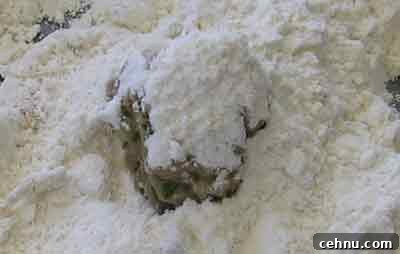
Gently flatten each ball into a thick disk and set them aside on a plate while you heat the oil.
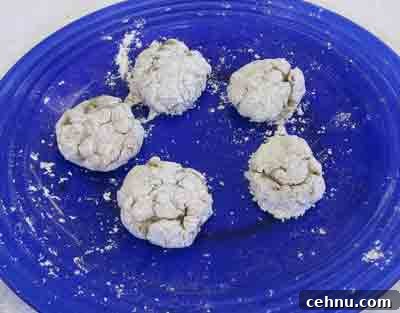
Heat a couple of inches of oil in a heavy skillet until hot but not smoking. Fry the meatballs in batches, giving them room to “swim” so they brown evenly. If the oil is hot enough, they will sizzle immediately. Remove each batch when the outside is nicely browned and transfer to paper towels to drain.
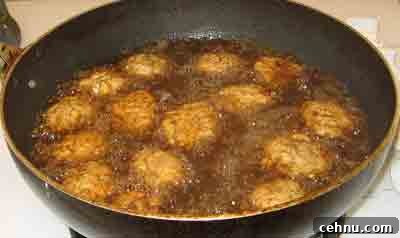
Note: as you fry multiple batches the oil will darken from the flour coating. For a half-recipe this happens toward the end; with a full recipe it can occur halfway through. When the oil becomes very brown, discard it, wipe the pan clean, and replenish with fresh oil. Darkened oil will make the meatballs look done before they are and can impart a bitter taste if kept too long.
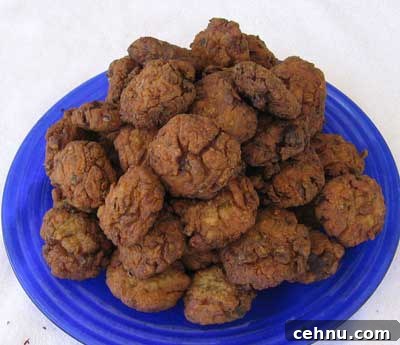
These keftedes are best fresh and hot from the pan, but they reheat well and freeze excellently, so I always make a large batch to enjoy over several meals. Serve them with a simple salad, yogurt, crusty bread or a squeeze of lemon to highlight the herbs and summer vegetables.