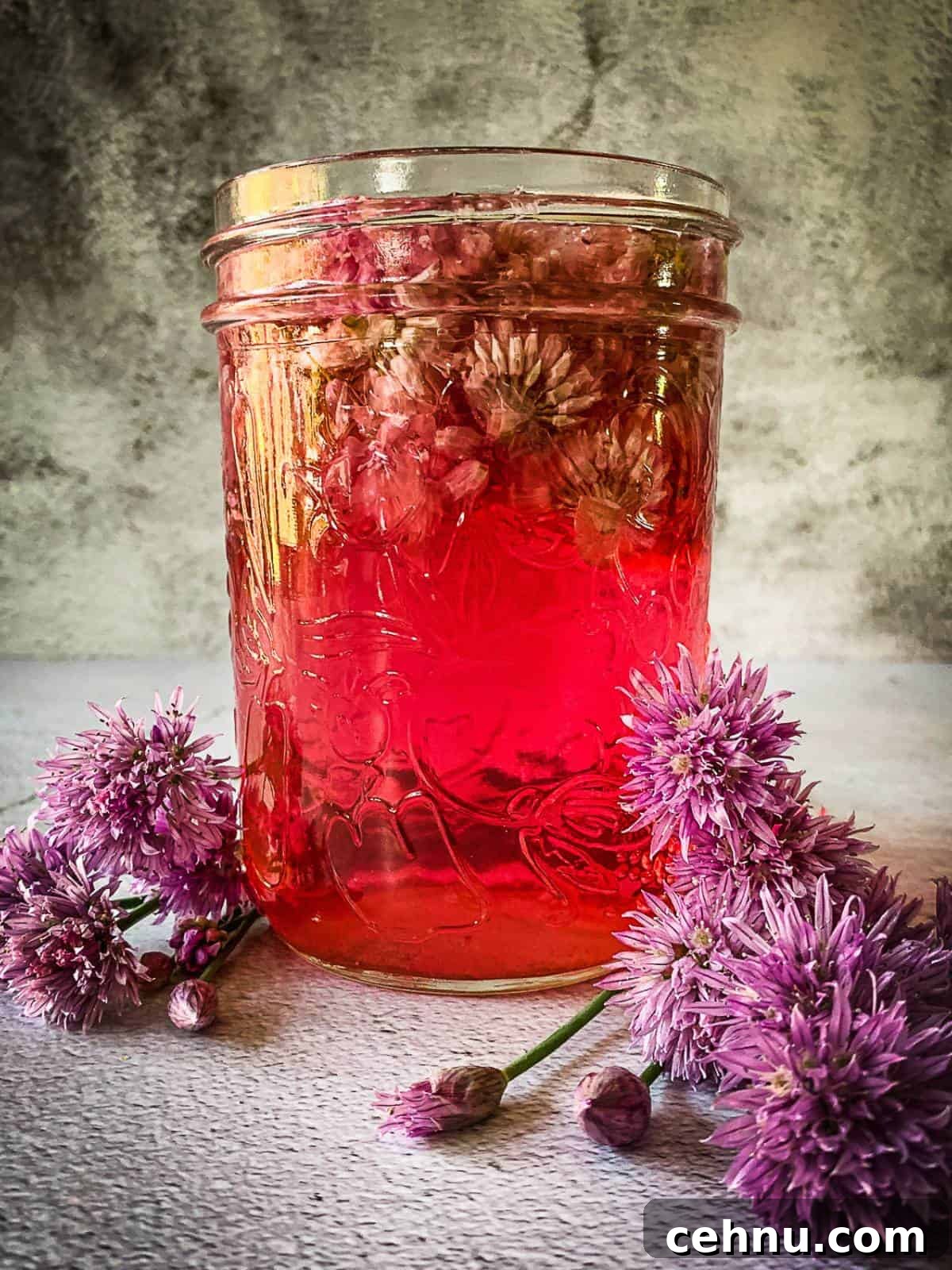
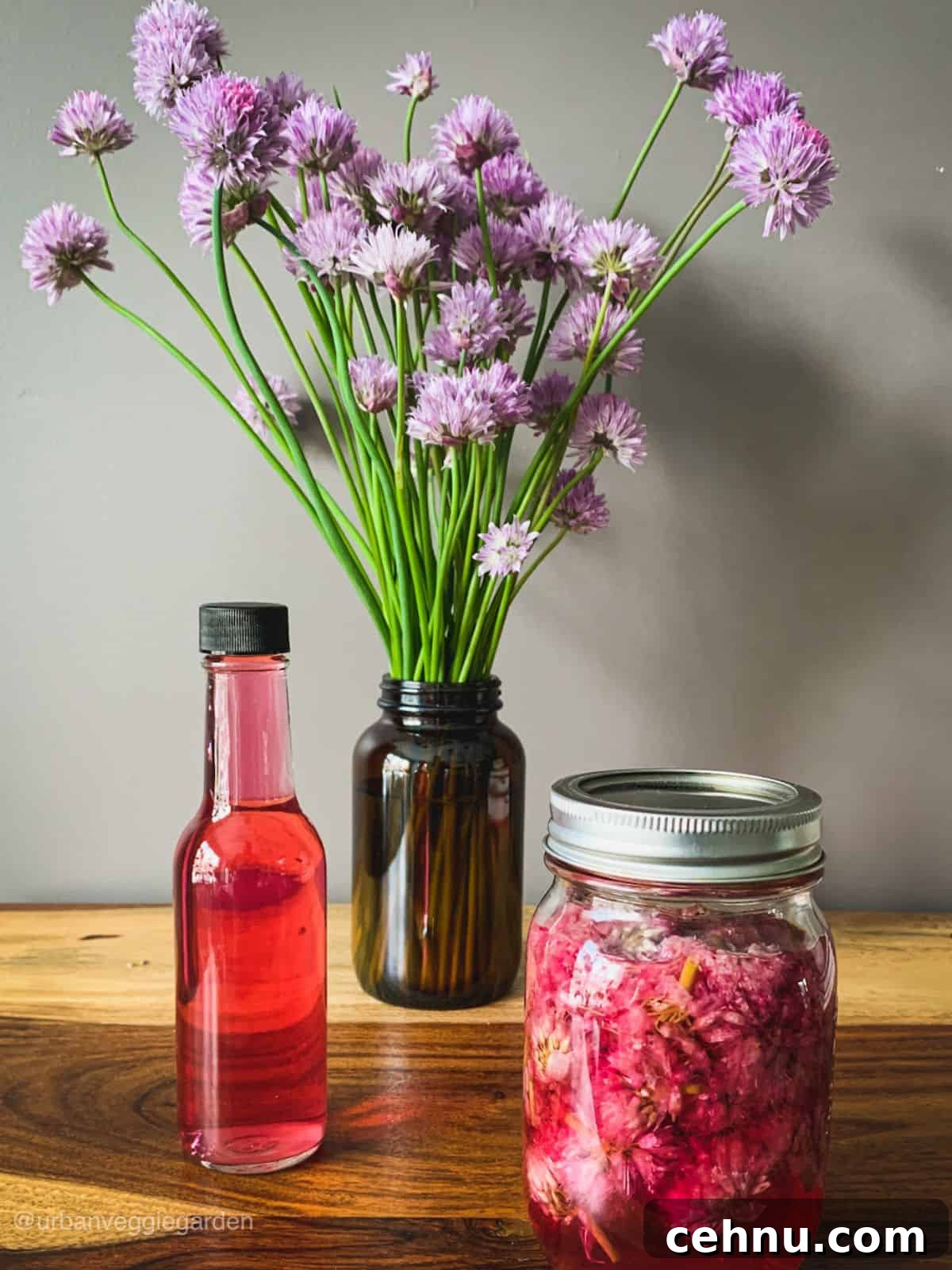
This chive blossom vinegar is a seasonal favorite that highlights the pretty purple flowers of chive plants. The infusion produces a delicate, slightly onion‑scented vinegar with a lovely pink tone that brightens dressings, marinades and sauces. It’s easy to make, requires only a few ingredients, and stores well for several weeks — perfect for using the first flush of chive blooms each spring.
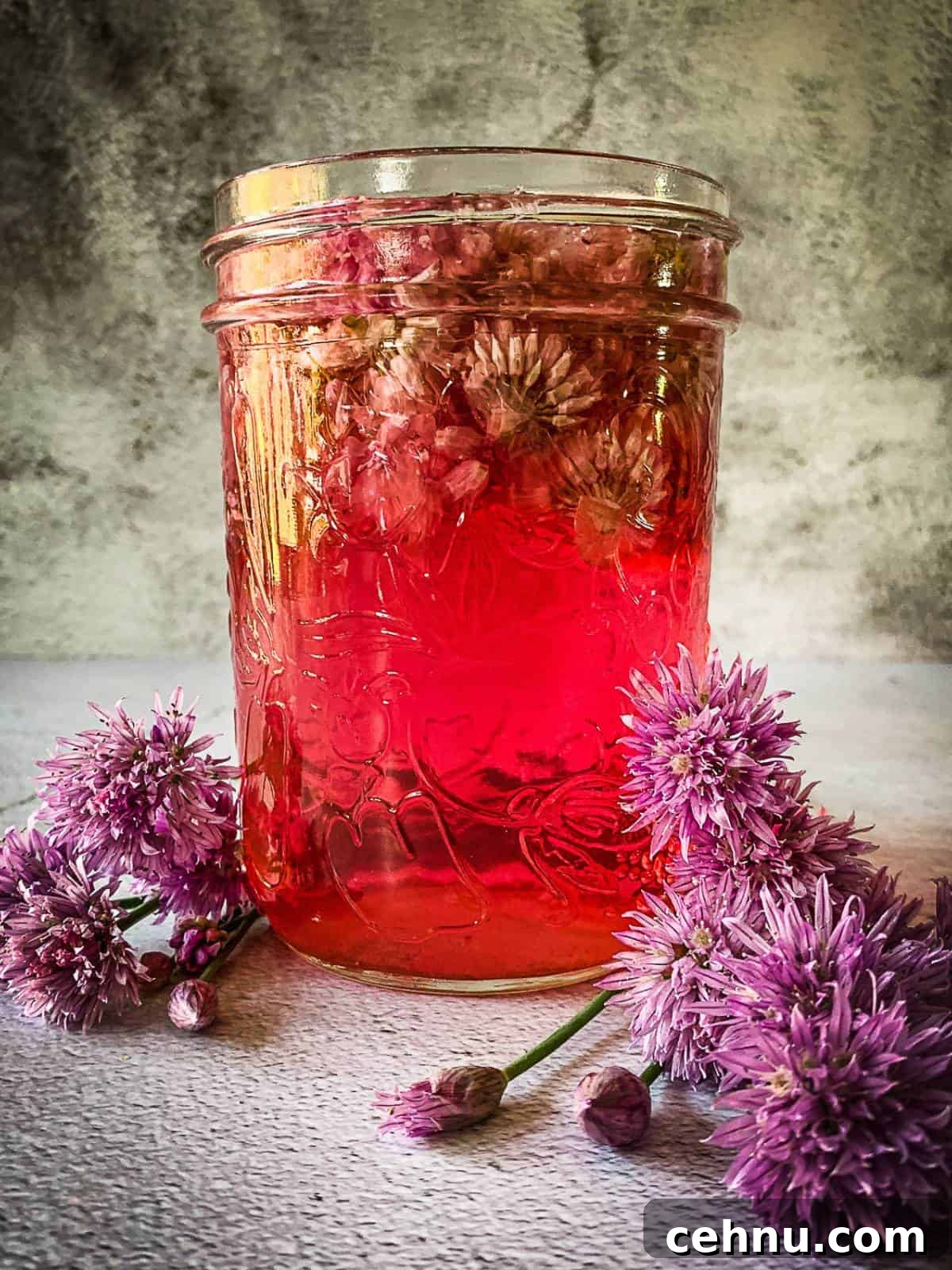
Table of Contents
- What are Chive Blossoms?
- Ingredients, Notes and Substitutions
- How to Make Chive Blossom Infused Vinegar
- Serving Suggestions
- Long Term Storage
- Expert Tips
- FAQ
- Chive Blossom Vinegar Recipe
What are Chive Blossoms?
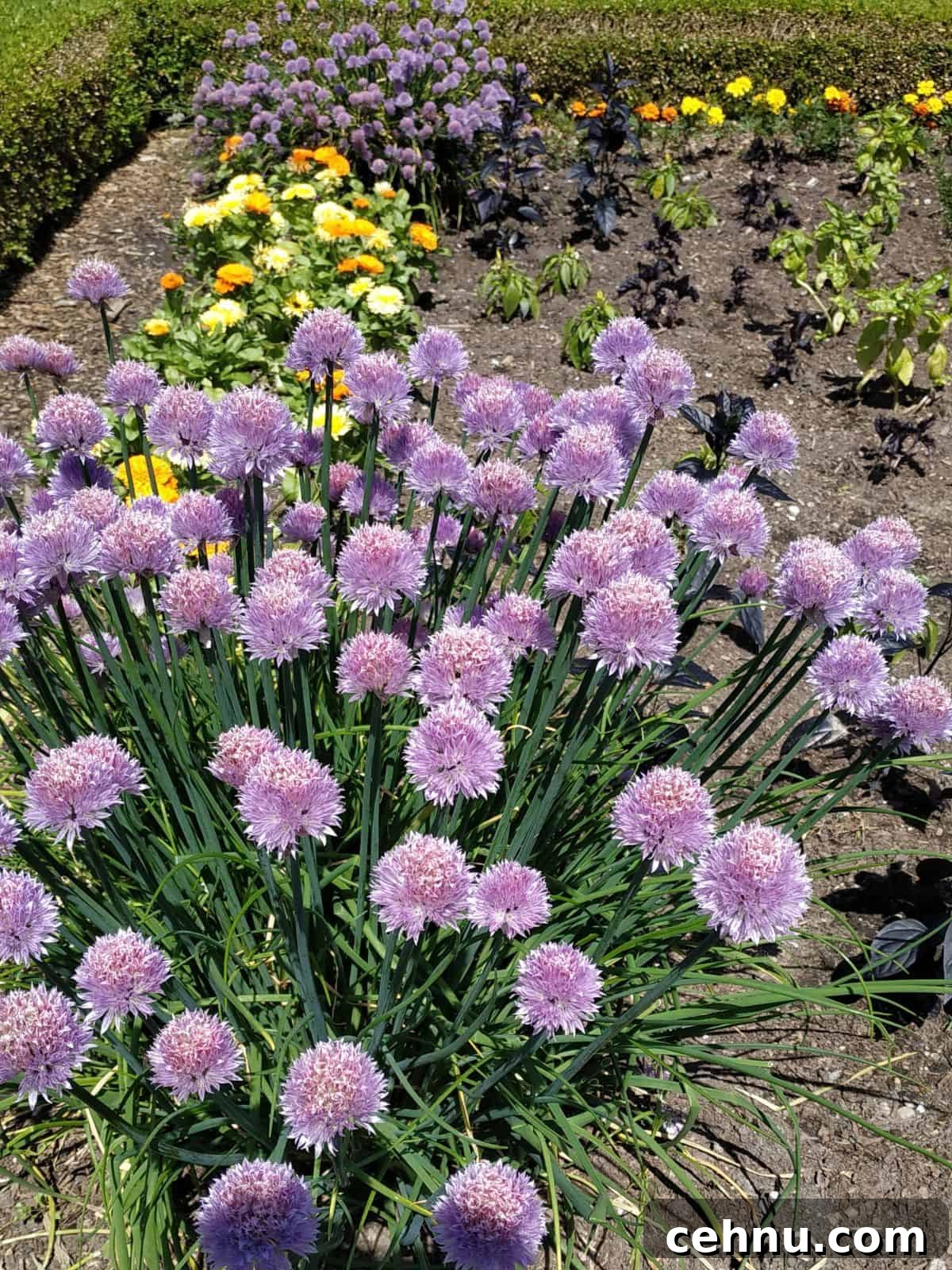
Chive blossoms are the round, ball‑like flower clusters produced by chive plants (Allium schoenoprasum). The florets are typically pink to purple and appear in late spring to early summer. They are entirely edible and carry a gentle onion flavor that is milder than the green chive stalks. Because they are attractive and flavorful, chive blossoms are used fresh as a garnish and to infuse oils, vinegars and butters.
Chives are perennial in many climates, so once established they return each year and can provide flowers for infusions season after season. If you don’t grow chives yourself, fresh blossoms can sometimes be found at farmer’s markets when they’re in bloom.
Ingredients, Notes and Substitutions
This infusion requires just two ingredients:
- Chive blossoms (washed and dried)
- Vinegar of your choice
For the clearest pink color and the most delicate taste, choose a mild, clear vinegar such as champagne vinegar or white wine vinegar. Distilled white vinegar will work but can be sharper and may reduce the delicacy of the finished product. Avoid dark vinegars (balsamic, red wine, dark apple cider) if you want to preserve the pale pink hue the blossoms impart.
If you prefer a stronger garlic note, you can substitute garlic chive blossoms (Allium tuberosum). These bloom slightly later and have white flowers with a more pronounced garlic flavor; the color and aroma will be different but still delicious.
How to Make Chive Blossom Infused Vinegar
This infusion is quick and forgiving. Follow these simple steps:
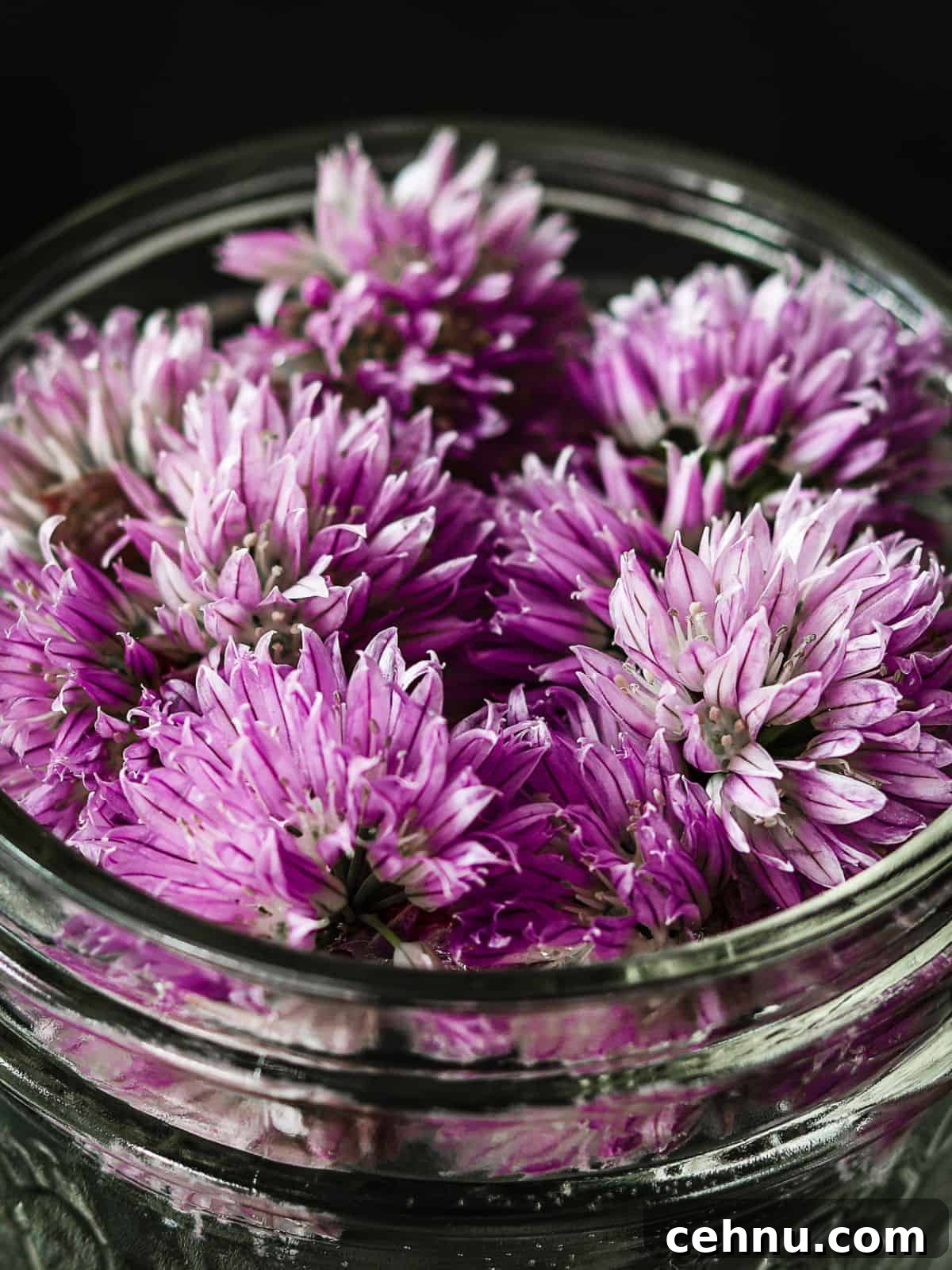
- Harvest and prepare: Snip flower heads just below the cluster. Rinse briefly to remove dirt or insects and pat dry on paper towels. Make sure the blossoms are mostly dry to avoid diluting the vinegar.
- Pack the jar: Tightly pack the blossoms into a clean, wide‑mouth glass jar. Pour in your chosen vinegar until the flowers are fully submerged and the jar is nearly full.
- Infuse: Seal the jar and store it in a cool, dark place away from direct sunlight. Let it steep for 5–7 days for a mild flavor, or up to 2 weeks for a stronger infusion. Shake gently once a day to encourage even extraction.
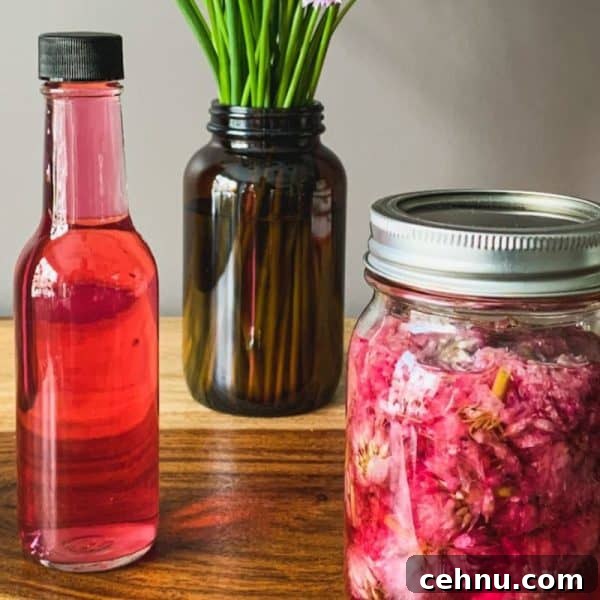
- Strain and bottle: When the flavor and color are to your liking, strain the vinegar through a fine mesh sieve or cheesecloth into clean bottles. Discard or compost the spent blossoms. Store the finished vinegar at room temperature in a pantry or cupboard.
Serving Suggestions
Chive blossom vinegar brightens many dishes. Use it to:
- Make a vinaigrette for spring salads — mix with olive oil, Dijon mustard and a little honey or shallot.
- Marinate fish or white meats for a subtle oniony lift.
- Add to steamed or grilled vegetables just before serving.
- Finish sauces such as beurre blanc or hollandaise for an aromatic twist.
- Dress potato salad, grain bowls or cold pasta salads for a seasonal flavor boost.
Long Term Storage
Infused vinegars are relatively shelf‑stable thanks to their acidity. I recommend using chive blossom vinegar within two months for best color and flavor. Store in a cool, dark place at room temperature; refrigeration is not necessary. Over time the floral notes will fade and the color may darken.
Expert Tips
- Always use a non‑reactive container such as glass. Acidic vinegar can react with some metals and plastics and alter the flavor.
- For a faster extraction, warm the vinegar slightly before pouring over blossoms, then steep overnight. This shortens infusion time but may yield a less vivid color.
- If you want more bite, include some of the chopped green chive stems with the flowers when infusing.
- Do not use dark vinegars if your goal is a delicate pink infusion; clear vinegars display the blossom color best.
- Label your bottle with the date made so you can track freshness.
FAQ
Yes. Chive flowers are edible and add a mild onion note to dishes. Use them fresh as a garnish, fold into salads, sprinkle over dips, or infuse into vinegars and oils.
Chive Blossom Vinegar Recipe
Chive Blossom Vinegar
By: Luay Ghafari
Summary: A quick and elegant way to capture the flavor and color of chive blossoms in a fragrant vinegar that’s perfect for dressings, marinades and finishing sauces.
Servings: 15
Prep Time: 15 mins
Total Time: 15 mins (plus infusion time)
Ingredients
- 2 cups vinegar of choice — white wine or champagne vinegar recommended
- 2 cups chive blossoms, lightly packed
Instructions
- Harvest. Snip chive flower heads just below the cluster, rinse and pat dry.
- Pack. Tightly fill a clean glass jar with the blossoms and pour in the vinegar until fully submerged.
- Infuse. Seal and store in a cool, dark place for 5–7 days, up to 2 weeks for stronger flavor. Shake occasionally.
- Strain and Bottle. Strain into clean bottles, discard the used flowers, label and store at room temperature.
Notes
Store in the pantry and use within two months for best color and aroma. Nutritional information is approximate and based on 15 servings per jar.
Nutrition (per serving, approximate)
Calories: 8 kcal • Carbohydrates: 0.3 g • Protein: 0.2 g • Fat: 0.04 g • Sodium: 3 mg • Potassium: 28 mg • Fiber: 0.1 g • Sugar: 0.1 g • Vitamin A: 232 IU • Vitamin C: 3 mg • Calcium: 7 mg • Iron: 0.2 mg