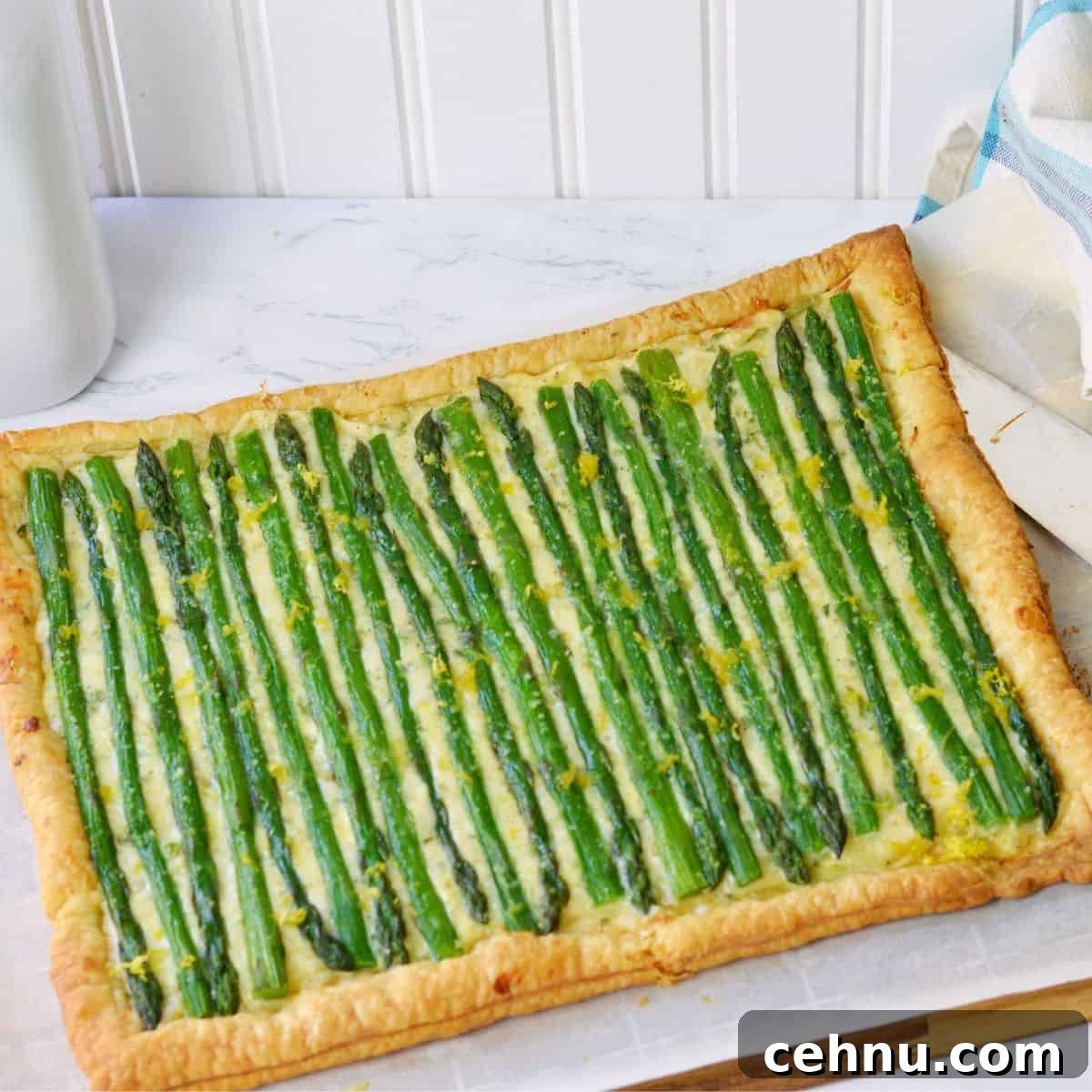
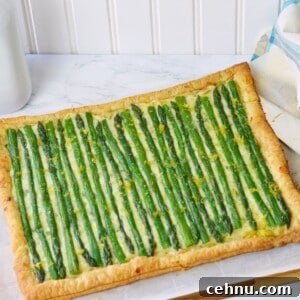
Asparagus cheese tart combines a trio of melting cheeses with seasoned, roasted asparagus on a flaky puff pastry crust. Elegant enough for brunch and simple enough for weeknight meals, this tart works as a starter, a side dish with soup or salad, or the centerpiece of a light lunch. Ready in about 30 minutes from start to finish, it’s a reliable recipe when you want something impressive with minimal fuss.
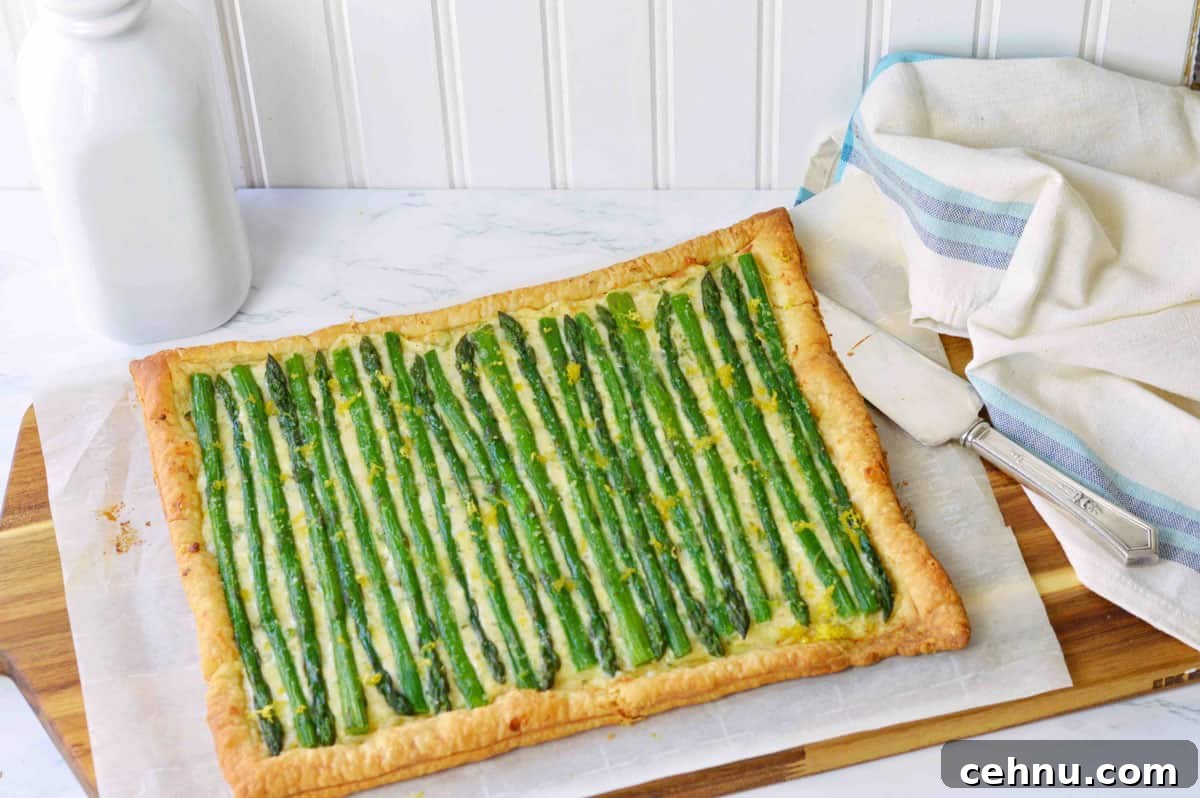
Why You’ll Love this Recipe
Bright green asparagus, nutty melted cheeses and a crisp, buttery puff pastry base make this tart visually striking and delightfully flavorful. The cheese filling creates a quiche-like cushion for the asparagus, while the lemon zest at the end adds a fresh, lively finish. It’s versatile, quick to put together, and ideal for entertaining or a special weeknight meal.
Ingredient Notes
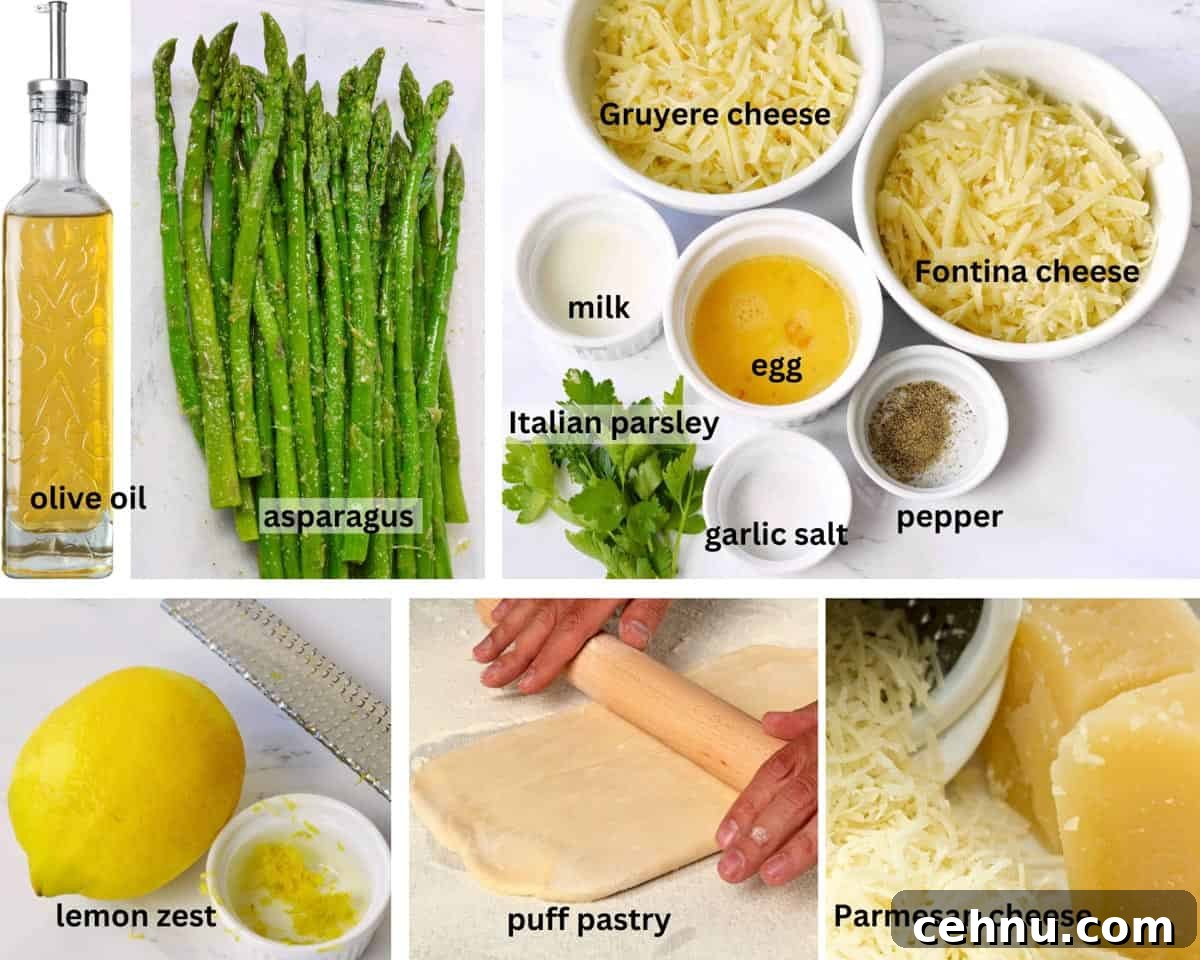
- Olive oil — provides flavor and helps roast the asparagus evenly.
- Asparagus — choose firm, straight stalks with tight tips for the best appearance and texture.
- Gruyere — a semi-hard cheese with a mild nutty flavor that melts smoothly.
- Fontina — buttery and creamy when melted; it adds richness to the cheese layer.
- Parmesan — a sharp, salty accent that rounds out the cheese blend.
- Egg and milk — bind the cheeses into a cohesive filling that sets during baking.
- Parsley, black pepper and lemon zest — fresh herbs and citrus lift the overall flavor.
- Puff pastry — store-bought frozen puff pastry saves time and yields a reliably flaky crust; keep it cold while working.
How to Make this Recipe
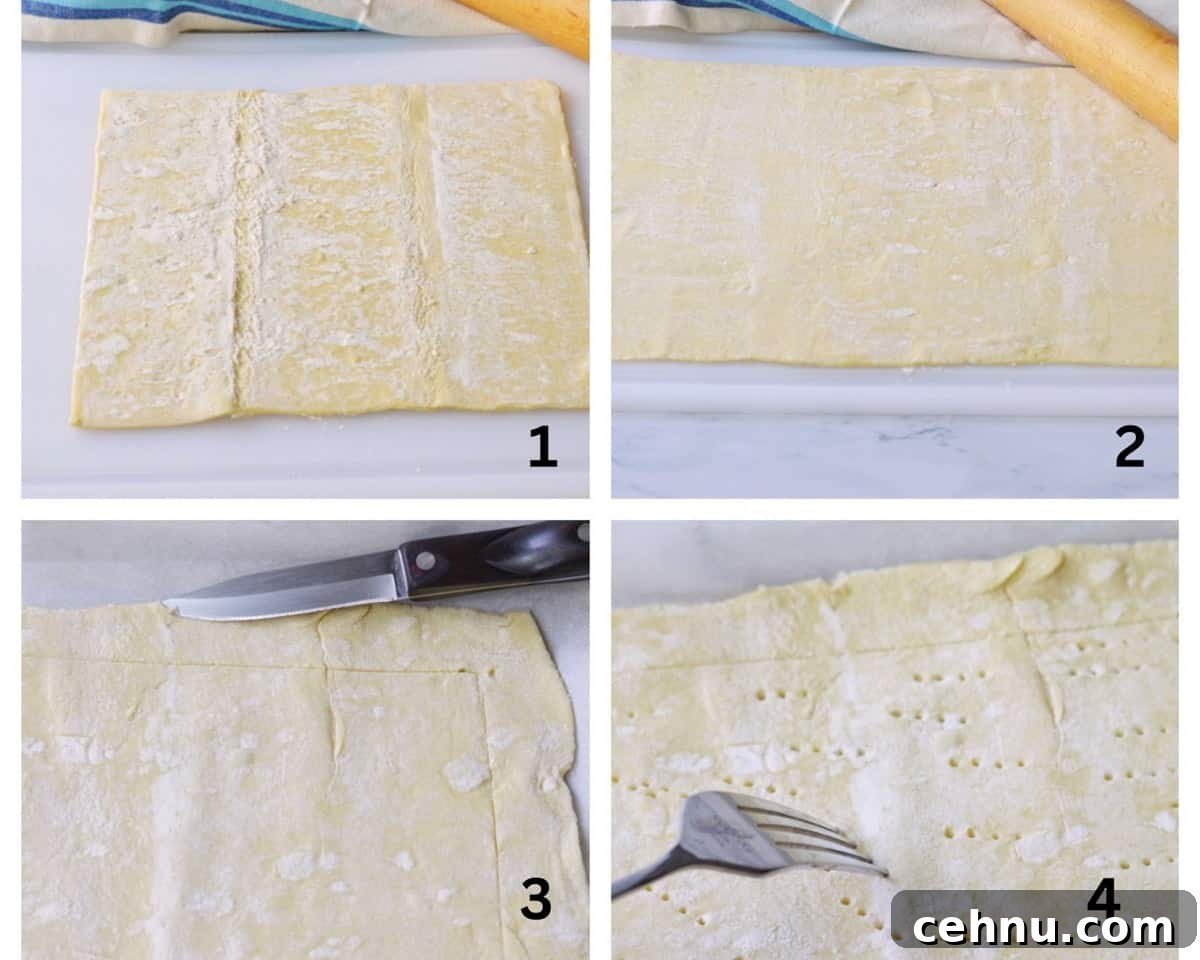
- Thaw puff pastry. Remove one frozen sheet and let it rest at room temperature 20–30 minutes until pliable but still cool. Unfold carefully so layers don’t stick.
- Roll lightly. On a lightly floured surface, roll the pastry just enough to smooth creases and form a rectangle. Work quickly to keep the dough cool so it puffs well in the oven.
- Score and dock. Transfer to a baking sheet, score a 1-inch border around the edge with a sharp knife, and prick the inside with a fork to prevent over-puffing. Brush the outer border with an egg wash for a golden finish.
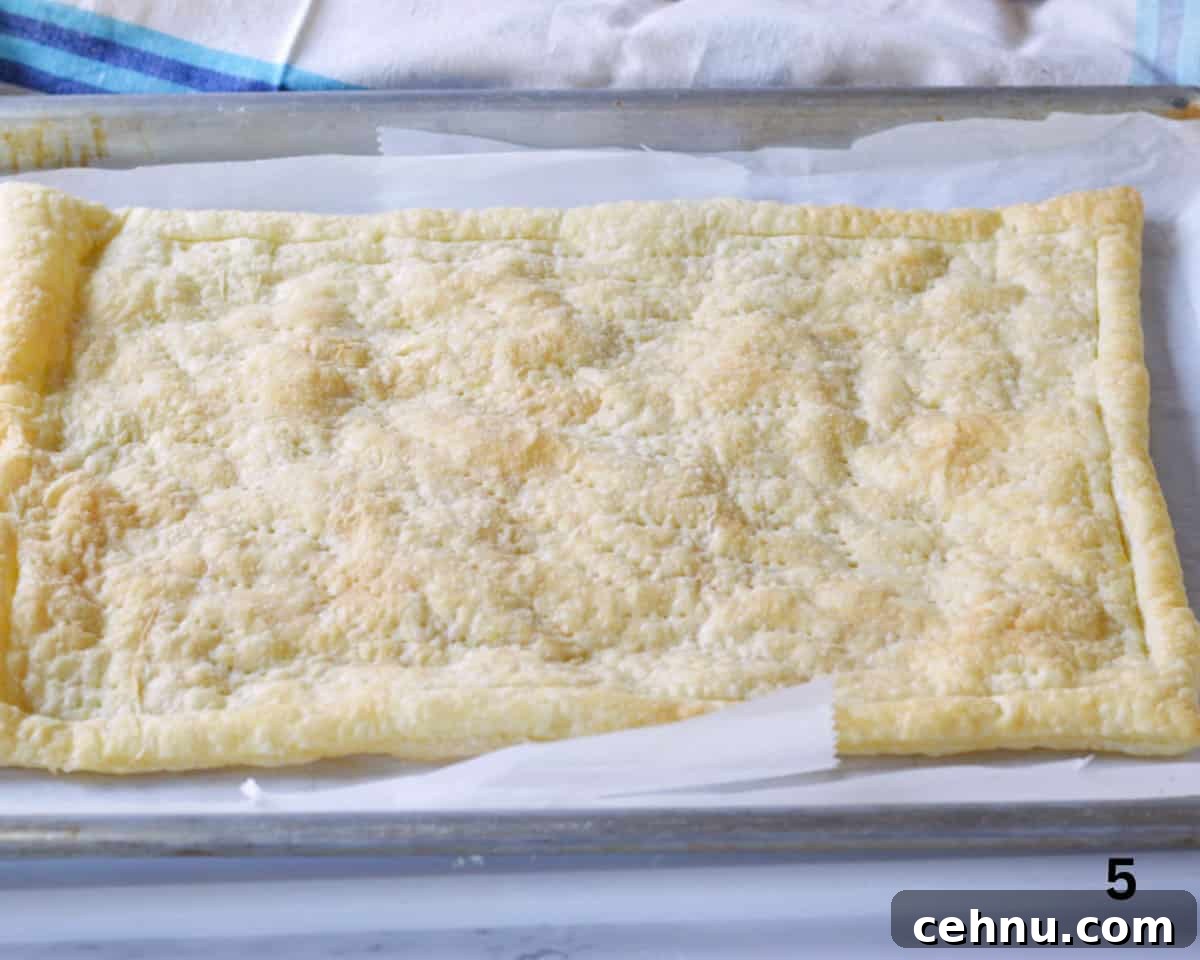
- Par-bake. Bake the prepared sheet at a high temperature (about 400°F / 200°C) for roughly 8–10 minutes until it begins to set and the border gains color. Remove and let cool slightly before adding the filling.
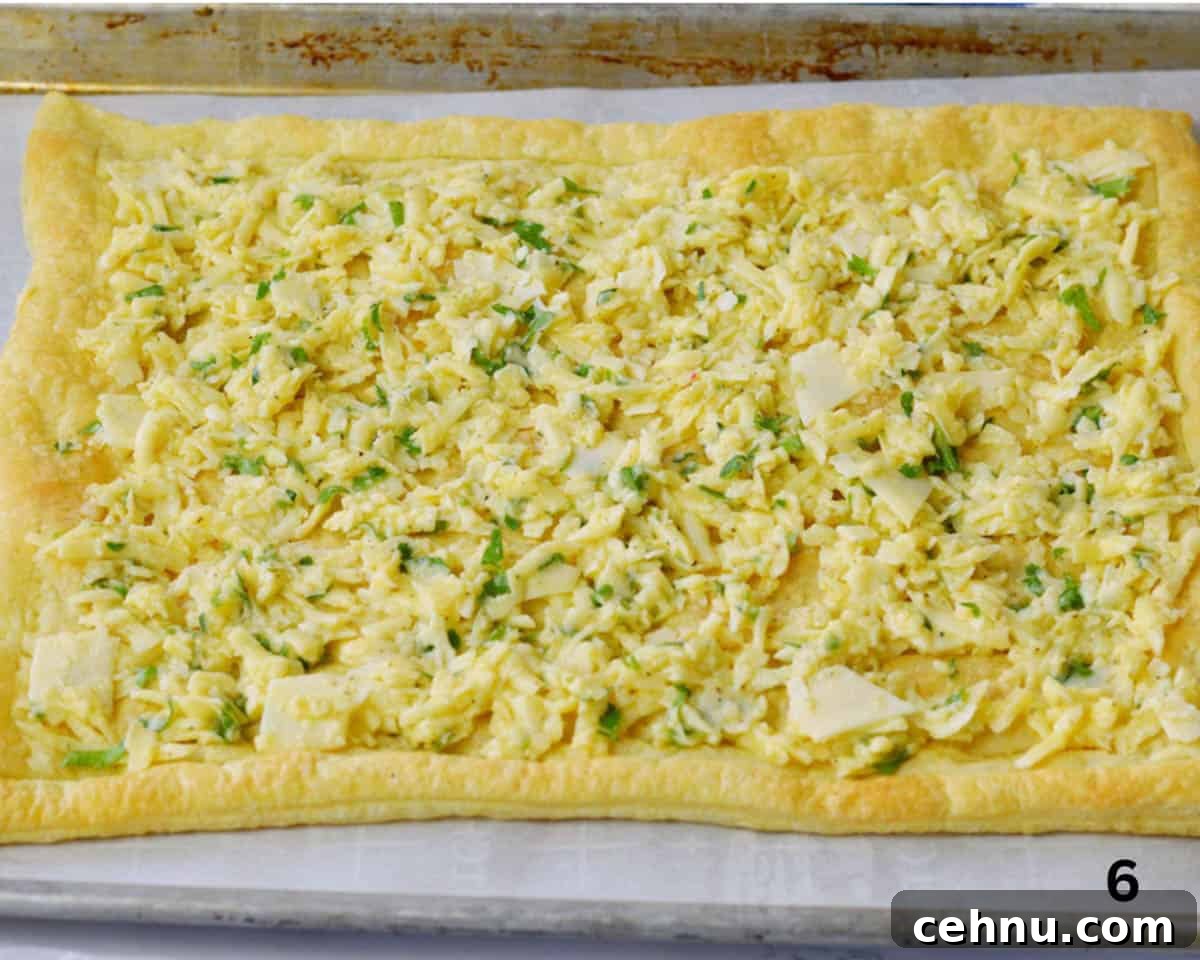
Add the cheese filling. Combine shredded Gruyere, Fontina and a little Parmesan with an egg, two tablespoons of milk, chopped parsley and 1/4 teaspoon black pepper. Spread this mixture evenly inside the scored border so it forms a savory base for the asparagus.
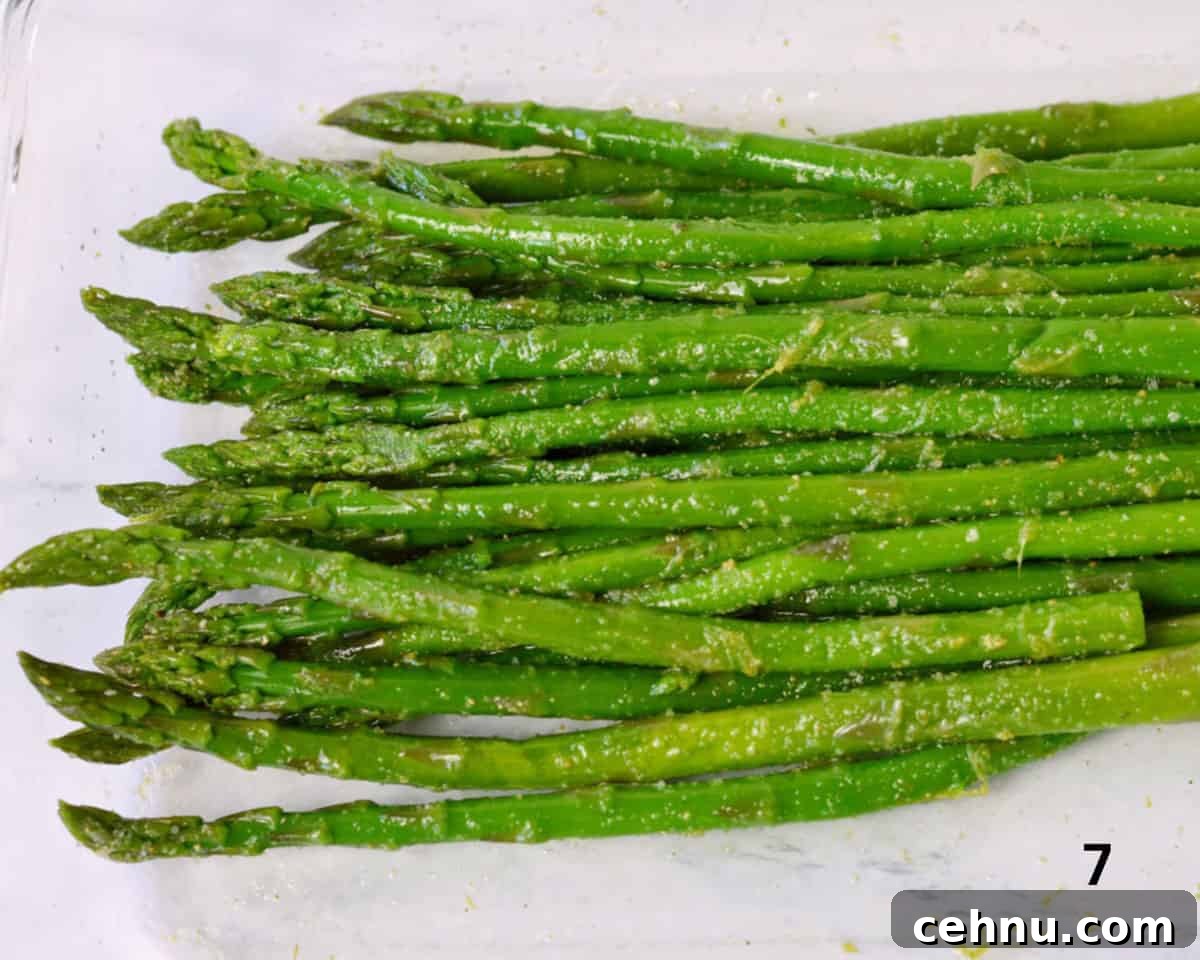
Prepare the asparagus. Trim the woody ends so the spears are similar lengths. For a brighter green and crisp-tender texture, blanch in boiling salted water for about one minute, then plunge into ice water. Toss the spears with olive oil, garlic salt and black pepper.
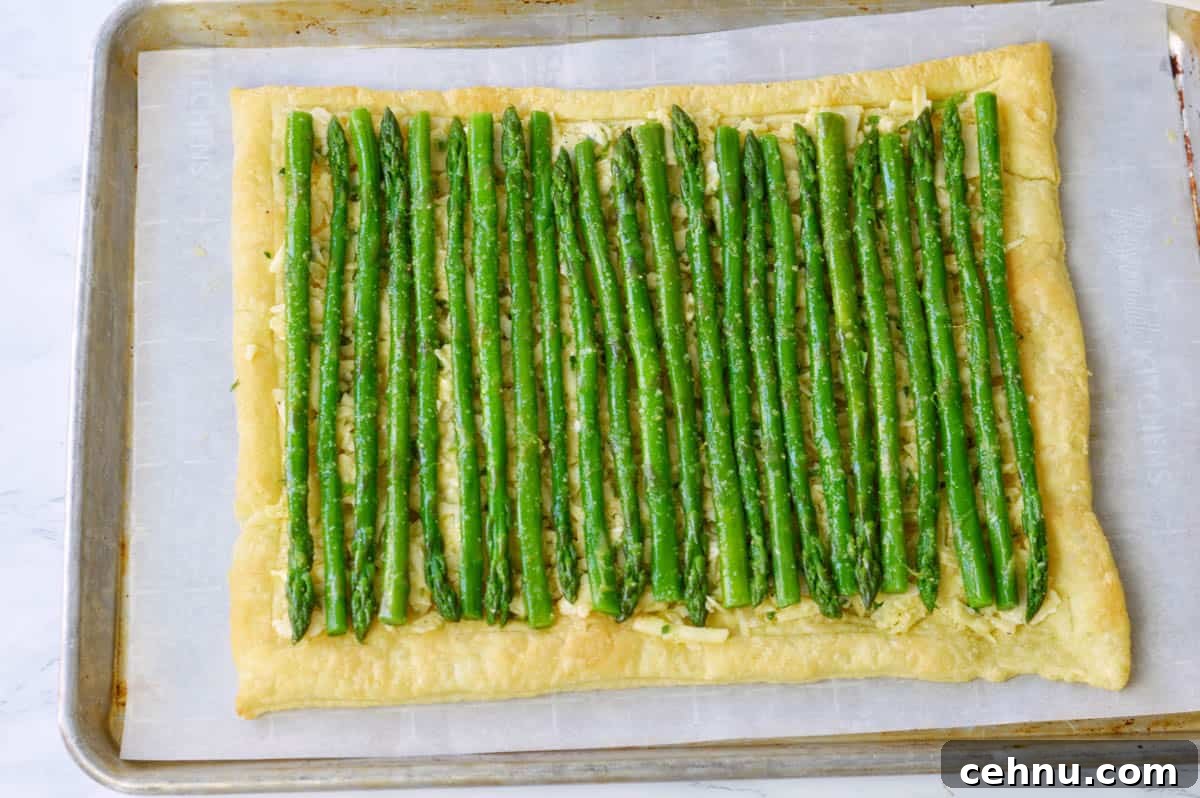
- Arrange. Lay the asparagus across the cheese layer, aligning spears so the tart looks neat and uniform. Trim any ends that extend past the pastry.
- Bake until golden. Return the tart to the oven and bake another 12–15 minutes, until the pastry edges are deep golden and the cheese is set. Finish with a light sprinkle of lemon zest for brightness.
Serve warm or at room temperature. The tart is excellent sliced into wedges for a party or cut into thinner pieces as an appetizer.
Puff Pastry Tips
Puff pastry, or pâte feuilletée, relies on cold layers of butter and dough that create a flaky lift in the oven. To get the best results:
- Use frozen sheets for convenience and consistent results.
- Thaw until just pliable; don’t let the pastry get too warm or the layers will fuse.
- Lightly flour your surface and handle the dough minimally to preserve flakiness.
- Par-bake and dock the center to prevent the middle from puffing excessively.
- Bake at a high temperature (around 400°F / 200°C) for a full rise and crisp texture.
Tips on How to Pick Asparagus
Select fresh asparagus for the best flavor and appearance. In the U.S., peak season is spring (April is high season), though asparagus is available year-round from other regions.
- Avoid very thick, woody stalks that are likely older and fibrous.
- Skip limp or wrinkled stems — they indicate dehydration and age.
- Choose firm, straight stalks with tight, compact tips.
- For a tidy tart, pick spears that are similar in length and thickness.
How to Trim Asparagus
- Keep the spears uniform in length for the best presentation.
- Bend each spear near the base; it will snap naturally where the tough part ends.
- To preserve more stalk, cut off just the bottom portion and trim about one-third up the stem — this saves more vegetable but is less tidy visually.
How to Blanch Asparagus
Blanching brightens asparagus and helps it stay crisp-tender when baked. Boil lightly salted water and blanch spears for about one minute, then immediately transfer to an ice bath to halt cooking. Blanching is optional — the asparagus will roast through while baking — but it reliably preserves a vivid green color.
Substitutions for this Recipe
Crust Options
If you don’t have puff pastry, pie dough or layered phyllo can work in a pinch, though the texture will differ.
Cheese Variations
Swap cheeses to suit your pantry: goat cheese, mozzarella, ricotta, Brie or Camembert can all create delicious variations. Adjust quantities so the filling still binds with the egg and milk.
Other Toppings
Feel free to replace asparagus with roasted vegetables or cooked meats. Vegetables with longer cook times should be partially cooked before assembling the tart.
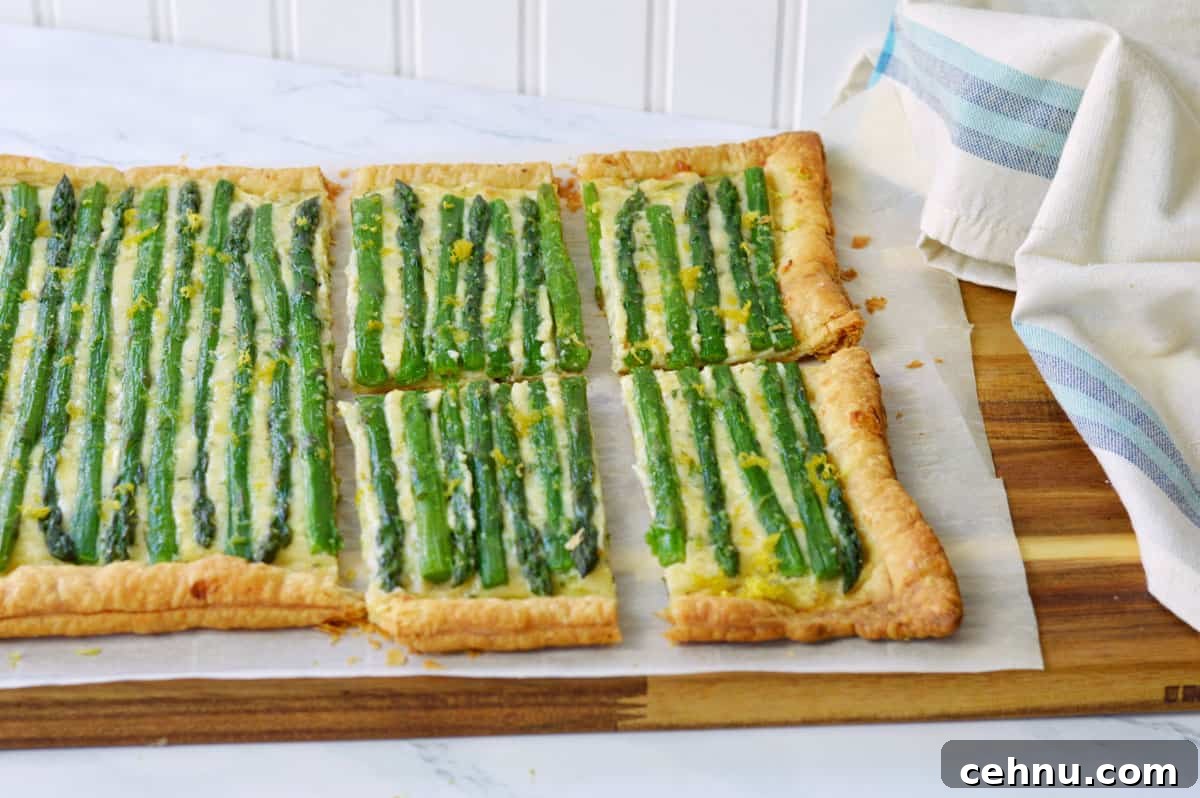
Different Ways to Serve Asparagus Tart
This tart is a springtime favorite but works year-round. Serve it:
- As the main dish for a brunch with a crisp green salad
- With a light soup for lunch or supper
- As a side alongside roast chicken or fish for dinner
- Sliced thinly into bite-sized pieces for a party appetizer
Frequently Asked Questions (FAQ)
Yes. Prepare the crust, blanch the asparagus and make the cheese mixture up to two days ahead. Keep each component refrigerated, then assemble and bake when you are ready to serve. The tart is also tasty at room temperature.
Asparagus is typically in season in spring, with peak availability in April in many regions. It’s also grown and shipped year-round from other areas, so you can usually find it outside of peak season.
Asparagus is low in calories and provides vitamins and antioxidants. It is a good source of vitamins A, C and K and adds fiber to the diet.
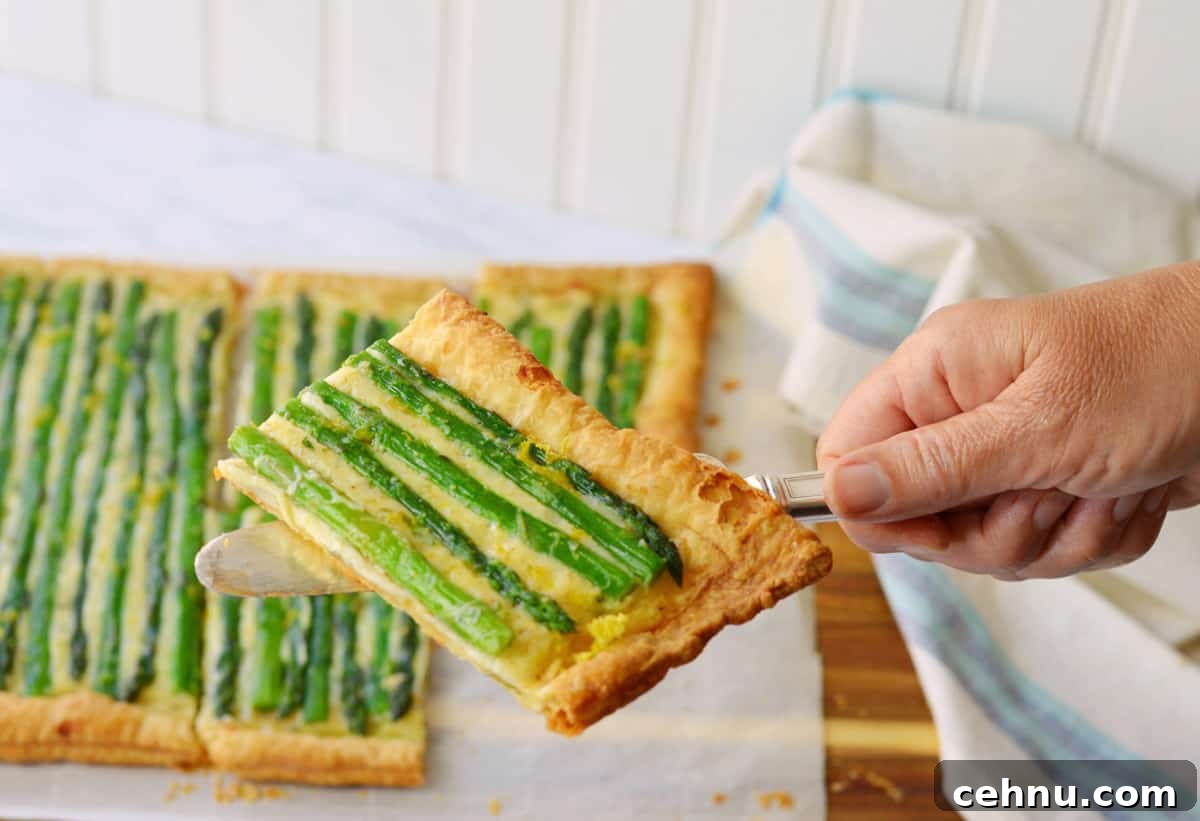
How to Store Cheese and Asparagus Tart
Cool the tart to room temperature, then cut into wedges and wrap tightly in plastic wrap or place in an airtight container. Refrigerate for up to 2–3 days or freeze for up to two months. To reheat, warm on a baking sheet in a 250°F oven for a few minutes to refresh the pastry — avoid microwaving, which makes puff pastry soggy or rubbery. The tart is also enjoyable cold.
You’ll Love these Recipes Too
-
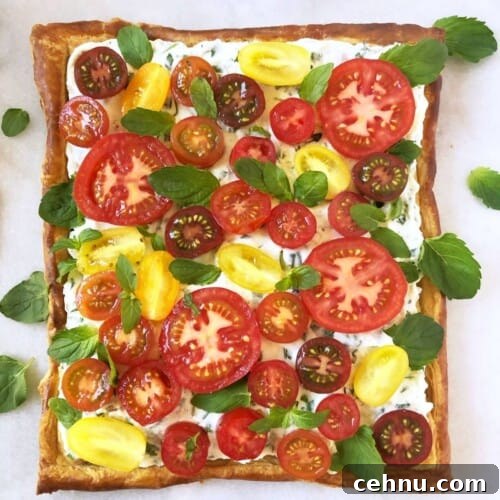
 Herbed Cheese and Heirloom Tomato Tart
 -
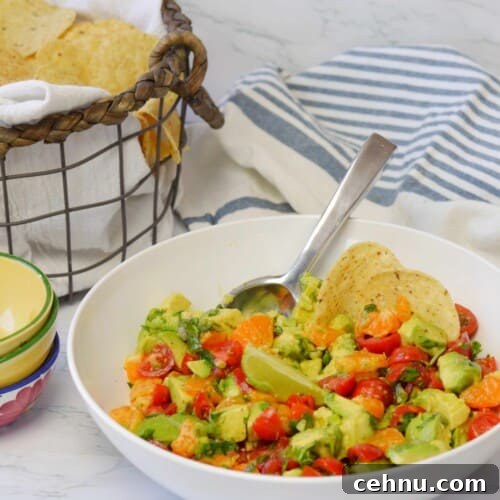
Mandarin Guacamole
-
Quinoa Stuffed Avocado
-
Bruschetta with Tomato and Creamy Feta

P.S. If you tried this asparagus cheese tart, rate the recipe or leave a comment where you found it — cooks’ feedback is always appreciated. Share a photo and note which cheese combination you liked best.
Asparagus Cheese Tart
A trio of cheeses topped by tender asparagus on a flaky puff pastry crust. Perfect for brunch, as an appetizer, or served with a salad or soup.
Ingredients
- 1 pound asparagus spears
- 1 sheet puff pastry (about 8 ounces / ½ package)
For Cheese Mixture
- 2–3 ounces Fontina (about 1 cup shredded)
- 2–3 ounces Gruyere (about 1 cup shredded)
- 2 Tablespoons shredded or shaved Parmesan
- 2 Tablespoons minced flat-leaf parsley
- 1 egg
- 2 Tablespoons milk
- ¼ teaspoon black pepper
For Asparagus Coating
- 2 Tablespoons olive oil
- ½ teaspoon garlic salt
- ¼ teaspoon black pepper
- Zest of one lemon
Instructions
- Trim tough ends from asparagus and, if desired, blanch in boiling salted water for 1–2 minutes, then cool in ice water to preserve color.
- Preheat oven to 400°F (200°C). Thaw puff pastry per package directions, roll to about a 10 x 16 inch rectangle on a lightly floured board.
- Transfer pastry to a baking sheet, score a 1-inch border, and prick the inside with a fork. Brush the border with egg wash and par-bake for 8–10 minutes. Let cool slightly.
- Mix cheeses, parsley, egg, milk and pepper. Spread the mixture inside the scored border on the par-baked pastry.
- Toss asparagus with olive oil, garlic salt and pepper. Arrange spears across the cheese layer so lengths are even.
- Bake 12–15 minutes more, until the pastry edge is golden and cheese is set. Sprinkle with lemon zest before serving.
Notes
Serve warm or at room temperature. To store, wrap wedges tightly and refrigerate 2–3 days or freeze up to two months. Reheat in a low oven to restore crispness.
Nutrition (per serving)
Calories: 252 kcal | Carbohydrates: 7 g | Protein: 13 g | Fat: 20 g | Fiber: 2 g