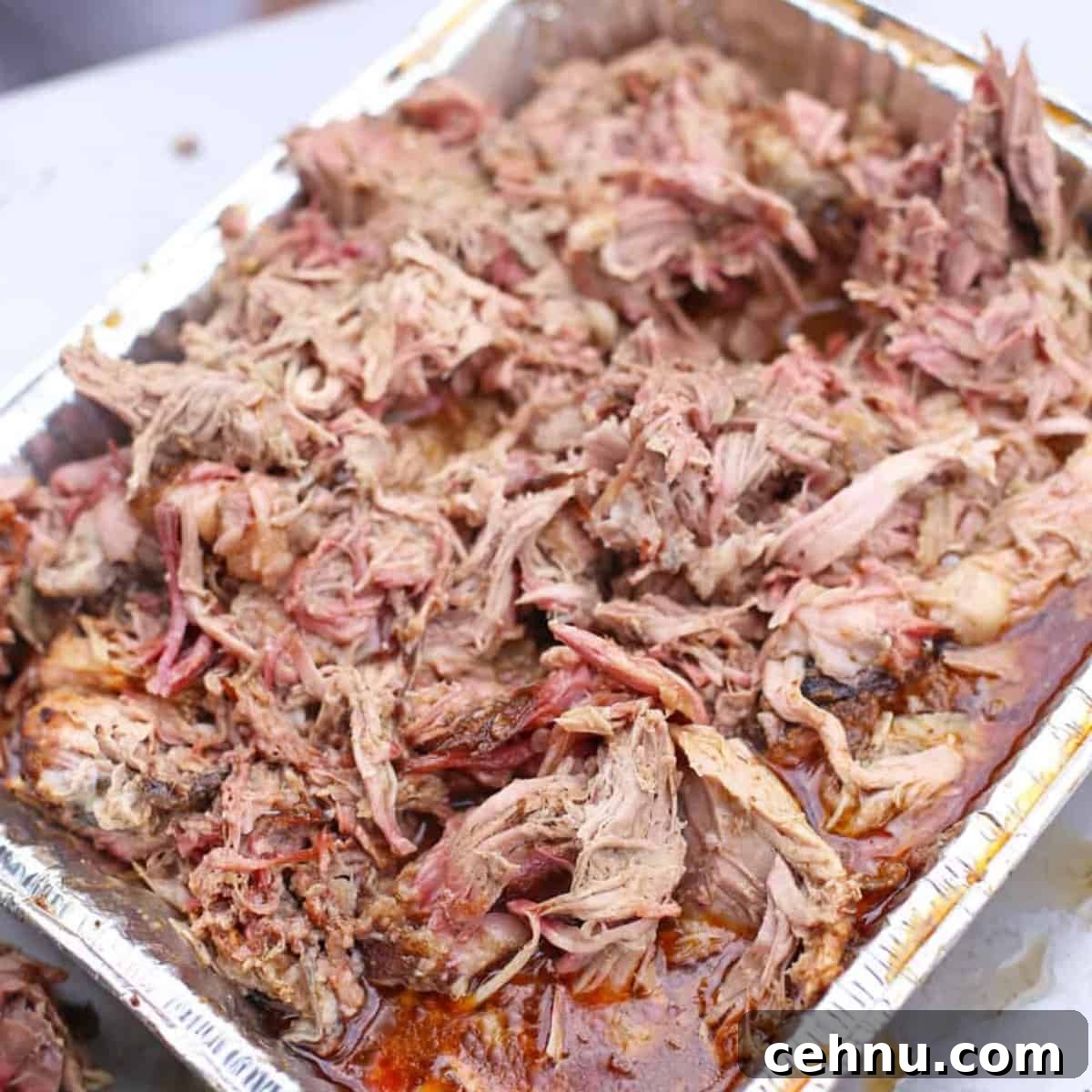
A complete guide to making the best pulled pork using smoked pork butt (pork shoulder). Learn the tips and step-by-step process for tender pulled pork on your smoker, plus a full video tutorial on how to smoke pork shoulder.
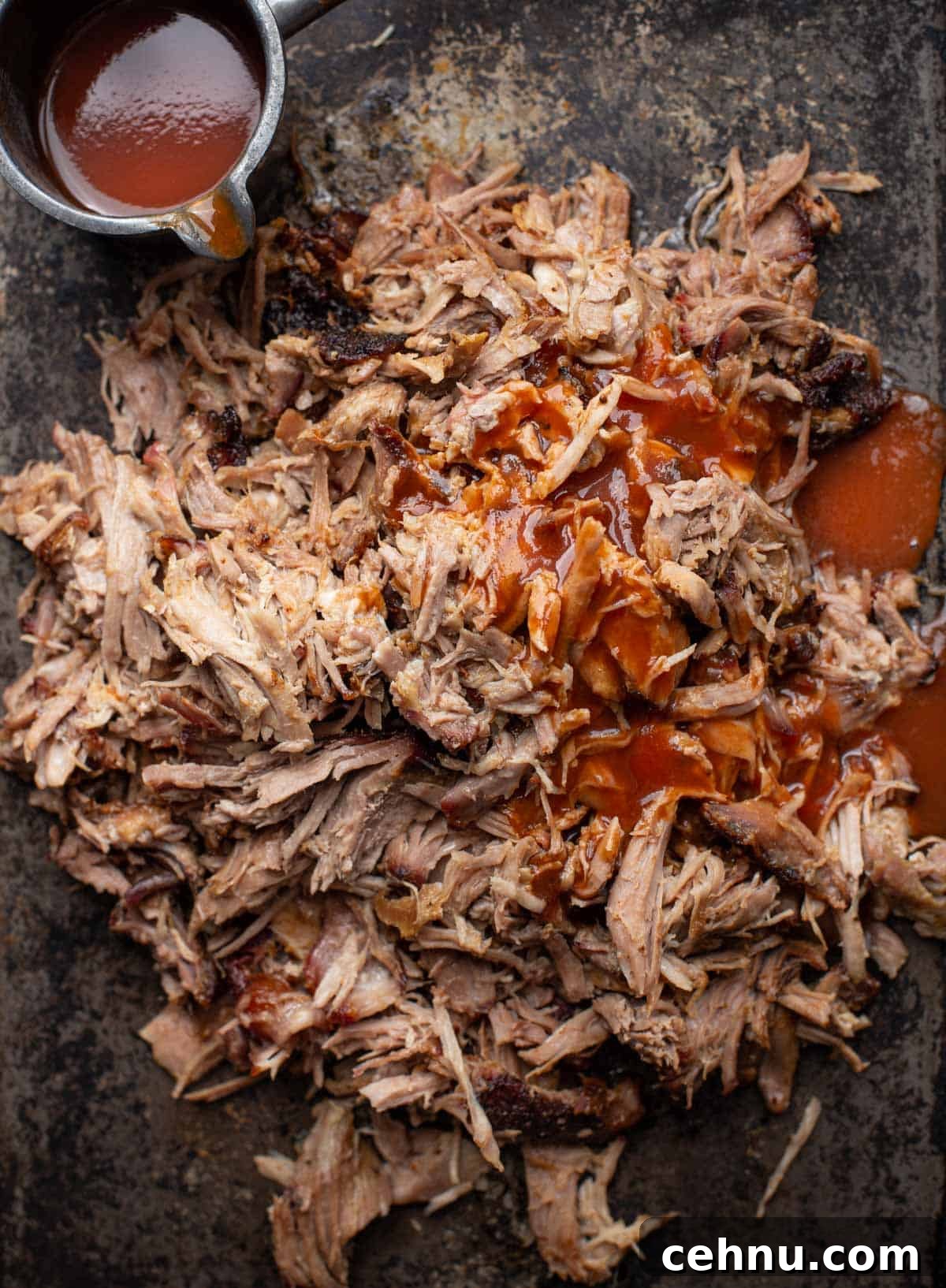
Recipe Highlights
- This method uses an initial period of smoke, then wrapping to finish the cook. Wrapping accelerates the process while preserving moisture.
- Works well with bone-in or boneless pork butt (Boston butt).
- Rendered fat and connective tissue make this ideal for making ahead and reheating for a crowd.
- Applies to any smoker style—pellet, offset, charcoal, or gas—with consistent low-and-slow technique.
Table of Contents
- Recipe Highlights
- Recipe Ingredients
- Tools Needed
- Trimming a Pork Butt
- Preparation
- Seasoning
- How to Smoke a Pork Butt
- Pulled Pork Spritz
- How To Wrap Pork Butt
- How to Pull Pork
- Frequently Asked Questions (FAQ)
- Expert Tip
- Storage and Reheating Instructions
- Leftover Ideas
- Smoked Pork Butt Recipe
We’ve smoked many pork butts—both for home cooks and professionally—and this guide collects the best practices we’ve learned from experimentation and catering. Follow these steps for consistent, flavorful smoked pulled pork.
Recipe Ingredients
- Pork Butt – Aim for a 5–8 pound Boston butt (bone-in preferred).
- Dijon Mustard – Acts as a binder so the rub adheres evenly. Yellow mustard or a neutral oil will also work.
- Seasoning – A balanced dry rub of savory, salty, and sweet. Detailed rub quantities are in the recipe card below.
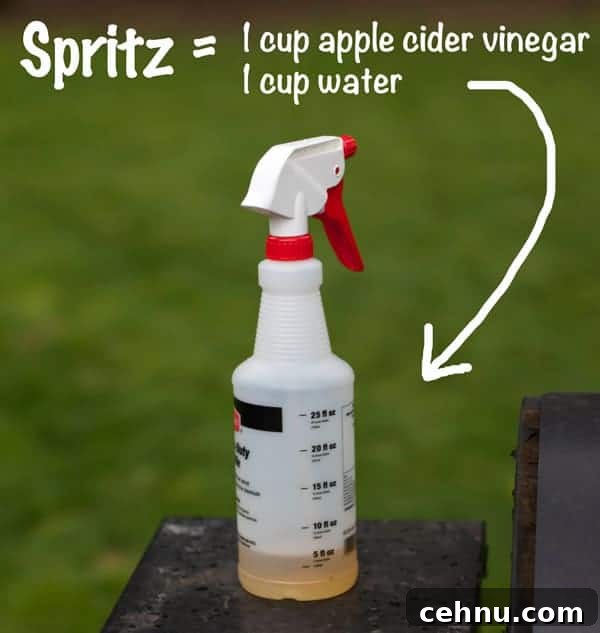
- Spritz – Equal parts apple cider vinegar and water (or apple juice) to add acidity and retain moisture while smoking.
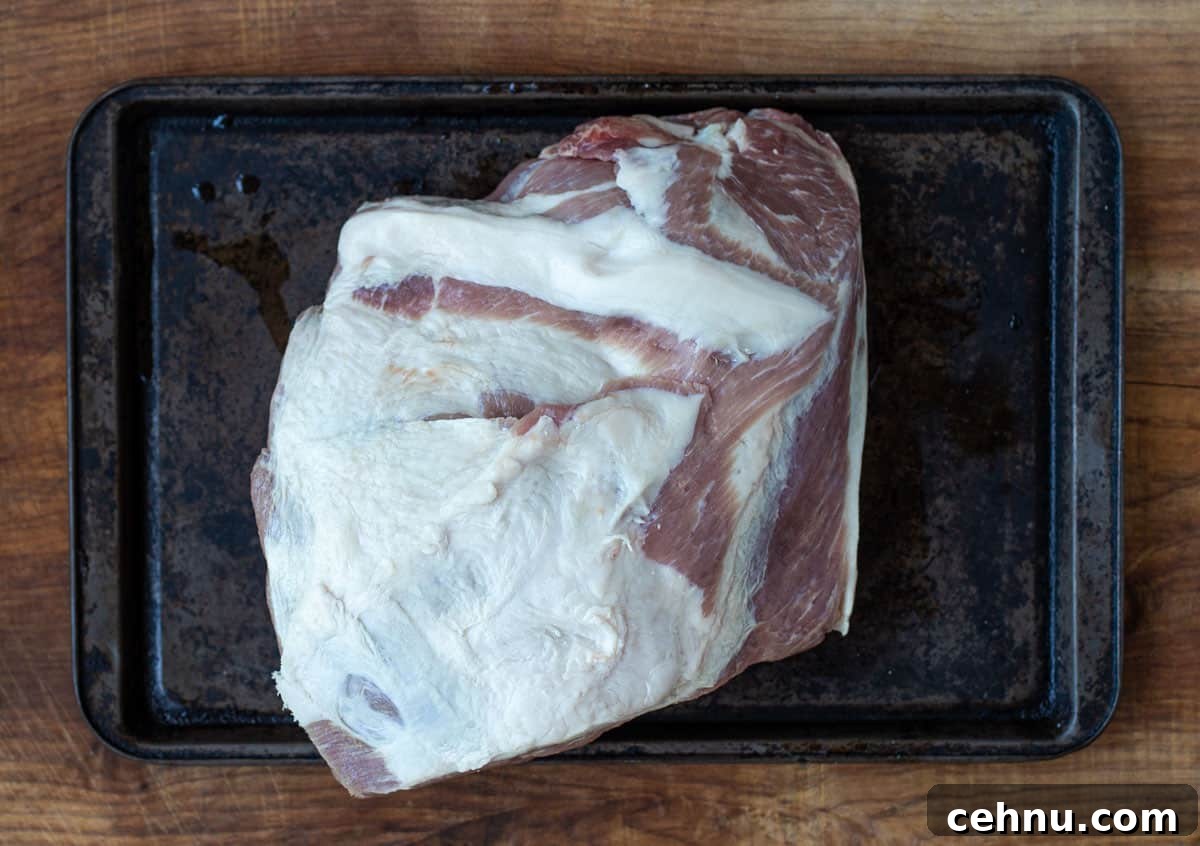
What is Pork Shoulder (Pork Butt)
Pork butt, also called Boston butt, is a shoulder cut from the front of the pig. It contains well-distributed intramuscular fat and connective tissue that, when cooked low and slow, breaks down into tender, flavorful meat. Inside the shoulder is often a prized small muscle sometimes called the pork collar or money muscle; this area can be especially succulent.
Variations you may encounter:
- Whole Pork Shoulder – A larger roast (10–14 pounds) that includes both butt and picnic portions.
- Picnic – The lower shoulder that tapers toward the leg (often 5–8 pounds).
- Boston Butt / Pork Butt – The upper shoulder portion typically 5–8 pounds; ideal for pulled pork.
- Boneless or Bone-in – Both work; bone-in often cooks more evenly and holds shape.
Butcher tip: If a package is labeled simply “roast,” confirm it’s a shoulder and not pork loin. If you find smaller pre-cut pieces (3–4 pounds), ask your butcher about larger untrimmed shoulders.
Tools Needed
- Heat-resistant gloves (silicone or similar) for handling hot meat safely.
- Pork pulling tool or forks for shredding; a drill-attached puller can speed the process for large quantities.
- A reliable digital probe thermometer (leave-in and instant-read) to monitor internal temperature precisely.
- Aluminum foil or peach/pink butcher paper for wrapping during the stall.
- A culinary meat injector (optional) and a food-safe spray bottle for the spritz.
Trimming a Pork Butt
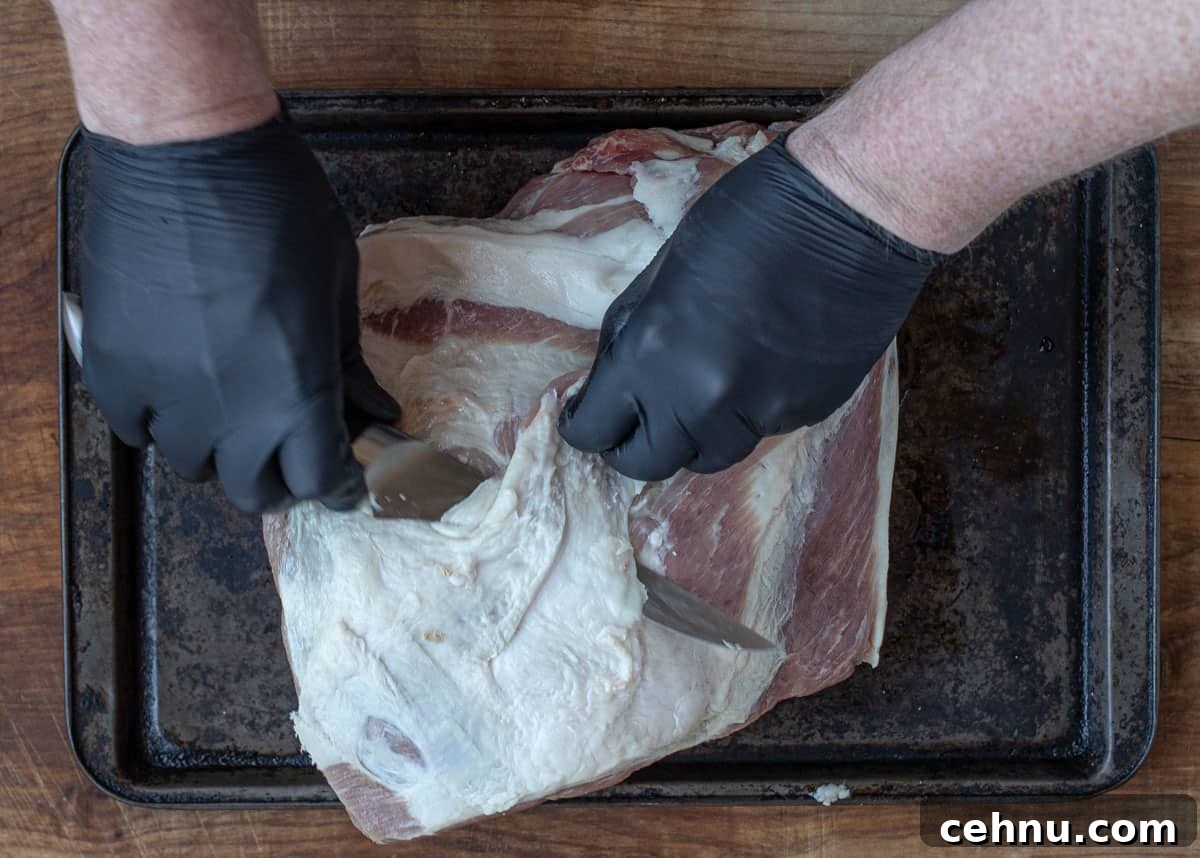
Trim the fat cap so that about 1/4 inch remains on the top. Leaving a very thick fat cap can result in unrendered fat and reduce the surface area available for bark. Remove any glands, silver skin, or excessively large pockets of fat. The intramuscular fat will render during the cook and keep the meat moist.
Preparation
We prefer to inject before applying the rub. Use a simple injection of equal parts apple cider vinegar and apple juice or water to add moisture and flavor inside the meat. Inject roughly every 1–2 inches in a grid pattern; the meat will bulge slightly—that’s normal. This added liquid helps the pork stay moist through a long cook.
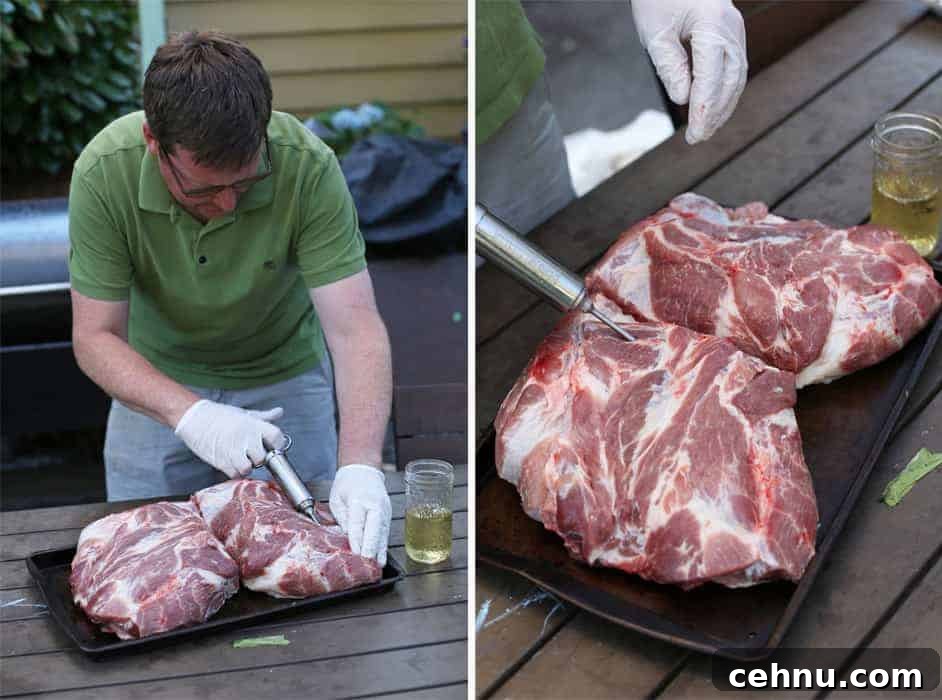
If you like heat, add a dash of hot sauce to the injection. The primary purpose is moisture and interior flavor rather than spiciness.
Seasoning
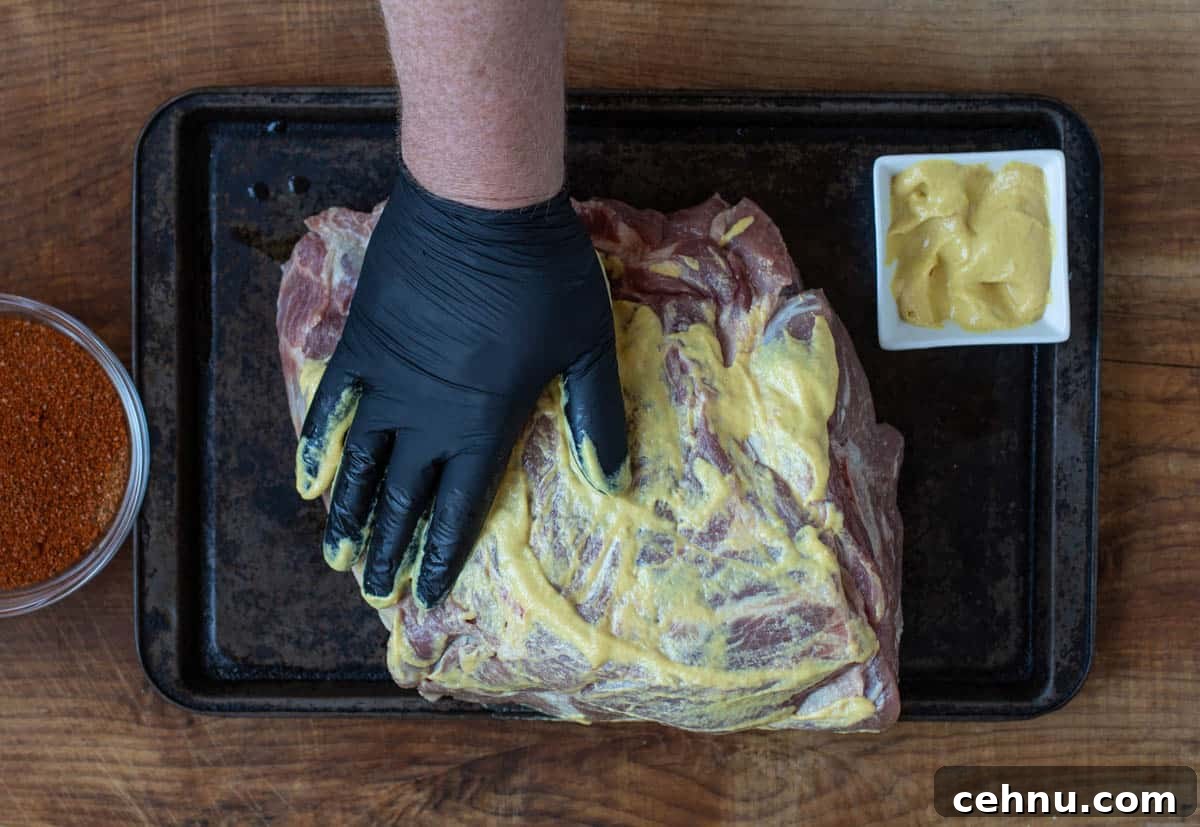
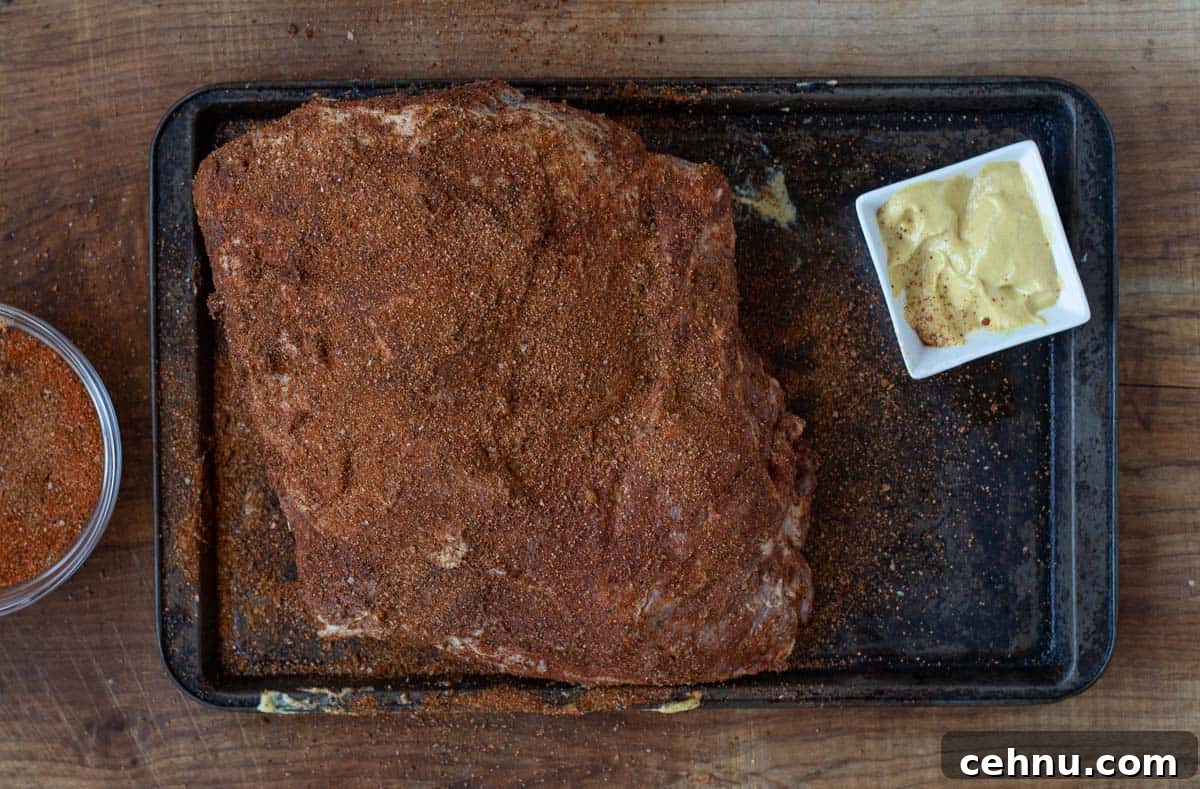
Apply a thin layer of Dijon mustard (or another binder) to help the dry rub stick. For a 5–7 pound shoulder, plan on about one cup of rub. A good pork rub balances sugar with savory spices; sugar helps develop a caramelized bark while salt and spices provide depth. Adjust sugar and salt to taste if you prefer more savory or less sweet bark.
Pork Butt Dry Rub Ingredients
- Brown sugar (light or dark)
- Kosher salt
- Coarse black pepper
- Cumin
- Paprika (smoked paprika preferred)
- Dry mustard
- Cayenne
- Garlic powder
- Onion powder
Mix rub ingredients in a bowl. Season the pork the day before for best flavor, or at least an hour before cooking.
How to Smoke a Pork Butt
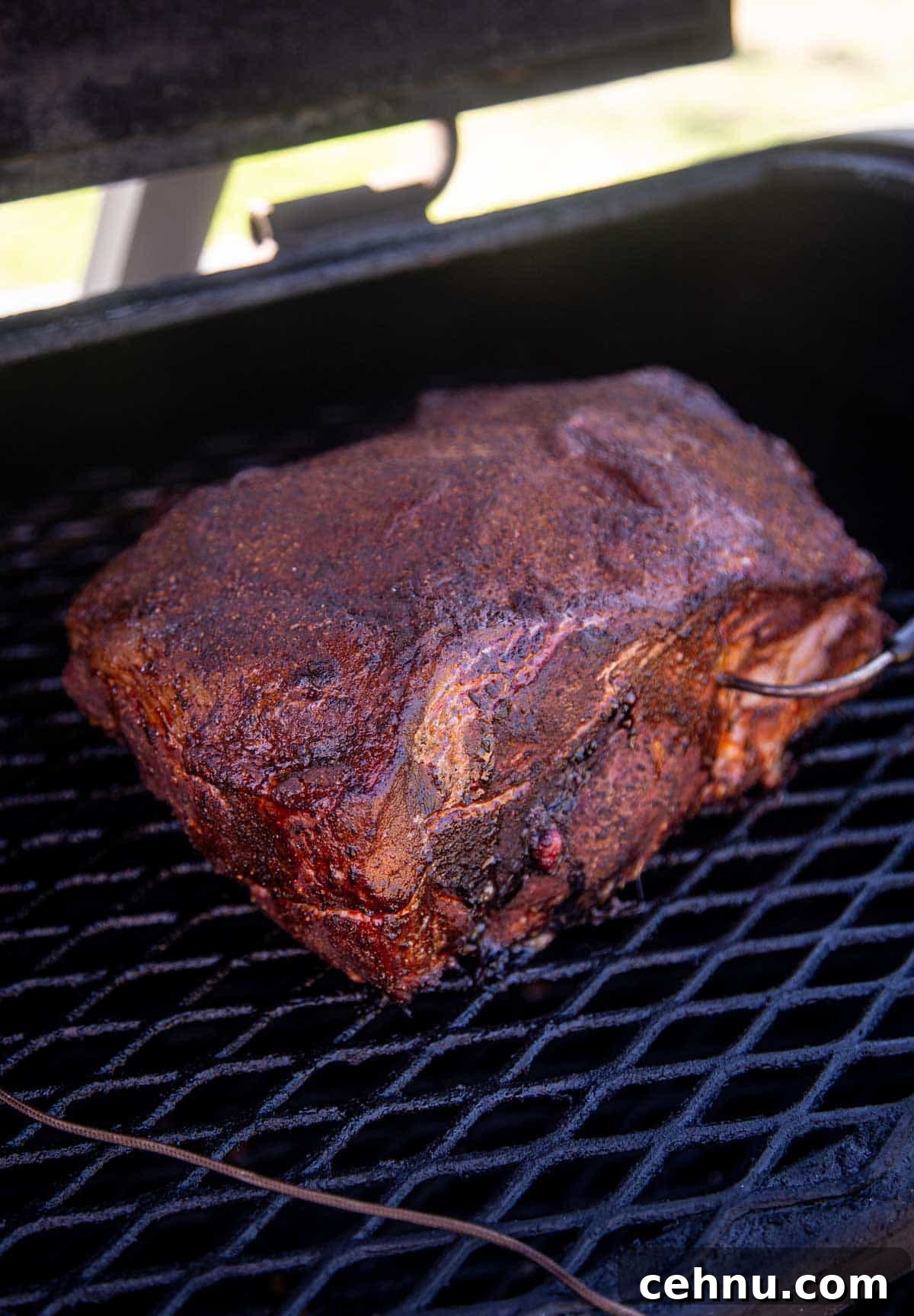
Smoking a pork shoulder involves several phases. As a general guideline, plan about 1 hour and 15 minutes per pound total time, including resting.
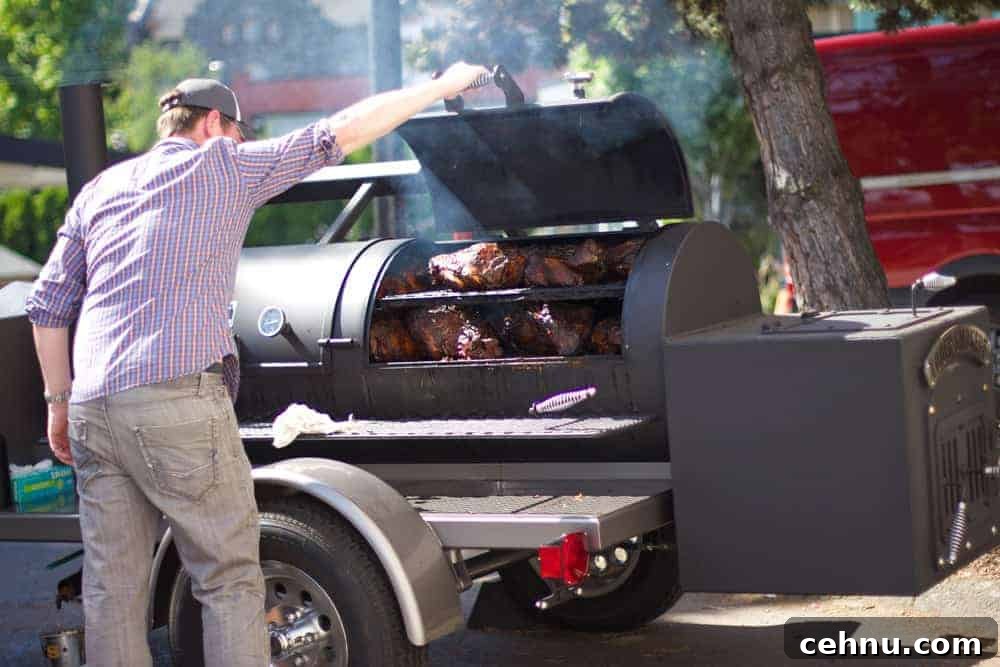
- Smoke: Maintain a smoker temperature near 250°F for the initial 3–4 hours.
- Spritz: After the first 3–4 hours, lightly spritz the shoulder every 30 minutes until the internal temperature reaches about 165°F.
- Wrap: At roughly 165°F (when the stall is ending), place the shoulder in a pan, add a couple of tablespoons of spritz liquid, and wrap tightly in foil or butcher paper. Reinsert a probe thermometer through the wrap, avoiding the bone.
- Continue Smoking: Return the wrapped shoulder to the smoker at 250°F and cook until the internal temperature reaches 200–203°F. Use an instant-read thermometer to verify tenderness—the probe should slide in easily like room-temperature butter.
- Rest: Remove the wrapped shoulder from the smoker and place it in a cooler (without ice) for about an hour to redistribute juices and settle the meat.
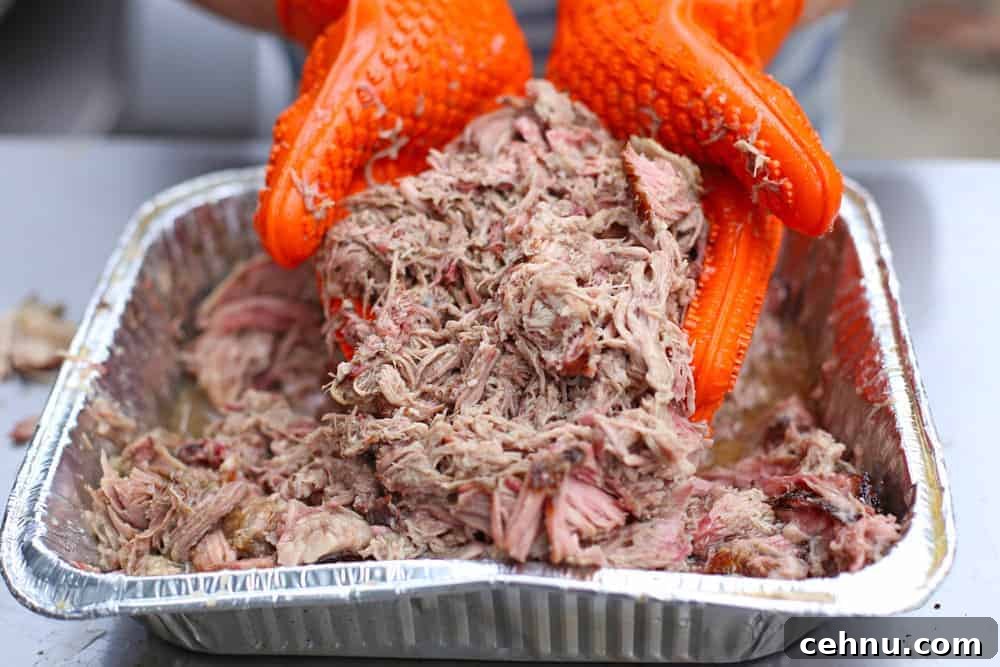
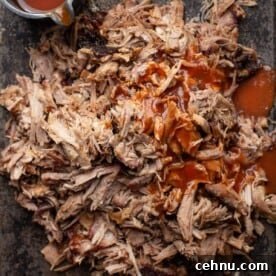
- Pull: Unwrap and shred the pork with forks, heat-safe gloves, or a mechanical puller. Discard any cartilage or large pieces of fat as you go.
Cook to temperature, not strictly to time; thickness, fat, and smoker conditions change the total duration.
Pulled Pork Spritz
Use a food-safe spray bottle and combine equal parts apple cider vinegar and water (or apple juice). After 3–4 hours of smoke, spritz every 30 minutes until wrapping. Moisture attracts smoke particles, so spritzing increases smoke flavor and helps keep the surface from drying out.
How To Wrap Pork Butt
Wrapping is optional but speeds the cook and helps push through the stall. Wrap when the internal temp reaches about 165°F:
- Place shoulder in a large pan or baking sheet, add a couple of tablespoons of spritz liquid in the pan, and wrap tightly in foil or butcher paper.
- Insert a probe thermometer through the wrap (avoid bone contact) and return to the smoker until the target internal temperature is reached.
How Long to Smoke Pork Butt
Average guide at 250°F: plan about 1 hour and 15 minutes per pound.
- 5 pounds: ~6–7 hours
- 7 pounds: ~8–9 hours
- 8 pounds: ~9–11 hours
How to Pull Pork
After the rest period, pull the pork with heat-resistant gloves, forks, or a mechanical puller. Remove the bone (it should come out easily) and discard any cartilage or large fatty pieces. For extra flavor, finish with a splash of apple cider vinegar or your favorite barbecue sauce.
Frequently Asked Questions (FAQ)
The stall occurs when evaporative cooling from the meat’s surface causes the internal temperature to plateau for several hours. As fat and connective tissue render and moisture evaporates, the temperature will eventually resume rising. The stall commonly ends around 165–170°F when the temperature begins to climb steadily.
It commonly takes another 4–5 hours from the beginning of the stall for the pork shoulder to reach final tenderness, but this varies by size and smoker conditions.
Fruit woods—apple, cherry, or peach—are excellent choices for pulled pork, offering a sweeter, milder smoke than heavier woods like mesquite.
As a rule of thumb, plan about 1 hour and 15 minutes per pound. For example, a 6-pound shoulder will often take roughly 8 hours, including rest.
Choose a shoulder with good marbling and a fresh pink color without off-odors. Bone-in shoulders often hold shape and cook evenly, but boneless is fine if that’s what’s available.
Spritzing is optional. It helps retain surface moisture and enhance smoke adherence, which can improve bark and flavor.
Tough, dry pork is usually overcooked past the point of tenderness. Rehydrating with a little apple cider vinegar or sauce while warm can help recover some moisture.
No—wrapping is optional. Unwrapped shoulders take longer and develop a firmer bark. Wrapping shortens cook time and retains moisture.
Plan about 1/2 pound per person when serving with sides. For sandwiches, plan closer to 2/3 pound per person.
Expert Tip
Pork shoulder needs time—trust the temperature. Allow it to pass through the stall and rest after cooking; resting redistributes juices and improves tenderness.
Storage and Reheating Instructions
You can prepare smoked pork butt up to 5 days ahead. Pull the pork while warm, store it in a pan covered with foil or plastic with its juices. To reheat, preheat the oven to 300°F, place pulled pork in an oven-safe dish, add about 1/4 cup apple cider vinegar or sauce, cover tightly, and heat for about 20 minutes until warmed through. The liquid will steam and rehydrate the meat.
Leftover Smoked Pork Butt Ideas
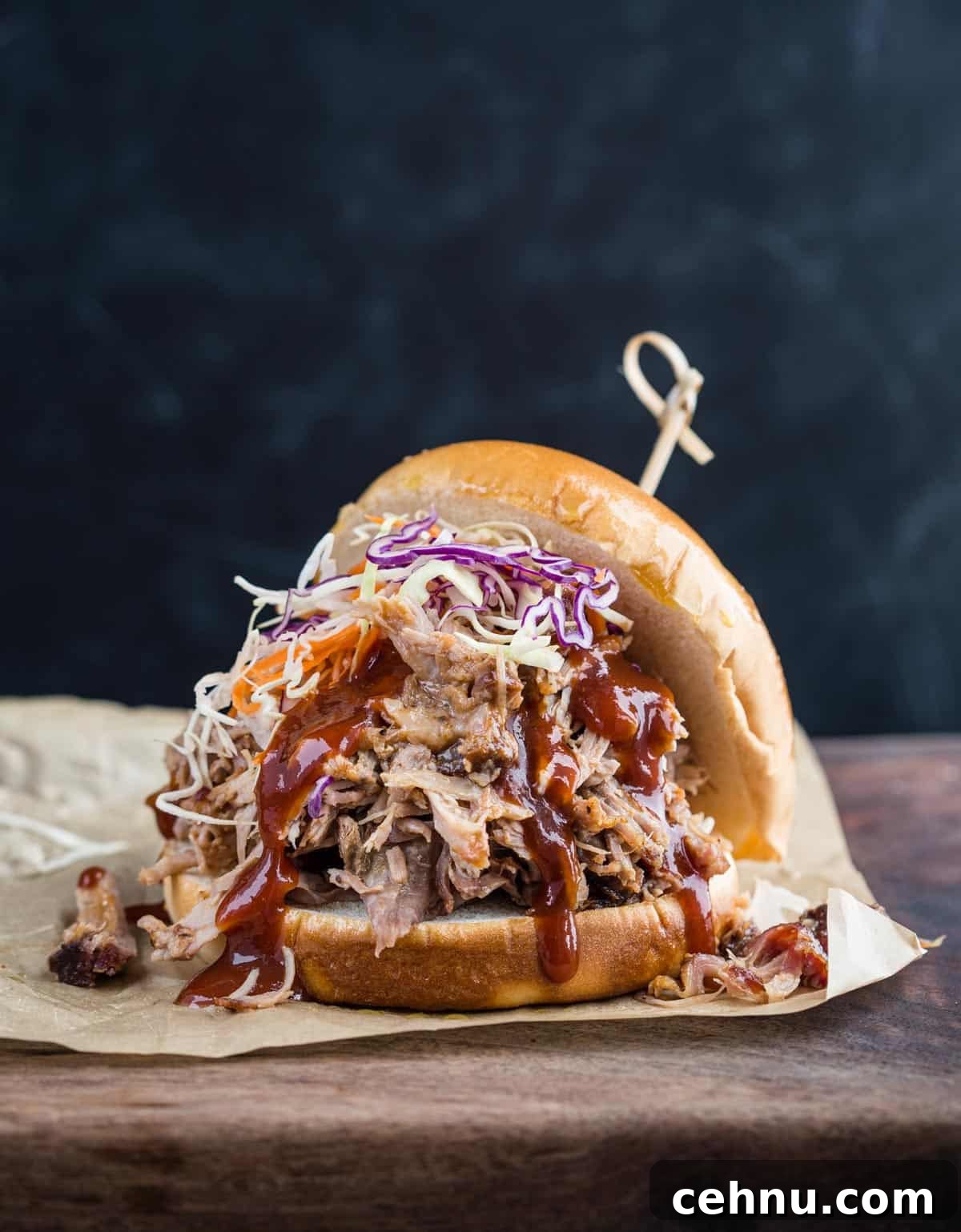
Leftover pulled pork is versatile. Try tacos, nachos, spring rolls, wontons, or a breakfast hash—pulled pork transforms easily into many dishes and is great for meal planning.
About the Authors
Mary (a certified sommelier and recipe developer) and Sean (backyard pitmaster) are co-authors of cookbooks and creators of food content. They develop recipes and test techniques from their home on a small farm near Portland, Oregon.
Smoked Pork Butt Recipe
Equipment
- Instant-read thermometer
- Leave-in probe thermometer (recommended)
- Food-safe spray bottle for spritz
Ingredients
- 8 pound pork shoulder (Boston butt)
- 2 tablespoons Dijon mustard
Dry Rub
- ¼ cup brown sugar
- ¼ cup kosher salt
- 1 tablespoon chili powder
- 1 tablespoon smoked paprika
- ½ tablespoon dry mustard
- ½ tablespoon cumin
- ½ teaspoon cayenne
- 2 teaspoons garlic powder
- 1 teaspoon onion powder
Injection
- 1 cup apple cider vinegar
- 1 cup apple juice
Spritz
- 1 cup apple cider vinegar
- 1 cup water
Instructions
For the Pork Dry Rub
- Mix all dry rub ingredients in a large bowl and set aside. Use the full amount for the pork butt.
For the Spritz
- Combine apple cider vinegar and water in a food-safe spray bottle.
How to Smoke Pork Shoulder
- Trim and prep: Remove excess fat cap and any glands. Pat the shoulder dry, inject with the liquid mixture if using, then pat dry again.
- Season: Apply a thin layer of mustard and coat thoroughly with the dry rub. For best results, season the night before and refrigerate.
- Preheat smoker: Bring smoker to 250°F. Fruit woods like apple or cherry work well.
- Smoke: Place fat cap up and smoke for about three hours, then continue until a deep mahogany bark develops. Begin spritzing every 30 minutes once bark forms, until internal temperature nears 165°F.
- Wrap: When the shoulder reaches about 165°F, place it in a pan, add a couple tablespoons of spritz liquid, and wrap tightly in foil or butcher paper. Insert a probe thermometer (avoid the bone).
- Finish: Continue cooking wrapped until the internal temperature reaches 200–203°F and the meat is tender when probed.
- Rest: Remove from smoker and keep wrapped in a cooler (no ice) for about one hour.
- Pull: Unwrap, remove the bone, and shred the meat. Discard cartilage and large bits of fat. Serve warm with optional vinegar or barbecue sauce to taste.
Video
Video tutorial: a step-by-step demonstration is available to show trimming, seasoning, smoking, wrapping, and pulling techniques.
Notes
Serving tip: Pull meat close to serving time—pulled pork cools quickly. If reheating, return to the smoker or oven covered with a little apple cider vinegar to rehydrate.
Time: The times given are for a 7–8 pound shoulder. Every shoulder cooks differently; adjust accordingly and always prioritize temperature and tenderness over strict time.
Nutrition (approximate)
Calories: 273 kcal | Carbs: 13 g | Protein: 28 g | Fat: 11 g
Nutrition information is an approximation and should be used as a guideline.
Additional Info
Author: Mary Cressler
Course: BBQ, Entrée
Cuisine: Barbecue, grilling