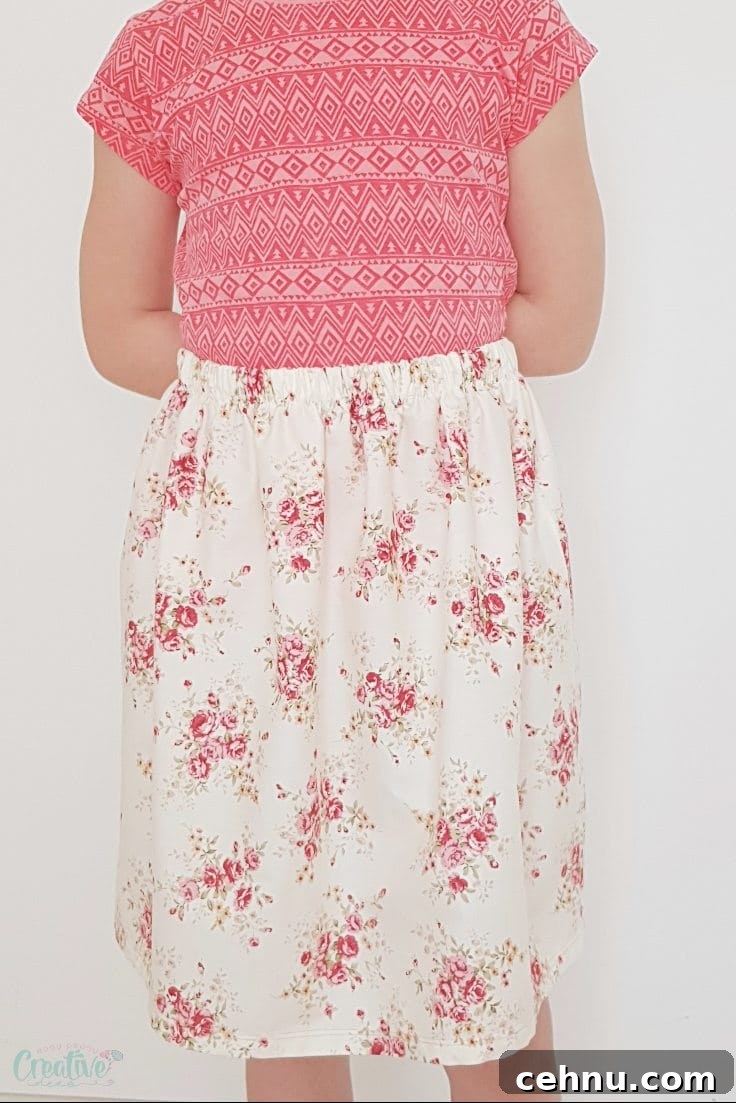
In just 20–30 minutes you can sew a simple, stylish elastic-waist gathered skirt. This quick project is perfect for beginners and children learning to sew: the measurements are straightforward, the cutting and stitching are easy to follow, and the result is a comfortable, flattering skirt you can wear right away or give as a handmade gift.
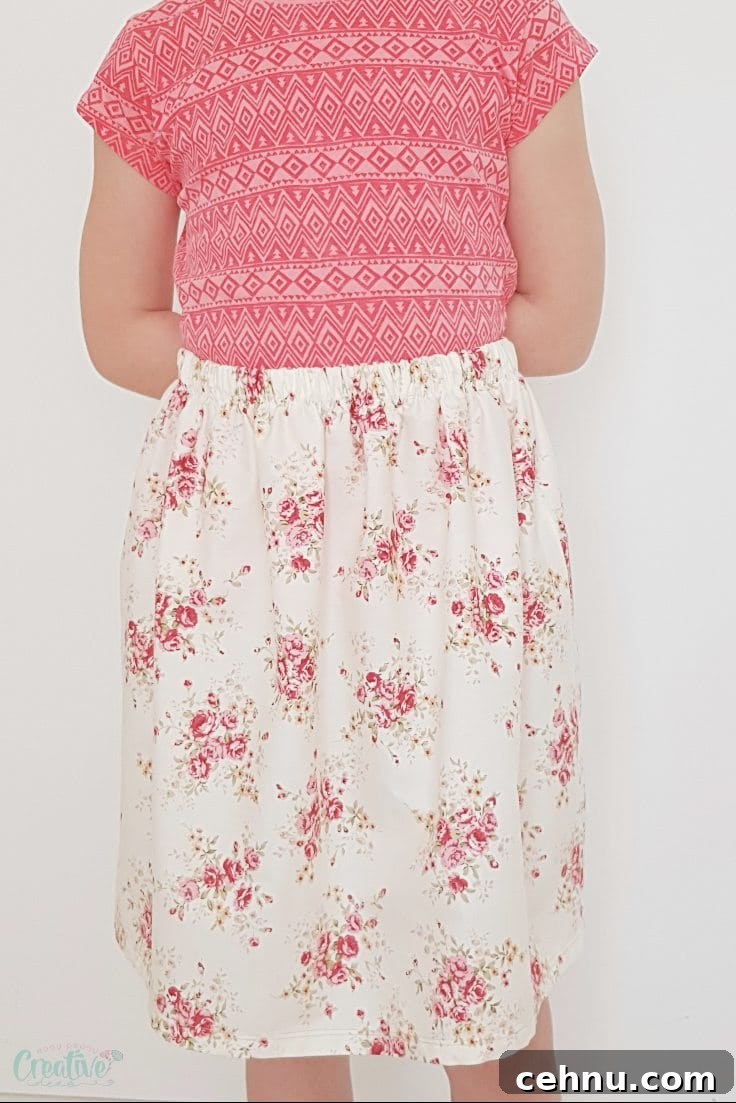
This tutorial was made with my daughter Ellie and can be adapted to any size, from kids to adults. The gathered skirt with an elastic waist is slightly more advanced than very first projects—because it involves stitching elastic—but it remains beginner-friendly and not overwhelming. If you’re uncomfortable sewing elastic directly, an alternative method using a casing is included below.
Elastic waist skirt pattern
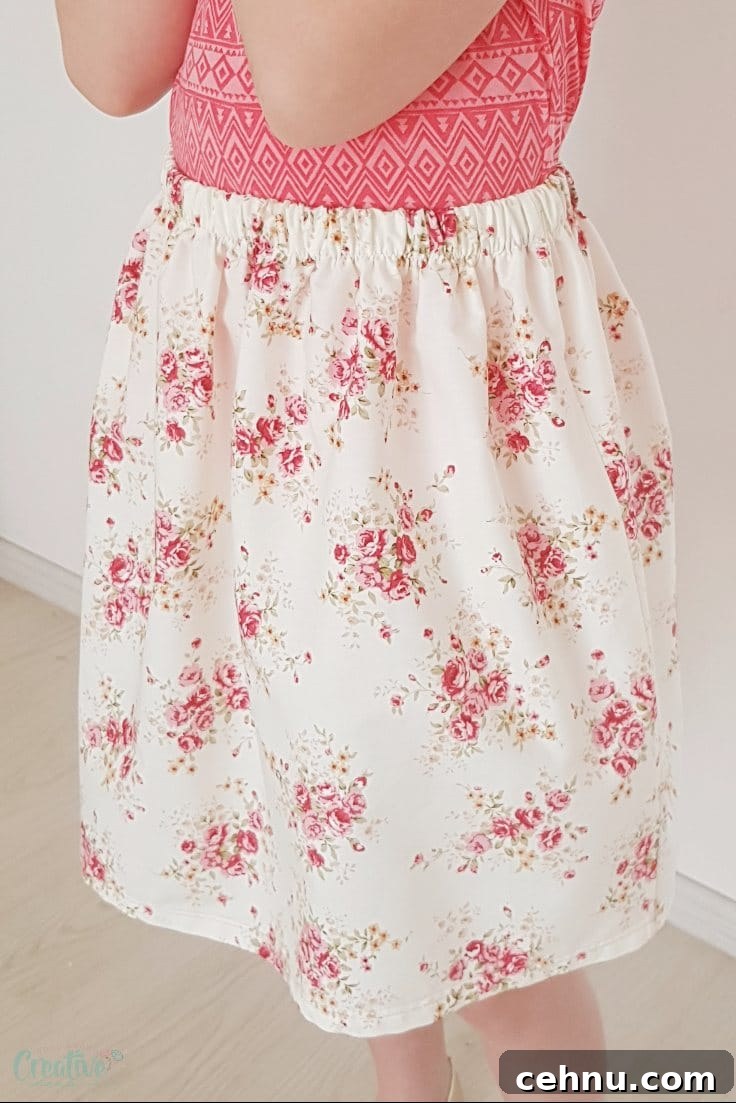
Materials
- Lightweight woven fabric (cotton or linen recommended)
- Fabric marker or chalk
- Measuring tape
- Yardstick or ruler
- Sharp fabric scissors
- Pins
- Elastic (we used 1″ wide)
- Seam gauge
- Matching thread
- Sewing machine
- Serger (optional) to finish raw edges
- Pressing iron
Overview of the process
You will:
- Measure and cut two rectangular panels (front and back).
- Sew the side seams and finish them.
- Hem the skirt.
- Attach the elastic to the waist either by sewing it to the top edge and enclosing it, or by creating a casing and threading the elastic through.
How much fabric do you need?
Measure the waist and the desired skirt length. Use these steps to calculate each panel:
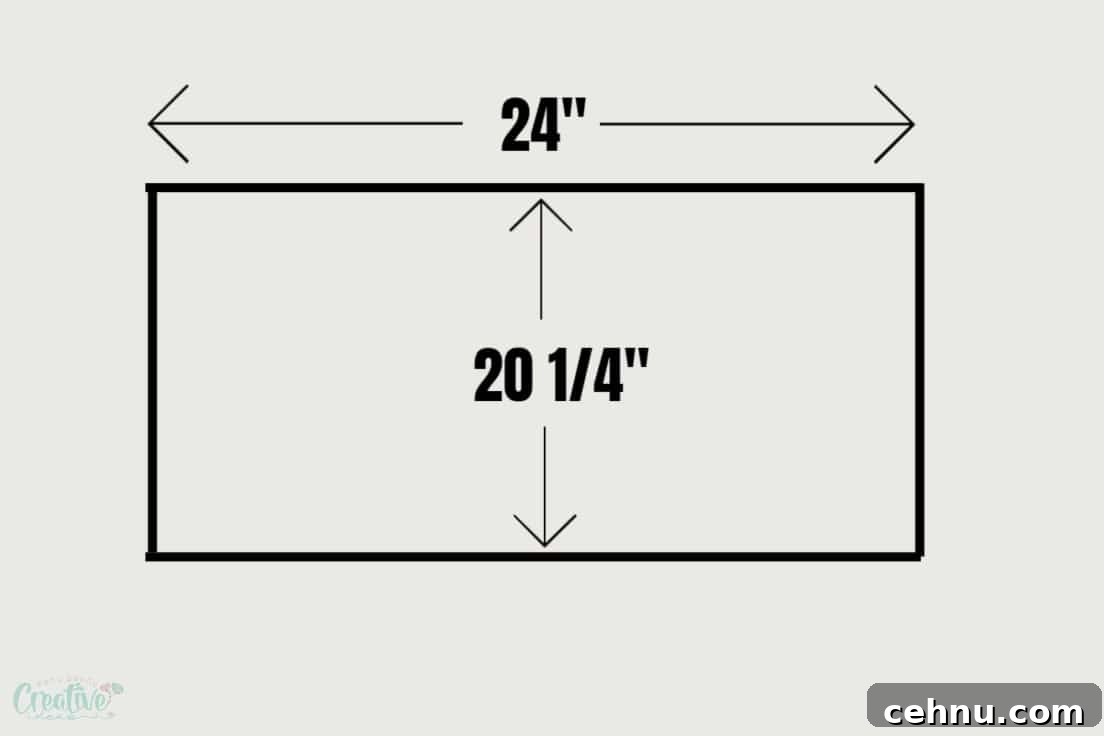
- Panel width = (waist measurement ÷ 2) + seam allowance (we add about 1″ per panel).
- Panel length = desired skirt length + hem allowance + elastic allowance (I add 1″ for the hem plus 2¼” for the elastic area).
- Cut two rectangles using those measurements (one for the front, one for the back).
Example: Ellie’s waist is 23″ and waist-to-above-knee length is 17″. With 1″ elastic width, we cut two rectangles of 24″ × 20¼”.
How to measure the elastic
Measure the waist and subtract 2–3″ depending on desired tightness. If you overlap elastic ends, allow for overlap. Overlapping creates a little bulk at the join; to reduce bulk, sew the join with multiple zigzag passes or use a flat-join technique. Adjust measurement to personal comfort.
Prepare the fabric
- Measure the waist and determine panel width and length including allowances.
- Place fabric pieces right sides together and mark rectangles with a fabric marker.
- Pin the layers and cut out the rectangles.
- Cut elastic to the length determined above (about 2″ less than waist in our example).
Sew the skirt
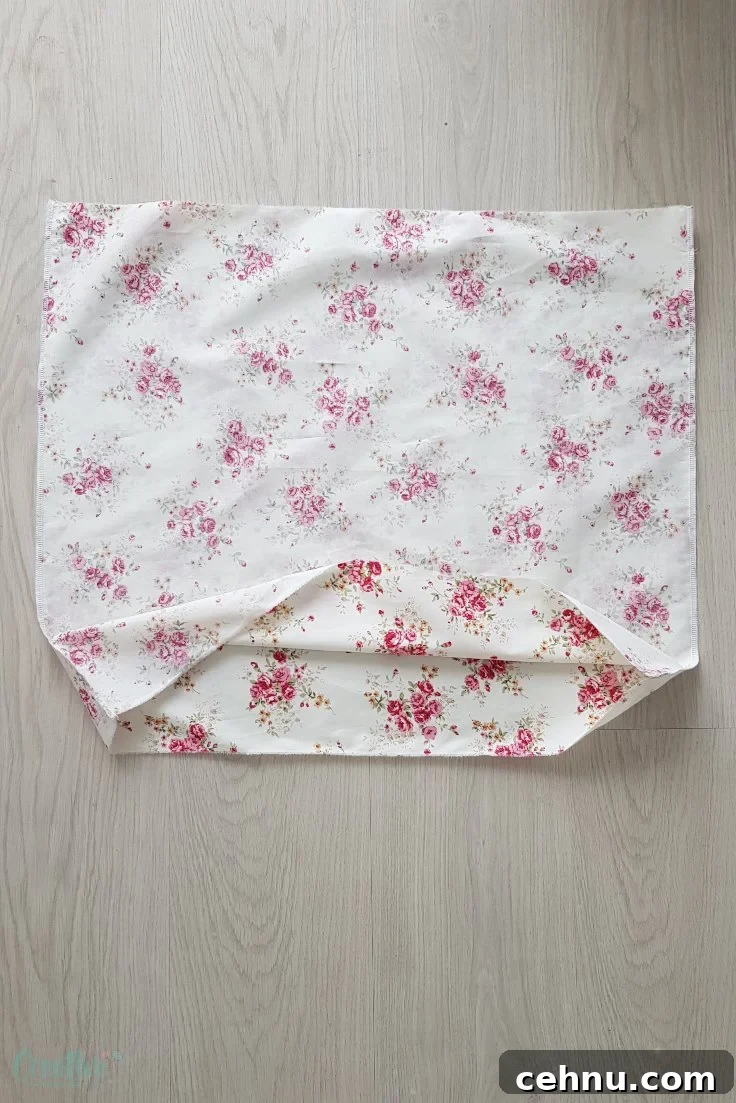
- Sew the two side seams with a 1/2″ seam allowance.
- Finish raw edges at the side seams with a serger or a zigzag stitch to prevent fraying.
Hem the skirt
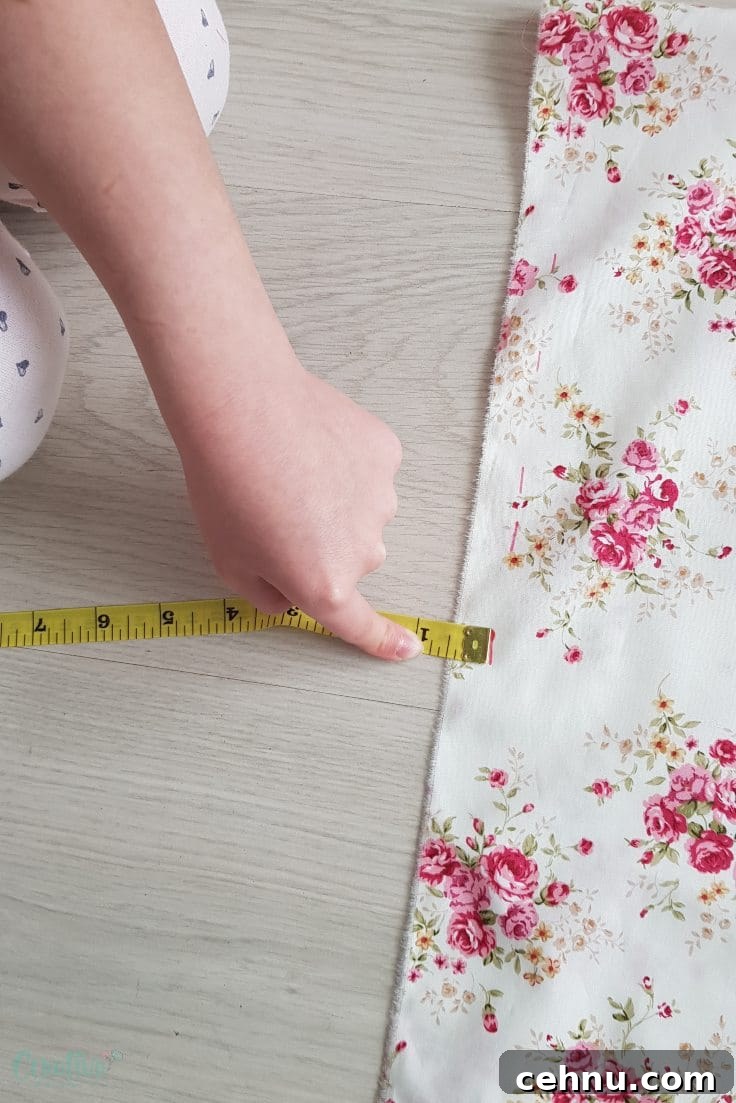
- Mark 1/2″ from the hem on the right side, fold to the wrong side and press.
- Fold again to enclose the raw edge, press, and stitch about 1/8″ from the inside fold for a neat hem.
Attach the elastic (method 1: sew elastic to the top)
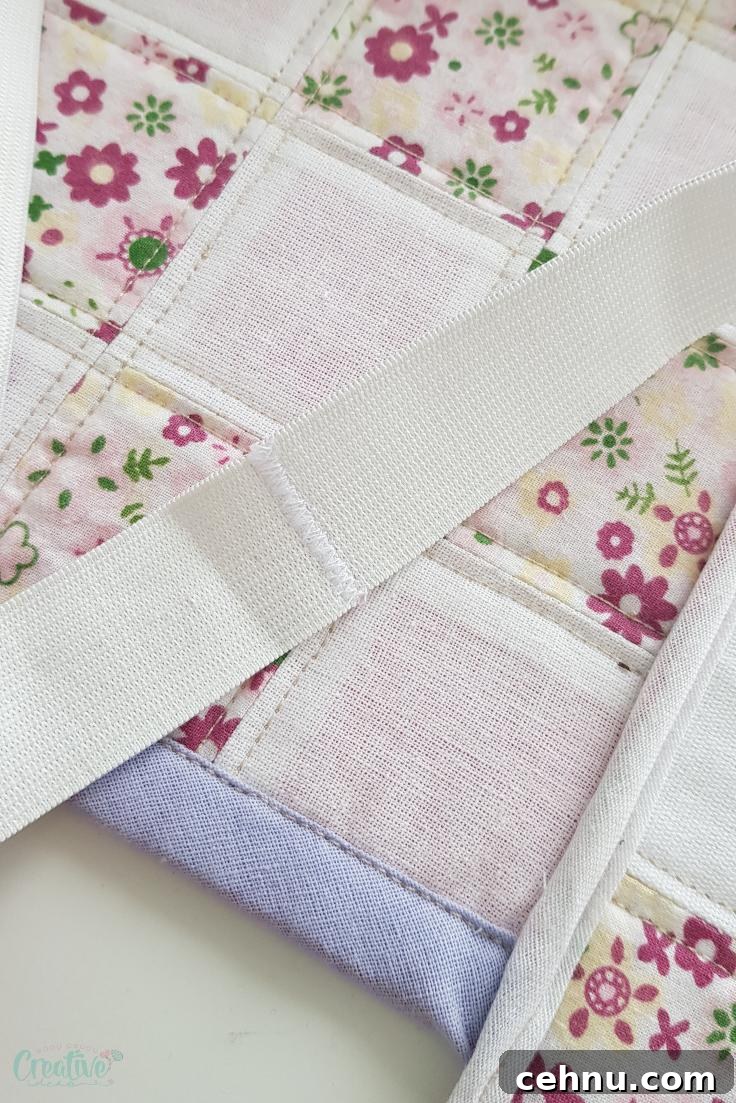
- Join elastic ends with a zigzag stitch (or use a flat joining technique) so you have one continuous loop.
- Divide the elastic into quarters and mark with pins. Do the same at the top edge of the skirt.
- With the skirt right side out, align the quarter marks and pin the elastic to the top edge, adding more pins between marks to distribute fabric evenly.
- Sew the elastic to the skirt with a wide zigzag about 1/4″ from the raw edge.
- Fold the elastic down and then fold again to enclose it inside the skirt, pin, and stitch close to the fold with a zigzag or straight stitch to secure.
Alternative method: create a casing and insert elastic
- Fold the top edge of the skirt in 1″ and press; fold again 1″ and press to form a casing.
- Sew around the casing about 1/8″ from the inner fold, leaving a 2″ opening.
- Use a safety pin to guide the elastic through the casing until the ends meet, sew the ends together, then close the opening and even out gathers.
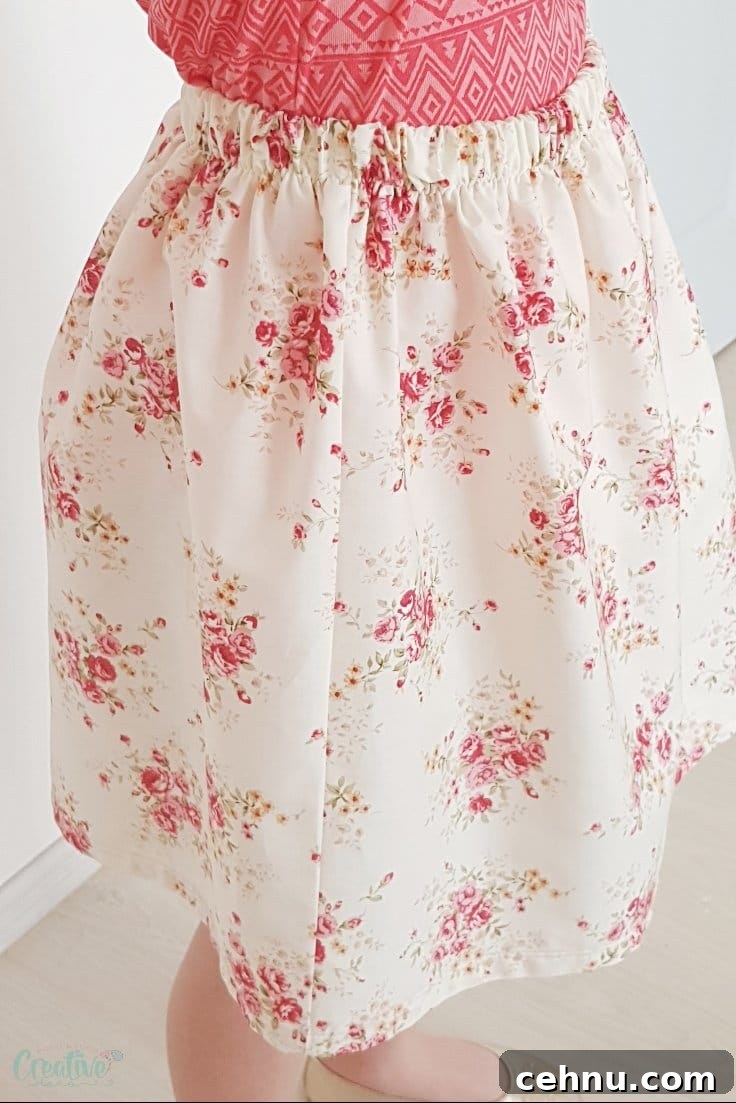
Either method produces neat, even gathers and a comfortable, adjustable waist. The elastic automatically creates the gathers when attached, so pre-gathering is not necessary.
Tips
- Choose lightweight, breathable fabrics such as cotton or linen for an easy-to-handle skirt.
- Add lace or trim to the hem for a decorative finish.
- Measure carefully before cutting to ensure the best fit.
- Try different lengths (mini, midi, maxi) and prints to suit your style.
Project variations
- Create a drawstring waist by sewing a narrow channel and threading ribbon or cord.
- Add side pockets before sewing the side seams for extra functionality.
- For a flowing look use chiffon or silk with a lining; beginners should stick to cotton first.
- Add ruffles or pleats at the hem for more volume and movement.
Styling tips
- Tuck in a blouse or fitted top for a polished look.
- Pair with a basic tee or tank for casual wear.
- Add a leather jacket and ankle boots for edge.
- Mismatched prints and solid tops make a fun, eye-catching outfit.
Frequently asked questions
What is the best fabric for skirts?
All-purpose cotton is the best choice for beginners: it’s easy to cut, pin, press and sew. Lightweight linens and some rayon blends also work well. Avoid very slippery or heavyweight fabrics like silky chiffons or thick denim until you are more comfortable with handling different materials.
How do you gather an elastic skirt?
When the elastic is attached and evenly distributed around the waist, the skirt naturally forms even gathers. The key is matching the elastic evenly to the skirt panels and using a medium-wide zigzag stitch when stitching elastic directly to the fabric.
This elastic-waist gathered skirt is a versatile, comfortable garment that’s quick to make and ideal for sewers of all levels. Try different fabrics, lengths, and trims to create a skirt that reflects your personal style.
Happy sewing!
Other skirt ideas you might like
- Paper bag skirt tutorial
- Full circle skirt with elastic waist
- Box pleated skirt tutorial
- Reversible skirt tutorial