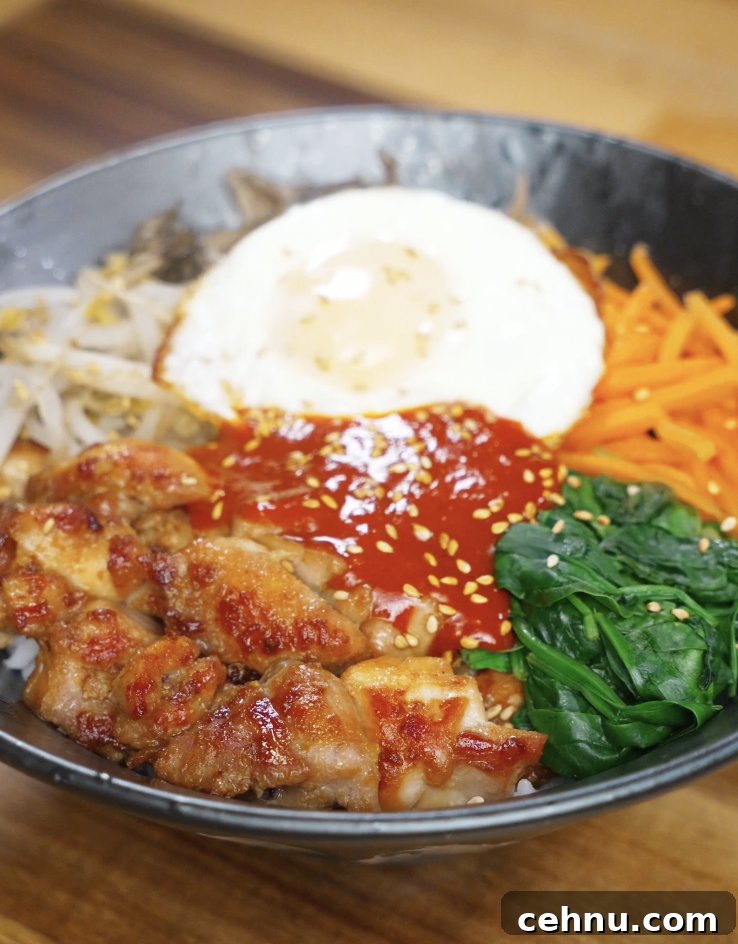
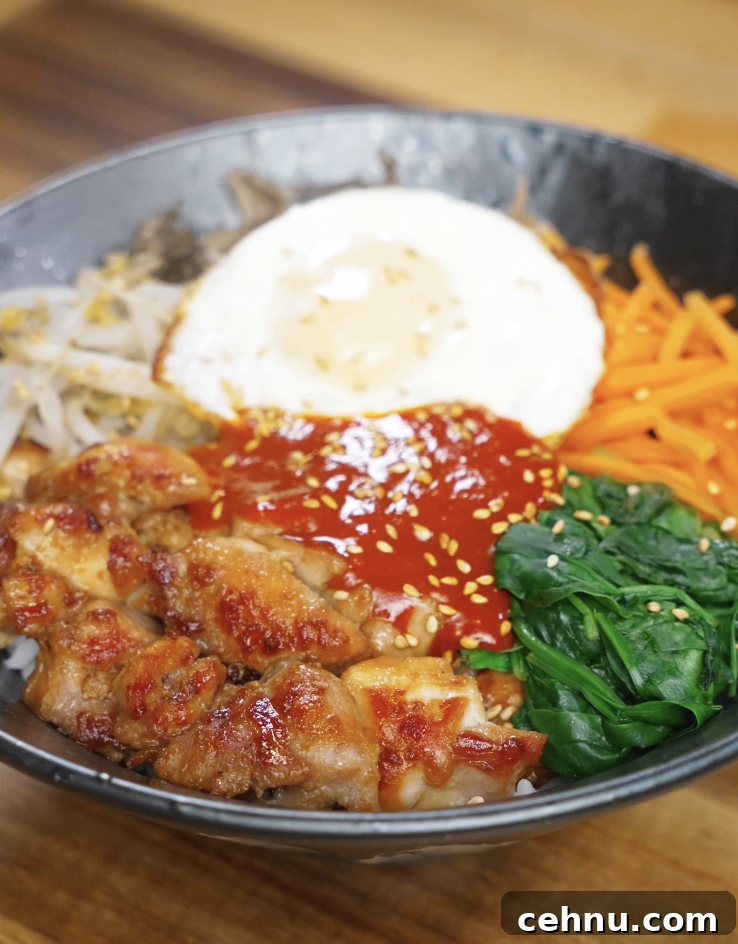
Chicken Bibimbap
2
servings
15
15
30
Equipment
-
Frying pan or skillet
-
Mixing bowls
Ingredients
Chicken
- 16 oz boneless skinless chicken thighs, cut into bite-sized cubes
- 2 tbsp soy sauce
- 1 tsp sesame oil
- 2 cloves garlic, minced
- 2 tsp sugar
Vegetables
- ½ cup bean sprouts
- ½ cup carrots, julienned or thinly sliced
- ¼ cup mushrooms (shiitake, cremini, or button)
- 1 cup spinach
- Salt, to taste
Bibimbap Sauce
- 2 tbsp gochujang
- 1 tsp sesame oil
- 1 tbsp rice vinegar
- 1 clove garlic, minced
- 2 tsp sugar, or to taste
Optional Garnishes
- Fried egg
- Sesame seeds
- Cooked rice, for serving
Instructions
-
Place the cubed chicken in a bowl. Add soy sauce, sesame oil, minced garlic, and sugar. Toss to coat and let the chicken marinate for at least 15 minutes while you prepare the vegetables and sauce.
-
In a small bowl, whisk together gochujang, sesame oil, rice vinegar, minced garlic, and sugar until smooth. Taste and adjust sweetness or tang to your preference, then set the sauce aside.
-
Steam the vegetables separately for 3–5 minutes until just tender: bean sprouts, carrots, mushrooms, and spinach. Season each lightly with salt while still warm and keep them separated so the textures stay distinct.
-
Heat a little oil in a skillet over medium-high heat. Add the marinated chicken and cook for 6–7 minutes, stirring occasionally, until the meat is cooked through and lightly caramelized. Remove from heat.
-
Build your bowl: start with a bed of warm rice, arrange the steamed vegetables around the bowl, add the cooked chicken, and top with a fried egg if using.
-
Drizzle the bibimbap sauce over the bowl and finish with a sprinkle of sesame seeds. Mix everything together before eating to enjoy the full combination of flavors.
Nutrition
Serving:
1
serving
Calories:
435
kcal
Carbohydrates:
17
g
Protein:
34
g
Fat:
25
g
Nutrition information is automatically calculated and should be used as an approximation.
Like this recipe? Rate & Comment Below!
Why Chicken Bibimbap Is Always in My Weekly Meal Rotation
I keep Chicken Bibimbap in my weekly menu because it’s straightforward to prepare and delivers a complete, balanced meal in one bowl. The dish combines lean protein, vegetables, and rice, which makes it satisfying and nutritious. I also appreciate how flexible the recipe is: the vegetables listed are simply suggestions. Use what you have on hand—leftover rice, different vegetables, or another protein all work well. The result is an easy, colorful bowl that’s both healthy and delicious.
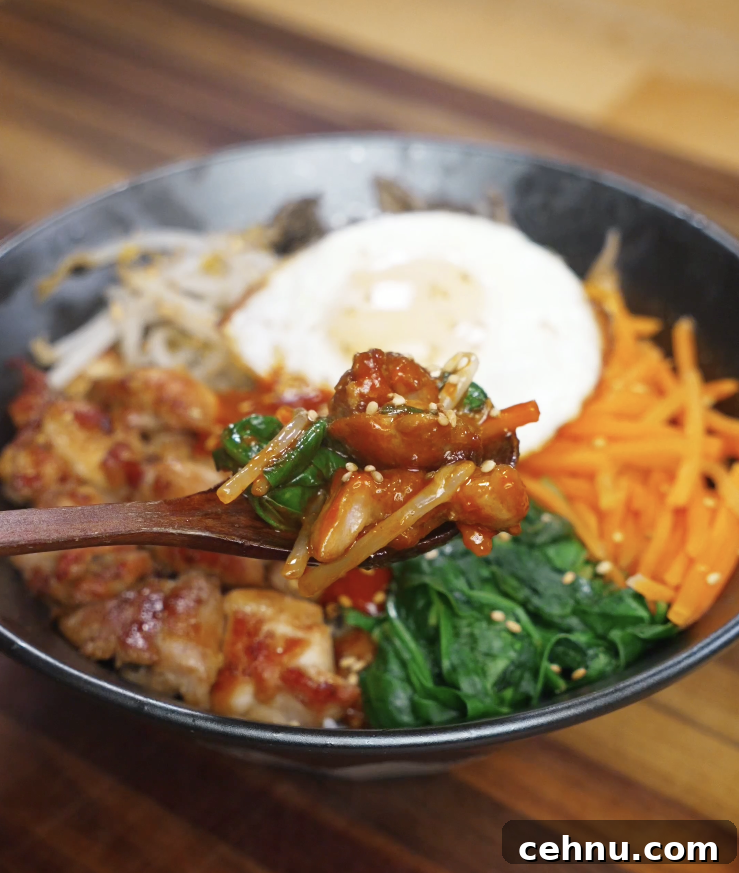
What Makes This Chicken Bibimbap Stand Out
The chicken and vegetables are tasty on their own, but the bibimbap sauce is what unifies the bowl. The gochujang-based sauce adds spicy, tangy, slightly sweet, and deeply savory notes that tie every element together. I often make extra sauce to have on hand—the flavor only improves after a day. If you want meals that are both nutritious and satisfying, this sauce is a game changer.
What You’ll Need To Make Chicken Bibimbap
Chicken
- 16 oz boneless skinless chicken thighs, cut into bite-sized cubes
- 2 tbsp soy sauce
- 1 tsp sesame oil
- 2 cloves garlic, minced
- 2 tsp sugar
Vegetables
- ½ cup bean sprouts
- ½ cup carrots, julienned or thinly sliced
- ¼ cup mushrooms (shiitake, cremini, or button)
- 1 cup spinach
- Salt, to taste
Bibimbap Sauce
- 2 tbsp gochujang
- 1 tsp sesame oil
- 1 tbsp rice vinegar
- 1 clove garlic, minced
- 2 tsp sugar
Optional Garnishes
- 2 fried eggs
- Sesame seeds
- Cooked rice, for serving
How To Make Chicken Bibimbap
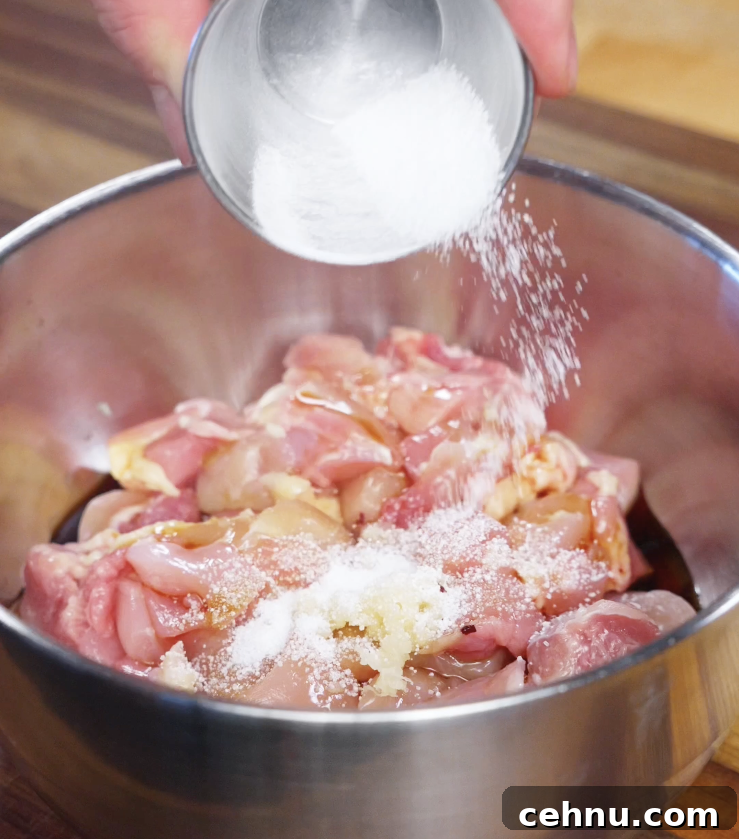
Add the chicken thighs to a bowl and combine with soy sauce, sesame oil, garlic, and sugar. Allow the chicken to marinate for at least 15 minutes while you prepare the sauce and vegetables.
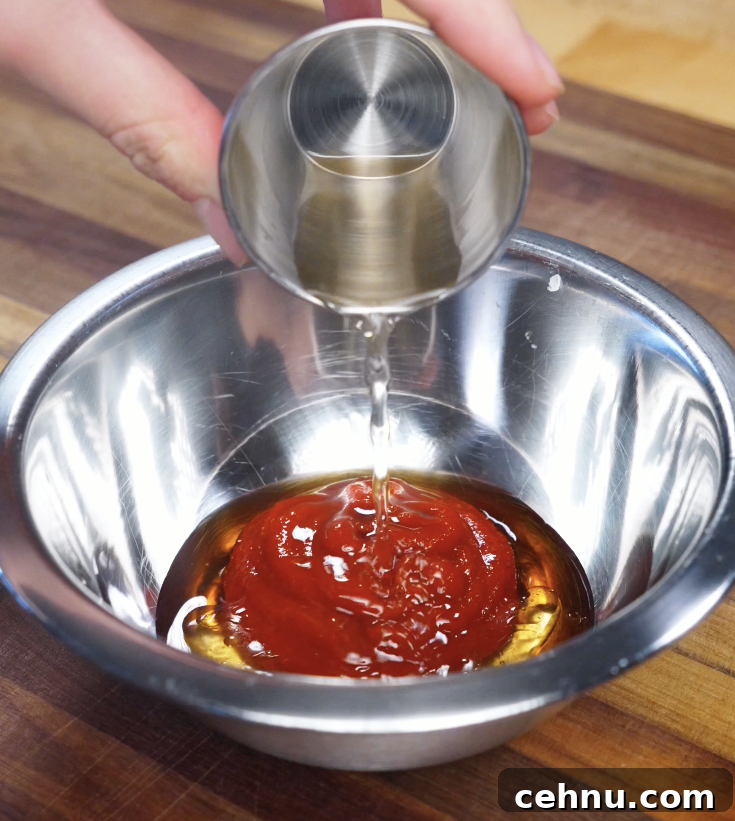
Whisk the gochujang, sesame oil, rice vinegar, minced garlic, and sugar together until smooth. Set the sauce aside and taste-adjust if desired.
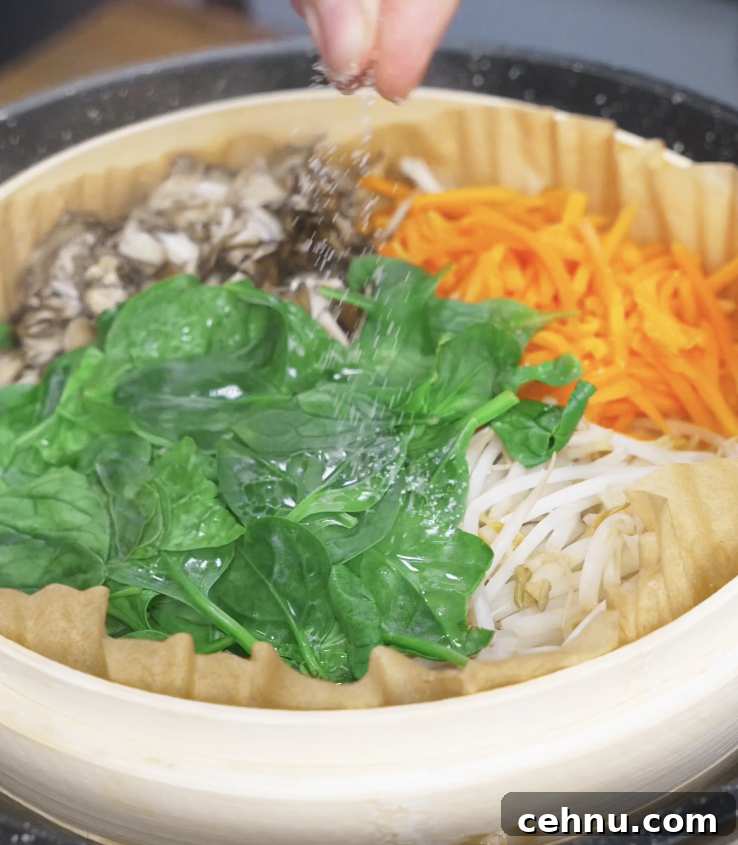
Steam each vegetable for 3–5 minutes until just tender. Season lightly with salt while still warm, and keep the vegetables separated to preserve texture and color.
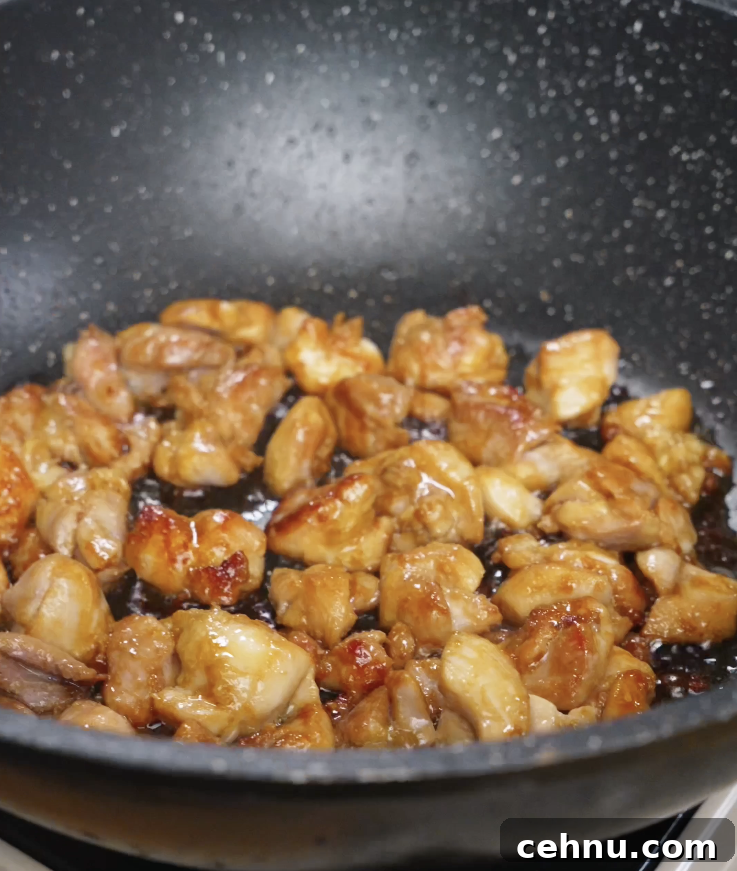
Heat oil in a skillet over medium-high heat. Cook the marinated chicken for 6–7 minutes until browned and cooked through. Remove from the pan and let it rest briefly.
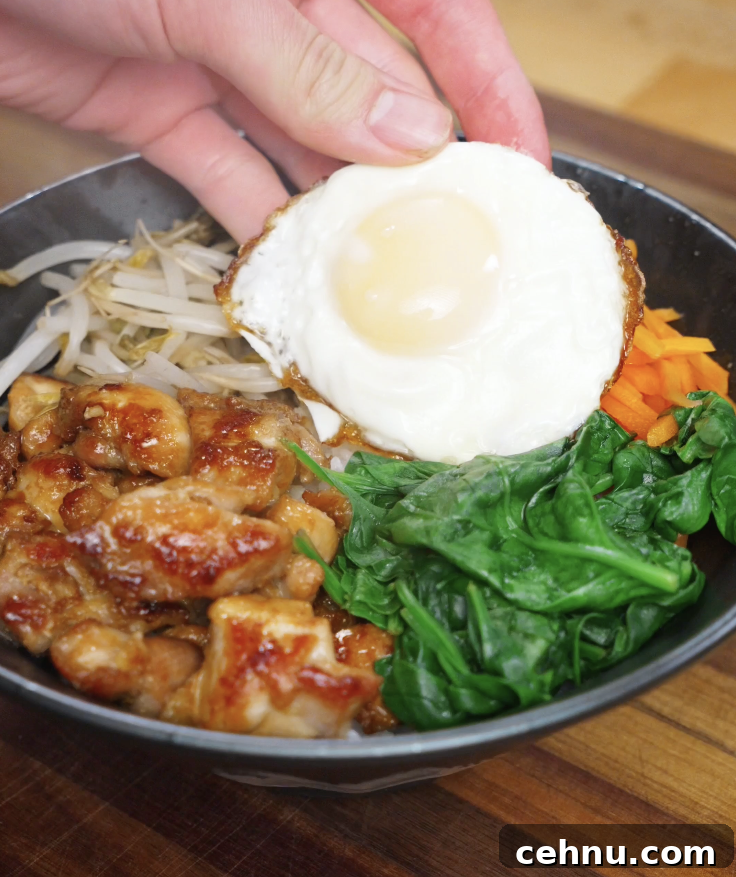
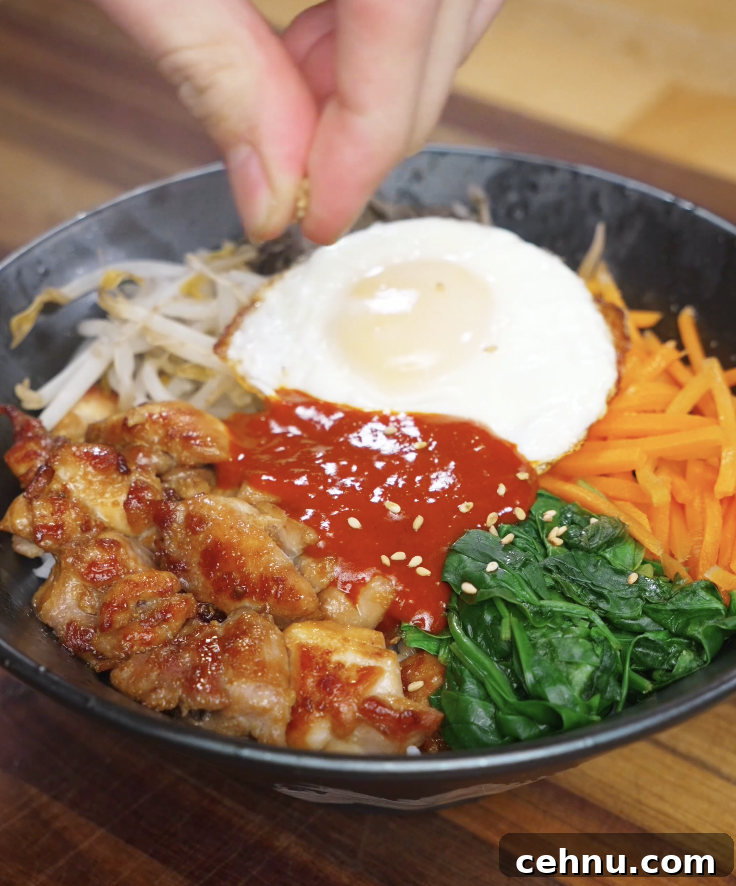
Arrange warm rice in bowls, add the steamed vegetables, top with the cooked chicken and a fried egg if you like. Generously drizzle with the bibimbap sauce and finish with sesame seeds. Mix well before eating.
Tips & Variations
If gochujang feels too spicy, reduce the amount by half or balance it with a little extra sugar. If you already mixed the sauce and it’s too spicy, a tablespoon of tomato paste or a touch of honey can mellow the heat.
To make this dish vegetarian, swap the chicken for firm tofu or tempeh, or add extra fried eggs for protein. Both options keep the bowl hearty and satisfying.
If you don’t want to steam vegetables, roasted or sautéed vegetables, or even pre-cooked leftovers, will all work well—roasting brings a pleasant caramelized flavor.
For meal prep, store vegetables and chicken together but keep the sauce separate until serving to prevent sogginess. Reheat the bowl in the microwave for a couple of minutes, then add the sauce and mix to serve.
Frequently Asked Questions
Can I use chicken breast instead of thighs?
Yes. Chicken breast will work, but watch the cooking time to avoid drying it out. Thighs stay juicier and are more forgiving.
Is there a substitute for gochujang?
Gochujang provides a unique fermented heat and umami that’s central to bibimbap. If you don’t have it, a combination of miso, chili-garlic sauce, and a bit of honey can provide a similar savory-sweet kick, though it won’t be identical.
Can I roast the veggies instead of steaming?
Absolutely. Roasting at a high temperature (about 425°F / 220°C) with a little oil adds a pleasant char and depth of flavor—roast until fork-tender.
Try These Next
Japanese Steak Bowl
Black Pepper Beef
Teriyaki Chicken